



















































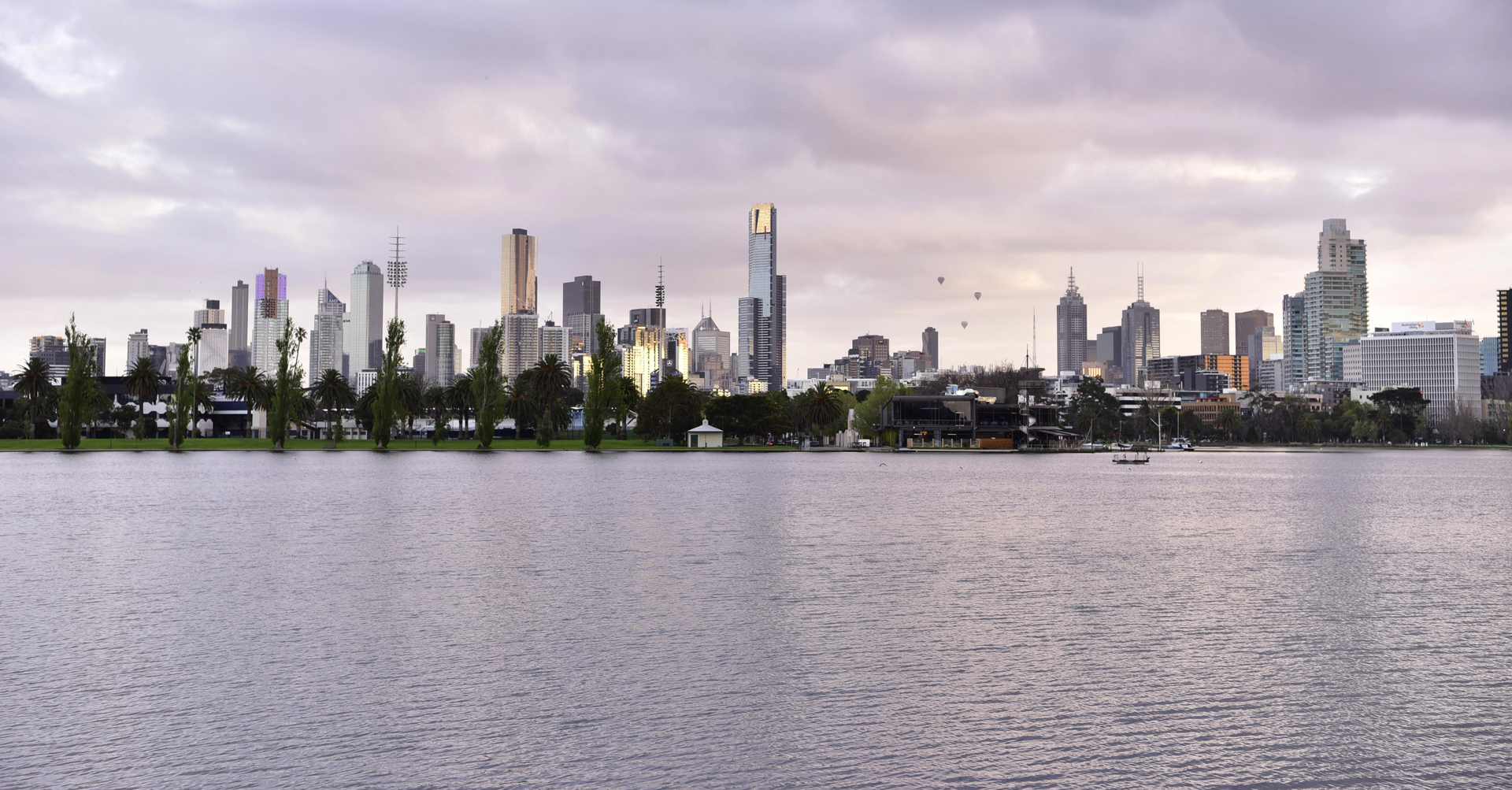
For the better part of two decades the answer to “where does Australia keep its data” was simple: Sydney. The harbour city’s western and northern corridors became the default home for the server halls that run the nation’s banking, streaming and cloud workloads, and Sydney still sits among the largest data centre markets in the Asia Pacific. That settled hierarchy is now being quietly rearranged, and the city doing the rearranging is Melbourne.
According to new pipeline analysis reported by Data Center Knowledge, Melbourne has overtaken Sydney in the volume of data centre capacity currently in the development pipeline. In practical terms that means more planned megawatts, more sites moving through planning and construction, and more of the next wave of Australian compute being pointed at Victoria rather than New South Wales. It is a genuine change in the centre of gravity for an industry that only ever grows in one direction.
Why the ground is shifting south
The forces behind the move are not mysterious, and they stack up neatly in Melbourne’s favour. Land on the city’s fringe is cheaper and more plentiful than the increasingly tight parcels around Sydney’s established hubs in Macquarie Park and the Western Sydney corridor. Power, which is now the single hardest constraint on where a hyperscale facility can go, is easier to secure on Victoria’s grid, and the state’s pipeline of wind and solar gives operators a clearer path to the renewable supply their customers demand. A cooler southern climate, which shaves a little off the enormous cost of cooling a hall full of accelerators, does not hurt either.
Sitting above all of it is artificial intelligence. Training and running large models is extraordinarily power hungry, and the racks that house AI chips draw far more electricity per square metre than the web and storage workloads data centres were built around a decade ago. That has turned access to firm, affordable power into the deciding factor in site selection, and it has sent developers hunting for locations where they can plug in tens or even hundreds of megawatts without waiting years for a grid connection. Melbourne, for now, looks like the easier plug.
Sydney is hardly out of the contest. It remains the landing point for most of the international subsea cables that connect Australia to the world, which matters enormously for latency-sensitive traffic, and the depth of existing infrastructure keeps it attractive to the big cloud platforms. The story is less that Sydney is shrinking and more that Melbourne is growing faster, capturing a larger share of what is a rapidly expanding national total.
Two readings of the same numbers
For Victoria’s boosters, the pipeline figures read as a vindication. A larger share of a booming industry means construction jobs, a pull on local engineering and electrical trades, and a long tail of operational roles once the halls are running. State governments across the country have been competing hard for exactly this kind of capital-intensive, export-adjacent investment, and the numbers suggest Melbourne’s pitch on land and energy is landing.
The more sceptical reading focuses on what those server halls actually consume. Data centres are voracious users of electricity and, depending on the design, water, and a surge of new capacity lands on a Victorian grid that is simultaneously trying to decarbonise and keep the lights on through the retirement of the state’s ageing coal fleet. Community groups elsewhere in the country have already pushed back on specific projects, as FluentSea reported with the opposition to the Western Downs digital park in Queensland, and the same questions about who pays for the extra transmission and generation will follow the industry to Melbourne’s outskirts. There is a real risk that households end up subsidising grid upgrades whose primary beneficiaries are offshore technology giants.
Both readings can be true at once. The investment is welcome and the jobs are real, and the pressure on power and water is also real. The task for policymakers is to capture the first without quietly socialising the second.
What it means for Australia
Beyond the Sydney versus Melbourne scoreboard, the shift matters because data centres are becoming strategic infrastructure in the same bracket as ports and power stations. Where the nation’s compute physically sits shapes which regions get the investment, which grids carry the load, and how resilient Australia is if a single market becomes congested or constrained. A more balanced split between two major east coast hubs is arguably healthier than a single point of concentration, both for competition and for resilience.
It also sharpens a tension that runs through almost every AI story FluentSea covers. Australia wants the economic upside of the AI build-out, yet it is trying to reach that goal on a grid in the middle of its biggest transition in a century. Every new campus that commits to renewable supply helps make the case that growth and decarbonisation can move together, while every project that leans on firmed fossil generation makes the maths harder. Victoria’s renewable pipeline is what makes Melbourne attractive to operators in the first place, which means the state has a strong incentive to keep that build-out on schedule.
There is a federal dimension too. Energy market rules, planning approvals and the pace of transmission upgrades are the levers that will decide whether this capacity arrives smoothly or snarls up, and they sit across state and Commonwealth desks. If Australia wants to host more of the region’s AI workloads rather than exporting the demand to Singapore or offshore, the grid and the approvals process have to keep pace with the developers’ ambitions.
What’s next
Pipeline figures are a forward measure, not a finished scoreboard, so the real test is conversion: how many of Melbourne’s planned megawatts actually secure power, clear planning and switch on. Expect the hyperscale operators and the local developers to keep announcing campuses across Melbourne’s west and north, expect grid connection queues and water use to become the flashpoints, and expect both state governments to keep sweetening their pitches. Sydney will not surrender its crown without a fight, and the cable landings give it a card Melbourne cannot easily match.
For now, though, the direction of travel is clear. The map of where Australia keeps its data, and increasingly where it trains its models, is being redrawn, and Melbourne has moved to the front of the queue.
Sources: Data Center Knowledge.



Comments 1