

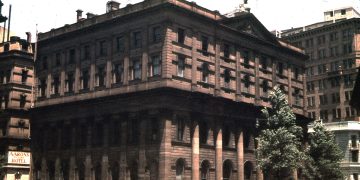
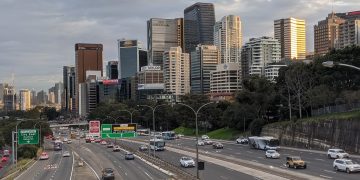










Another real-world arrest, another wave of fabricated pictures. AFP Fact Check has moved to knock down a set of AI-generated images that spread across social media following the arrest of a Thai Airways employee in Australia, adding the episode to a rapidly growing list of breaking-news moments now colonised by synthetic imagery before the facts are even established.
The pattern has become wearily familiar to anyone who watches how misinformation travels. A genuine news event, in this case an arrest involving an airline staffer on Australian soil, generates intense public curiosity. Into that vacuum of verified detail rush images that look plausible, carry an emotional charge, and are shared thousands of times before fact-checkers can catch up. According to AFP Fact Check’s reporting, the images circulating in connection with the arrest were not authentic photographs of the incident but products of generative AI tools.
What actually happened
The verification work here is the news. Fact-checkers assessed the images being shared as depictions of the arrest and concluded they bore the hallmarks of AI generation rather than genuine documentation. That distinction matters enormously. When a synthetic image is passed off as a real photograph of a real person being detained, it doesn’t just mislead, it can defame the individual, prejudice public perception of a live legal matter, and pollute the record that journalists and, potentially, courts rely on.
AFP and other fact-checking outfits have refined a repeatable method for this kind of debunking: tracing an image back to its earliest appearance, checking whether any credible news organisation or official source ever published it, and examining the picture itself for the tell-tale artefacts of generative models, warped hands, garbled text on signage or uniforms, inconsistent lighting, and backgrounds that dissolve into visual mush under scrutiny. Increasingly, they lean on detection tooling as well, though the fact-checkers themselves caution that automated detectors are imperfect and no substitute for old-fashioned provenance work.
Two ways to read it
There are competing lessons to draw. One camp argues the debunking is a quiet success story: a fabrication surfaced, fact-checkers identified it, and a correction entered the information ecosystem. The system, on this view, worked more or less as designed. Media-literacy advocates point out that the very existence of a specialist fact-check unit turning these images around quickly is a form of defence that didn’t exist a decade ago.
The more pessimistic reading is that debunking is always a step behind. A correction rarely travels as far as the falsehood it chases, and by the time AFP publishes, the fabricated images may already have shaped what millions of people believe about a person and an event. Researchers who study synthetic media warn of a compounding problem often called the “liar’s dividend”: once the public knows convincing fakes exist, bad actors can dismiss genuine footage as AI-generated, and honest observers lose confidence in everything they see. In that world, the harm isn’t only the specific fake, it’s the erosion of a shared baseline of trust in images altogether.
Why this lands hard in Australia
For Australian readers, this is not a distant curiosity. The arrest played out here, and the synthetic images purported to show an event on Australian ground, which means local audiences were among the most exposed and the most likely to share. Australia has become a notably active battleground for AI-driven misinformation, from fabricated images of natural disasters to manipulated clips of public figures and celebrity-endorsed investment scams that have cost Australians real money.
The policy backdrop is shifting to match. The eSafety Commissioner has been increasingly vocal about synthetic media and deepfakes, and the Commonwealth has legislated criminal penalties for sharing non-consensual sexually explicit deepfakes, a sign that lawmakers now treat generative fakery as a genuine public-safety issue rather than a novelty. The federal government’s broader work on misinformation regulation and its ongoing consideration of AI guardrails, including mandatory measures for high-risk uses, all circle the same core problem this episode illustrates: the gap between how fast synthetic content spreads and how slowly verification and accountability move.
There is a distinctly Australian dimension to the legal exposure, too. Australia’s defamation regime is comparatively plaintiff-friendly, and an AI-generated image that falsely depicts an identifiable person in the act of being arrested could give rise to serious reputational harm. The platforms that host and amplify such material, and the individuals who share it, are not necessarily insulated from consequences under local law, a point that ought to give pause to anyone tempted to repost a dramatic image before checking where it came from.
What comes next
The immediate task for Australian newsrooms and platforms is speed and clarity: flag the fabricated images, surface the correction prominently, and resist the pull to run unverified visuals simply because a story is trending. Several major outlets and the ABC have expanded their verification practices in recent years, but the volume of synthetic content is climbing faster than any single fact-check team can manage.
Longer term, the pressure will grow for structural fixes rather than case-by-case debunking. Content-provenance standards, cryptographic “nutrition labels” that travel with an image to show how it was made and edited, are being trialled by camera makers and platforms internationally, and their adoption in Australia would give local audiences a fighting chance to tell authentic footage from generated fakes. Expect renewed calls for platforms operating in Australia to label AI-generated content clearly and to act faster on flagged material, and expect regulators to keep testing whether voluntary codes are enough or whether harder obligations are needed.
For now, the episode is a small, sharp reminder of a large problem. The images looked real enough to spread. They weren’t. And the only thing standing between a fabricated picture and a settled public belief was a fact-checker willing to do the unglamorous work of tracing it back to nothing. The lesson for Australian readers is blunt: in a breaking-news moment, the most trustworthy image is often the one you haven’t seen yet.
Sources: AFP Fact Check via GNews.