










































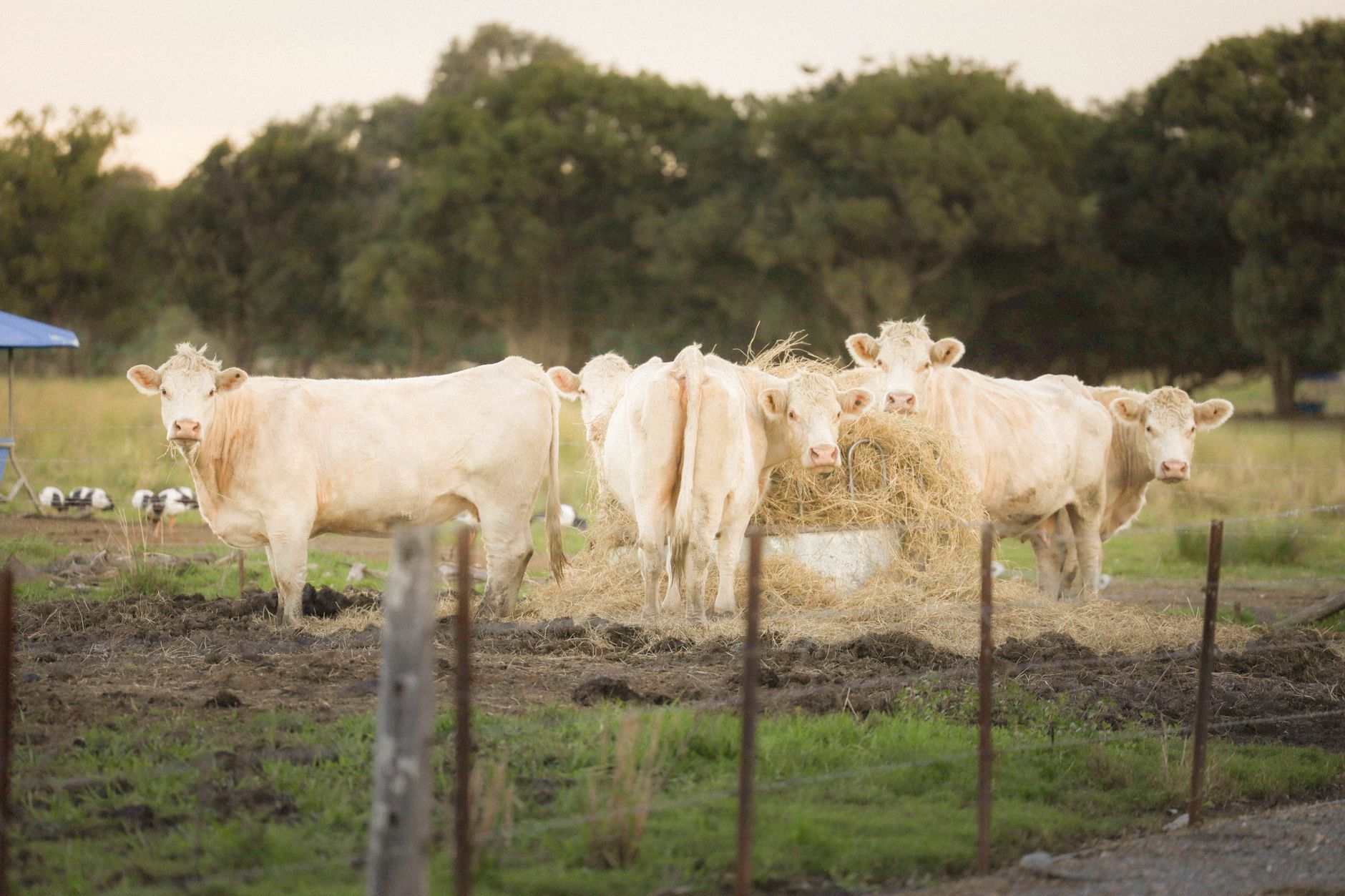
Cattle grazing inside an active cropping paddock stopped at a boundary that was not there. In three South Australian trials, CSIRO researchers found that cattle wearing GPS collars responded to an audio beep alone 95 per cent of the time, holding a digital line without needing the mild electric pulse the system can deliver as a backstop.
The result comes from a three-year study that fitted pre-commercial Gallagher eShepherd collars to 40 to 60 head of cattle across commercial properties at Long Plains, Heath and Pinnaroo. Rather than fencing animals out of a paddock, the researchers used software to fence them into precise zones inside it, then reshaped those zones as crop and soil conditions changed.
The 95 per cent figure came from the dual-purpose crop grazing trial, where the boundaries moved most often. According to CSIRO, the animals learned to associate the sound with the edge of their allowed area and adjusted before the pulse arrived.
How the collars learned the paddock, and the cattle learned the collars
Virtual fencing works by mapping a boundary as GPS coordinates. Each collar tracks the animal’s position, plays an escalating audio tone as it nears the line, and delivers a mild electric pulse only if the animal keeps going. The fence exists in software, so a producer can redraw it from a screen without moving a post.
That flexibility was the point. CSIRO senior research technician Jackie Ouzman told Beef Central the boundaries were not static, and that the trial showed technology and livestock could manage that level of complexity. The team moved fences to follow crop condition, soil variability and frost-affected areas, steering cattle onto the parts of a paddock a grower actually wanted grazed.
The learning happened fast. CSIRO senior principal research scientist Dr Caroline Lee said that within the first few days most cattle were responding to the sound alone, according to the CSIRO account. That behavioural shift is what makes the 95 per cent audio-only rate meaningful: it suggests the animals treated the beep as the fence, not the shock.
The findings are published in the peer-reviewed journal Animal Production Science, in a paper titled “Applying virtual fencing technology for grazing and crop management: three case studies with cattle in southern Australian mixed farming systems.” The work was funded by the Grains Research and Development Corporation, Australian Wool Innovation and CSIRO, with technical support from the Gallagher eShepherd team and Mallee Sustainable Farming Inc, and carried out alongside producers Peter Cook and Amanda Nickolls.
Targeted grazing for weeds, groundcover and stubble
Beyond simply keeping cattle in place, the trials tested virtual fencing as a management lever. The researchers used it to concentrate grazing on weedy patches for control, and to keep animals off erosion-prone ground so groundcover stayed intact. Boundaries could be tightened around vulnerable soil and loosened where biomass needed knocking down.
This is the harder problem in mixed farming. Grazing crop stubble or dual-purpose crops adds value, but doing it without a physical fence has meant either constant supervision or accepting damage to the wrong parts of a paddock. A digital fence that follows an irregular weed front or a frost-hit corner offers a level of precision that steel and wire cannot.
The results were not unconditional. Beef Central reported that containment weakened when heifers were in heat and bulls were nearby, and that water placement remained critical to keeping animals within their zone. Those caveats matter for producers weighing the technology against a real herd rather than a controlled trial.
CSIRO senior research scientist Dr Dana Campbell framed the technology as a management tool rather than a set-and-forget solution, per the CSIRO account. Animal behaviour and paddock context still drive whether it works, which places the burden on the operator to design sensible boundaries and keep water and feed in the right places.
Why it matters for Australian mixed farmers
Nearly 900,000 hectares of Australian grazing land shifted into cropping in just two years, according to figures cited by CSIRO. That trend squeezes the space to run livestock and crops on the same ground, and it makes any tool that lets a grower do both on one paddock commercially interesting.
The livestock have not left. CSIRO senior principal research scientist Dr Rick Llewellyn noted that more than half of Australian grain growers still run livestock, and that managing grazing across large paddocks remains difficult, according to Beef Central. Virtual fencing speaks directly to that group: producers who want to capture the value of stubble and weed grazing without the cost and permanence of new fences.
The economics are not trivial. Physical fencing across large mixed-farming properties runs to thousands of dollars per kilometre, and it locks land into a fixed layout. A collar-based system moves that cost onto hardware and software that can be redeployed anywhere on the farm, and it turns a paddock’s internal geometry into something a grower can change season by season, or even week by week.
There is a broader signal here for Australian agtech. Virtual fencing has largely been pitched at extensive rangeland grazing, where the appeal is managing animals across country too big to fence economically. Pushing it into the tight, high-value context of a cropping paddock is a different test, one that demands frequent boundary changes and reliable responses close to a valuable crop. A 95 per cent audio-only rate under those conditions is the kind of number that turns a research curiosity into a purchasing decision.
What comes next
The collars in this study were pre-commercial, which places the work at the edge of what is available to buy rather than a finished product. The near-term question is cost and reliability at scale: whether the per-collar economics stack up on a commercial herd, and whether the containment holds through the messier realities of breeding stock, variable terrain and shifting water.
For Australian mixed farmers, the trial offers a concrete proof point that AI-driven fencing can operate inside the crop, not just around the mob. If the commercial products match the trial numbers, the fence line may become one more variable a grower manages on a screen, alongside sowing rate and nitrogen. The land-use pressure driving farmers to run cattle and crops on the same hectares is not easing, and that is precisely the pressure this technology is built to relieve.
Sources: CSIRO, Virtual fencing takes on mixed cropping systems; Beef Central, Virtual fencing takes on mixed cropping/grazing systems; Animal Production Science, Applying virtual fencing technology for grazing and crop management.