















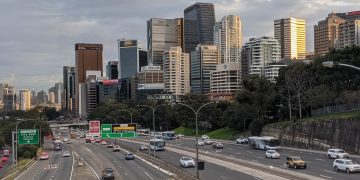
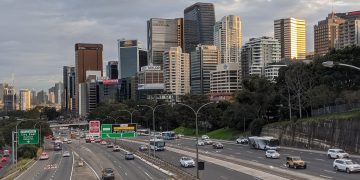

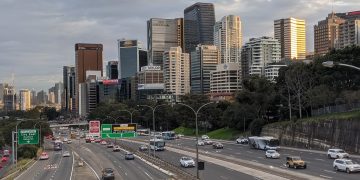












Australia’s second-largest fibre network owner is putting half a billion dollars behind a simple bet: that the artificial intelligence boom will need far more capacity between Sydney and Melbourne than the country’s existing cables can carry. Vocus has unveiled a new A$500 million fibre route linking the two cities, pitched explicitly as infrastructure built for the AI era rather than a general-purpose upgrade.
The announcement lands at a moment when the physical plumbing of AI, the cables, data centres and power connections that sit beneath the chatbots and copilots, has become one of the most contested and capital-hungry corners of the technology industry. For Vocus, a company that has spent the past decade quietly rebuilding itself around long-haul fibre, the Sydney-Melbourne corridor is the obvious place to plant a flag.
Why this corridor, and why now
The route between Sydney and Melbourne is the busiest digital artery in the country. Sydney remains Australia’s dominant data-centre market, home to the largest concentration of hyperscale and colocation capacity in the southern hemisphere, while Melbourne has grown rapidly as a second hub. The fibre that connects them carries an enormous share of the nation’s internet, cloud and enterprise traffic.
Much of that connectivity, however, runs over cable routes laid years ago, often following highway and rail corridors that were never designed with the demands of large-scale AI training and inference in mind. Modern AI workloads are unusually hungry for two things: raw bandwidth, because they shuttle vast datasets between storage and compute; and low, predictable latency, because distributed training jobs and real-time inference are sensitive to every millisecond of delay. A newer, more direct route with fresh fibre and higher-capacity optical equipment is precisely the kind of asset that hyperscalers and AI-focused operators are willing to pay a premium for.
By framing the project around AI, Vocus is signalling who it wants as customers. The big cloud providers building out AI capacity in Australia, and the specialist data-centre developers racing to serve them, are the natural buyers of dedicated, high-capacity dark fibre and wavelength services between the two cities. Locking in those tenants early, ideally before the concrete is poured, is the commercial logic behind a project of this scale.
A company remade around fibre
Vocus is no newcomer to ambitious infrastructure. The company owns one of the largest intercapital fibre networks in Australia, along with subsea assets including the Australia Singapore Cable and the North West Cable System, and it has pursued large builds such as its Darwin-Jakarta-Singapore cable and Project Horizon linking Perth and Darwin. Under private ownership by superannuation-backed investors Macquarie Asset Management and Aware Super, it has leaned into being an infrastructure business rather than a consumer telco, selling capacity to carriers, governments and enterprises rather than chasing retail broadband customers.
That positioning matters. A A$500 million route is a long-dated infrastructure investment that only pays off over many years of contracted revenue. Patient capital of the sort Vocus now sits on is well suited to backing an asset whose returns depend on a decade or more of AI-driven demand growth, according to the details reported by W.Media.
Two ways to read the bet
Supporters of projects like this argue that Australia has no choice but to build. If the country wants to host serious AI compute rather than exporting the workloads offshore, it needs the terrestrial backbone to move data between facilities at scale. On this view, a new AI-grade route is exactly the sort of enabling infrastructure that keeps investment, jobs and sovereign capability onshore, and Vocus is filling a gap that would otherwise constrain the sector.
Sceptics will note the risk that sits under every big infrastructure wager: overbuild. Australia’s intercapital routes are already contested by NBN Co’s transit network, Telstra, TPG and others, and a rush of AI-driven optimism has a habit of producing more capacity than near-term demand can absorb. If the AI buildout slows, or if hyperscalers favour their own private cable arrangements, a half-billion-dollar route could take longer to fill than its backers hope. The history of telecommunications is littered with fibre laid in booms and lit years later. The counter-argument is that fibre routes are long-lived assets and that demand for data transport has, over the long run, only ever gone up.
What it means for Australia
For Australia, the project is a useful barometer of how seriously the private sector is taking the AI infrastructure race. The federal government has been talking up sovereign AI capability and the importance of domestic data centres, and it has flagged energy and grid connections as the binding constraint on that ambition. Fibre is the other half of the equation, and a privately funded route means Canberra gets more digital backbone without spending public money.
There is a competitive dimension too. Data-centre operators choose locations partly on the strength and diversity of the connectivity available. A high-capacity, AI-ready link between Sydney and Melbourne strengthens the case for building large AI facilities in either city, and for the regional centres along the route that could host edge capacity or renewable-powered compute. It also adds route diversity, which matters for resilience: more independent paths between the two markets reduces the risk that a single cable cut disrupts a large slice of national traffic.
For businesses, more competition on the corridor should, over time, put downward pressure on the cost of moving large volumes of data, a meaningful input for any Australian company training models or running data-heavy AI services. And for the broader ambition of keeping AI workloads onshore, rather than shipping them to Singapore or the United States, domestic backbone capacity is a prerequisite.
What’s next
The key questions now are timing and tenants. Investors and rivals will be watching for construction milestones, the specific route the cable takes, and, most tellingly, which customers sign on. Anchor commitments from hyperscalers or major data-centre developers would validate the AI framing and de-risk the spend; a quiet launch without named tenants would raise harder questions about demand. Expect Vocus to court the cloud giants building AI capacity in Australia, and expect competitors to respond with capacity and pricing moves of their own along the same corridor.
Either way, the announcement is a marker of where the money is flowing. The visible face of the AI boom is software, but the投资 flowing into cables, data centres and power tells the real story, and in Australia, that story increasingly runs down the wire between Sydney and Melbourne.
Sources: W.Media.