













































Few sectors have moved as much money, as fast, as the business of renting out artificial intelligence computing power. Now that appetite is being tested closer to home, as fund managers keep one eye on the Australian Securities Exchange and the other on Nvidia, waiting to see whether the AI cloud hopeful Sharon AI can finally get its long-flagged debut away.
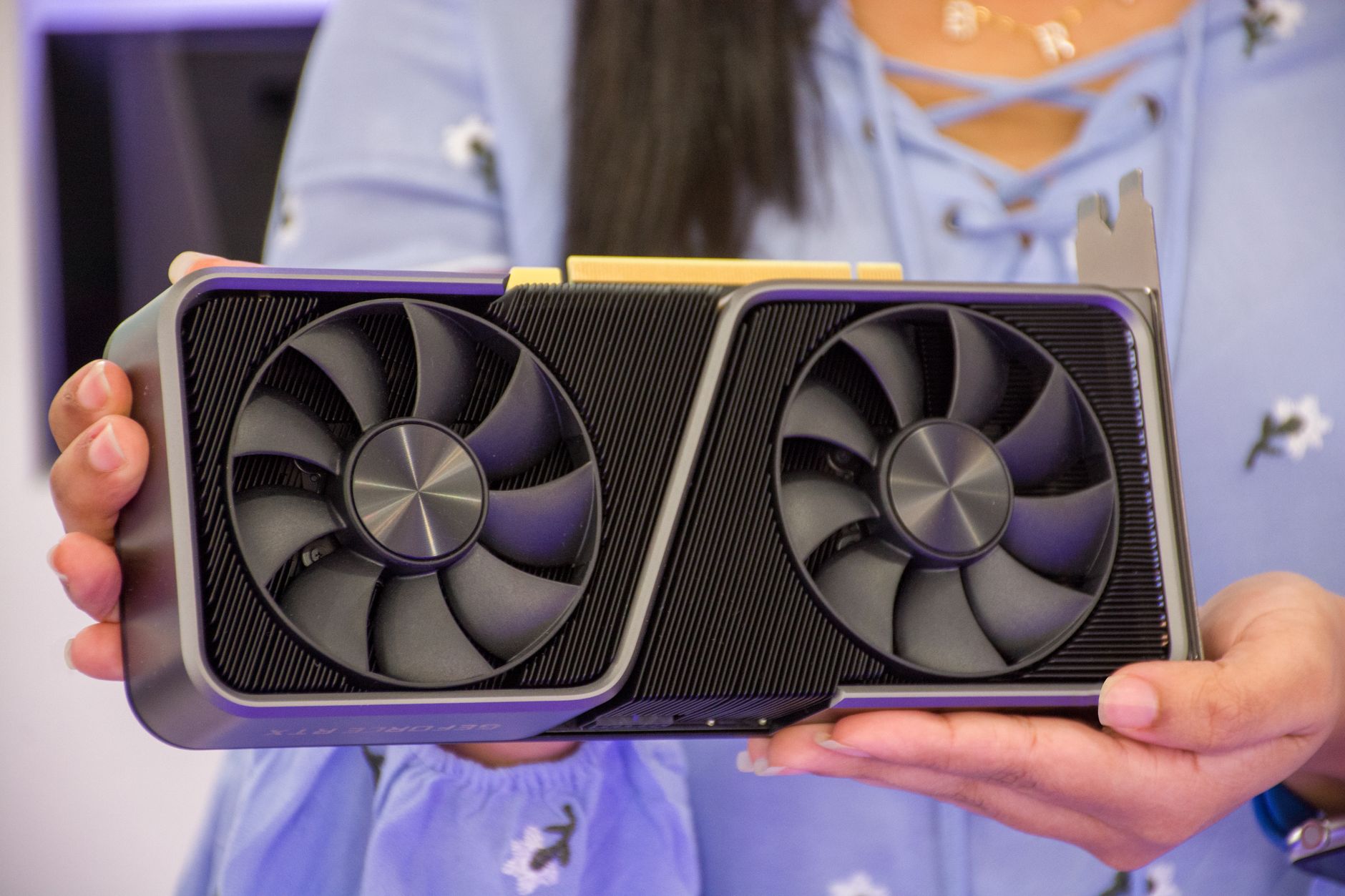
According to The Australian Financial Review, the company has left institutional investors waiting on the timing of its move onto the boards, with Nvidia’s role in the story looming as the swing factor. It is a familiar tension in AI infrastructure deals worldwide: the demand looks bottomless, but the ability to actually deliver hinges on securing the graphics processing units that make the whole thing run.
The context
Sharon AI sits in the part of the market often described as “neocloud”, a wave of specialist providers that buy or lease large fleets of Nvidia chips and rent that capacity to companies training and running AI models. It is a capital-hungry model. Operators must commit to expensive hardware and the data centre space, power and cooling to house it, often before they have locked in the customers who will ultimately foot the bill. The bet is that demand for compute keeps outrunning supply for years to come.
That thesis has minted enormous valuations offshore, from CoreWeave in the United States to a clutch of European and Middle Eastern challengers. Australian investors have watched much of that value creation from the sidelines, with the local bourse light on pure-play AI infrastructure names. A successful Sharon AI listing would give ASX fund managers a rare domestic vehicle to express a view on the AI build-out, which helps explain the level of interest, and impatience, around its debut.
The news
The immediate story is one of timing. Rather than a splashy first day of trade, Sharon AI has kept the market guessing on when, and on what terms, it will actually list. Delays in the AI infrastructure space are rarely about a single spreadsheet. They tend to reflect the hard mechanics of the sector: securing chip allocation, finalising power and site agreements, and pinning down the anchor customers and financing that make the numbers stack up for incoming shareholders.
Nvidia is central to all of it. The chip designer does not simply sell hardware into this market; it effectively decides who gets priority access to its most sought-after processors, and increasingly it takes stakes and strikes commercial arrangements with the very neocloud players it supplies. For a company like Sharon AI, the depth of its relationship with Nvidia is close to an existential question. Strong allocation and backing can underwrite a growth story that investors will pay up for. Uncertainty on that front can just as easily keep a float in the holding pattern.
Two ways to read it
Bulls will argue that the wait is a feature, not a bug. Getting a deal wrong in a hot sector, listing too early, at the wrong price, with shaky supply, can be far more damaging than taking the extra time to line everything up. On this view, patience signals discipline, and any company that can credibly point to secured Nvidia capacity and contracted demand is worth waiting for. The structural tailwind is real: global spending on AI data centres is running into the hundreds of billions of dollars, and someone has to own the picks and shovels.
The sceptics see something more cautionary. A delayed debut can be a tell that fund managers and the company cannot agree on price, and that the froth in AI valuations is meeting a more discerning public market. Neocloud economics remain unproven over a full cycle. Hardware depreciates quickly, customer contracts can be shorter than the assets that serve them, and the whole model is exposed to a single supplier’s pricing and priorities. If Nvidia’s roadmap shifts, or cheaper compute arrives, today’s premium multiples could look generous in hindsight. For these investors, a company that keeps the market waiting is one to scrutinise, not chase.
What it means for Australia
For Australia, the Sharon AI saga is a useful stress test of a much bigger ambition. Governments and industry have talked up the idea of “sovereign” AI capability, the notion that critical compute should sit onshore rather than being rented entirely from hyperscalers in other jurisdictions. Data centre construction is already one of the country’s fastest-growing infrastructure categories, drawing in superannuation money, offshore capital and energy suppliers alike. A listed local champion would give that narrative a public face, and give retail and institutional investors a way in.
It also sharpens questions the country has not fully answered. AI data centres are voracious consumers of power and water, and Australia’s grid is already navigating a difficult transition. Any large-scale compute build-out here runs straight into debates about electricity prices, renewable connection queues and where these facilities should be located. The more the sector grows, the more its fortunes become entangled with national energy policy, not just chip supply out of Silicon Valley.
There is a capital markets angle too. The ASX has been hunting for the kind of high-growth technology listings that have tended to gravitate to Nasdaq. Landing a credible AI infrastructure float would be a statement that Australia can host these companies, not just fund them from afar. A stumble, by contrast, would hand ammunition to those who argue the local market lacks the depth and the risk appetite for stories of this scale.
What’s next
The near-term watch items are straightforward to list, if not to resolve. Investors will be looking for clarity on Sharon AI’s Nvidia arrangements and chip allocation, hard detail on contracted customers and revenue, and a firm listing timetable and valuation range. Broader market conditions will matter as well. A wobble in global AI sentiment, or a heavy run of offshore neocloud news, could reset the terms on which any Australian debut proceeds.
For now, the fundies wait. Whether Sharon AI’s patience is read as prudence or as a warning sign will depend, more than anything, on what it can say about the chipmaker at the centre of the AI economy. In this market, the road to the ASX runs through Nvidia.
Update, 22 June 2026: Sharon AI kicks off ASX float as invitations go out
Update, 22 June 2026: The waiting appears to be over. Sharon AI has begun formally getting its long-flagged ASX listing away, with invitations to the raising now in the mail to prospective investors, according to The Australian Financial Review. After months of keeping fund managers guessing on timing, the move signals the company believes it now has enough of the picture (chip allocation, backing and demand) locked in to put a deal in front of the market.
The shift from holding pattern to active book-build matters because it turns the sector’s central question into a priced one. Institutions can no longer simply watch and wait: they will have to put a number on Sharon AI’s Nvidia arrangements, its contracted customers and the durability of neocloud economics over a full cycle. The terms of the raising, and how eagerly they are taken up, will be read as a live verdict on whether local investors are willing to pay up for a domestic AI infrastructure play, or whether the discipline of the public market clips the froth seen in offshore comparables.
For the ASX, this is the moment the sovereign-compute narrative gets a public face, or does not. A well-supported float would hand the local bourse the pure-play AI infrastructure name it has lacked, and bolster the argument that Australia can host these companies rather than merely fund them from afar. A soft reception would do the opposite. Either way, the story has moved from speculation about timing to the harder test of price and demand.
Sources: The Australian Financial Review. · GNews · AI + Aus banks