



















































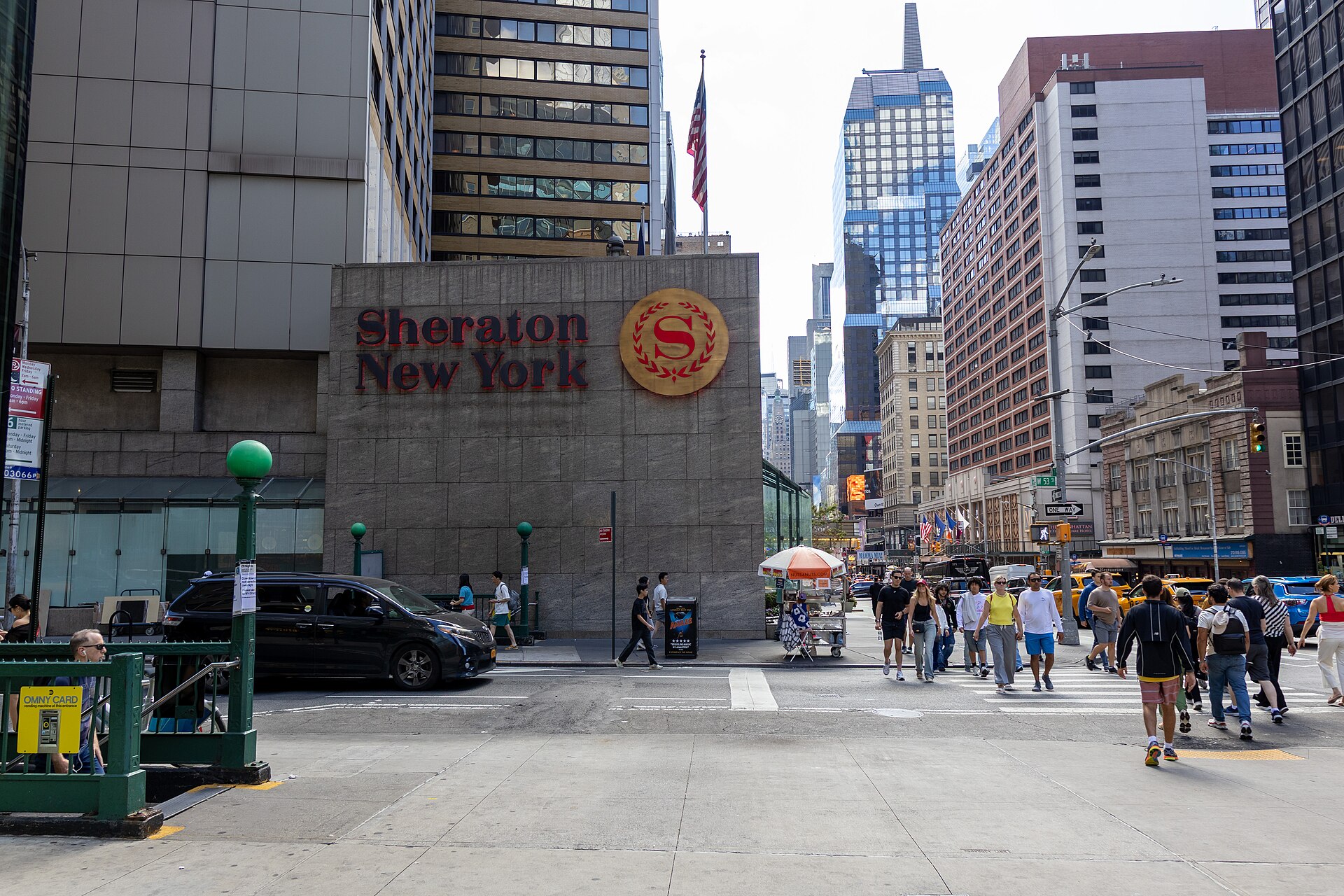
The front desk has long been the emotional centre of a hotel, the place where a weary traveller is greeted by name, handed a key and pointed towards the nearest decent coffee. That ritual is now being quietly reworked in Los Angeles, where the Sheraton Universal has introduced an artificial intelligence host called Rosa to field guest questions and smooth out the small frictions of a stay.
According to IT Brief Australia, the hotel, which sits a short walk from the Universal Studios theme park and draws a steady stream of international visitors, has positioned Rosa as a digital concierge that can answer guest queries, surface local recommendations and handle the routine requests that normally pile up at reception. It is a modest-sounding launch, but it lands at a moment when the global hospitality industry is treating AI less as a novelty and more as an operating decision.
What the launch actually involves
Rosa is not a humanoid robot wheeling through the lobby. It is a conversational AI layer that guests can tap into for the kind of information that used to require a phone call to the front desk or a wait in a queue: where to eat, how to get to the studios, what time the pool closes, whether a late checkout is possible. The appeal for an operator is obvious. A tool like Rosa works around the clock, never tires of the same question about parking, and frees human staff to deal with the complicated or emotionally charged situations that genuinely need a person.
It also fits a broader pattern. Marriott, the group that owns the Sheraton brand, has been investing heavily in digital guest services for years, and the wider sector has leaned into chat-based assistants, mobile check-in and app-driven room controls. Rosa is best understood as one more step along that path rather than a sudden leap, a controlled experiment in a flagship location where the results can be measured before anything is rolled out more widely.
Two ways of reading it
Supporters of this kind of deployment make a straightforward efficiency argument. Hotels run on thin margins and chronic staffing pressures, and a large share of guest interactions are repetitive and low-value. If an AI host can absorb that volume, the thinking goes, remaining staff can be redeployed to the moments that actually shape a guest’s memory of a stay, the warm welcome, the problem solved with grace, the local tip that turns an ordinary trip into a good one. On that reading, Rosa is not replacing hospitality but protecting it from being drowned in logistics.
The sceptical view is harder to wave away. Hospitality is, at its core, about being hosted by a person, and there is a real risk that guests experience an AalI concierge as a polite way of being kept at arm’s length. Travellers have grown wary of chatbots that loop endlessly without solving anything, and a hotel that routes too much through a machine may find it has traded away the very human touch that justified its room rate. There is also the question of accuracy. An AI host that confidently sends a guest to a restaurant that closed six months ago, or misreads a booking, does more damage to trust than a slightly slower human ever would.
Both readings can be true at once, which is why the Sheraton Universal launch is worth watching rather than cheering or dismissing. The outcome will depend less on the technology itself than on where the hotel draws the line between what Rosa handles and what stays firmly in human hands.
Why this matters for Australia
Australia has no Sheraton Universal, but it has exactly the conditions that make this experiment relevant. The domestic tourism sector has struggled with labour shortages since the pandemic, particularly in regional areas where seasonal demand collides with a shallow local hiring pool. Operators from the Gold Coast to the Barossa have been candid about the difficulty of staffing front-of-house roles, and an AI host that can cover overnight queries or peak-season overflow is a genuinely tempting proposition for a mid-sized Australian hotel or resort.
The pull is also commercial. Australia competes hard for international visitors against destinations across Asia and the Pacific, and inbound travellers increasingly expect the same slick digital self-service they get at home. A guest arriving from Singapore or Los Angeles who can message a hotel in their own language, at any hour, and get a useful answer is a guest more likely to rate the stay well and come back. For a tourism economy that leans heavily on reviews and word of mouth, that is not a trivial advantage.
But the Australian context carries its own cautions. Local hospitality has built much of its brand on an unpretentious, personable style of service, the easy chat at the bar, the staff member who remembers you from last year. Operators who import an AI host without protecting that character risk sanding off the thing that makes an Australian stay feel Australian. There is a regulatory dimension too. An AI concierge that collects guest questions, preferences and movements is handling personal information, and under the Privacy Act operators carry obligations around consent, storage and use that a flashy launch can easily gloss over.
What happens next
The honest answer is that the industry is waiting for numbers. Does Rosa lift guest satisfaction scores or quietly drag them down? Does it genuinely reduce the load on staff, or simply shift frustrated guests from a queue at the desk to a queue for a human once the AI has failed them? Marriott will be watching those metrics closely, and so will every rival chain, because a successful deployment in a high-profile property tends to become a template fast.
For Australian operators, the sensible posture is neither early adoption for its own sake nor reflexive resistance. The smarter play is to treat the Sheraton Universal launch as a live case study, to identify which guest interactions are safe to automate and which must stay human, and to invest in the governance and privacy scaffolding before the tool goes anywhere near a paying guest. The hotels that get this right will be the ones that use AI to buy back time for genuine hospitality, not the ones that mistake a chatbot for a welcome.
Sources: IT Brief Australia.


