



















































Fatigue has long been one of the hardest risks to manage on Australian roads, precisely because it creeps up quietly. A driver rarely announces the moment they stop being safe to be behind the wheel, and by the time a head droops or a vehicle drifts across a line, the dangerous window has usually already opened. That gap between the first signs of drowsiness and the obvious ones is exactly where fleet technology company Teletrac Navman says its latest product is aimed.
The company has rolled out an artificial intelligence fatigue sensor for fleets across Australia and New Zealand, pitching it as a way to give transport operators earlier warning that a driver is fading. According to IT Brief Australia, the system is designed to trigger alerts before the visible markers of tiredness worsen, shifting the intervention point from reactive to something closer to preventive. For an industry where the difference between a near miss and a fatality can be a matter of seconds, that repositioning is the whole pitch.
What the technology actually does
In-cab fatigue monitoring is not new. For years, fleets have used driver-facing cameras and sensors that watch for the classic signals, including prolonged eye closure, head nodding, yawning and lane drift. The limitation of those older systems is that they tend to fire once a driver is already in trouble, which leaves very little runway for a dispatcher or the driver to act. Teletrac Navman’s approach leans on machine learning to read subtler patterns earlier, so that a supervisor can get a heads-up while there is still time to intervene with a rest break, a route change or a conversation.
The commercial logic is straightforward. Fleet managers running dozens or hundreds of vehicles cannot personally watch every cab, and they are legally and morally exposed when a tired driver stays on the road. A tool that surfaces drowsiness earlier, and feeds it back into the same telematics platform operators already use for tracking, compliance and maintenance, slots neatly into existing workflows rather than adding another standalone system to manage.
Two ways to read the launch
From a road safety standpoint, earlier detection is hard to argue against. Fatigue is consistently identified as a major contributor to serious crashes involving heavy vehicles, and anything that narrows the window between a driver becoming impaired and someone noticing has obvious value. Safety advocates have long pushed for technology that treats fatigue as a predictable, manageable hazard rather than an act of individual willpower, and an AI sensor that nudges intervention earlier fits that philosophy.
There is a competing view, though, and it tends to come from drivers and the unions that represent them. In-cab cameras that watch a worker’s face for an entire shift raise legitimate questions about surveillance, data handling and trust. Transport workers have pushed back in the past against monitoring systems they see as treating them like suspects rather than professionals, and the concern sharpens when artificial intelligence is making judgements about a person’s physical state and feeding those judgements to an employer. The practical questions matter here. Who sees the footage, how long is it stored, whether it can be used in disciplinary processes, and whether a false positive can cost a driver money or standing. A fatigue tool that genuinely protects workers is a very different thing from one that simply documents them, and the design choices around consent and data governance are what separate the two.
The honest answer is that both readings can be true at once. The same sensor that prevents a crash can also become a point of friction if operators deploy it without bringing drivers along, which is why rollout and workplace culture often matter as much as the underlying algorithm.
Why this lands differently in Australia
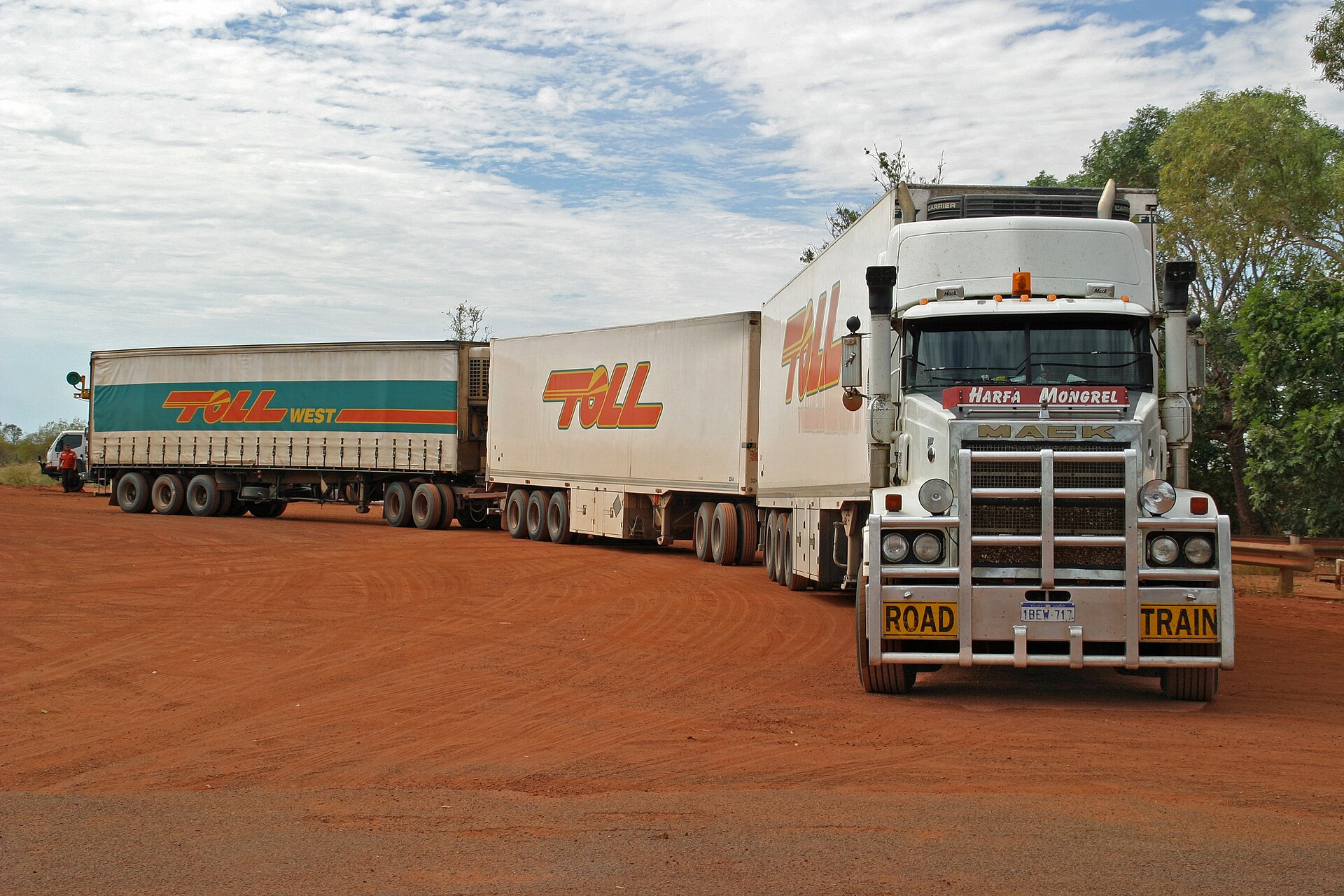
Australia is close to a worst-case environment for fatigue, and that is not a criticism of its drivers so much as a fact of its geography. Freight here moves across enormous distances, often through remote stretches where stopping is inconvenient and help is far away. Road trains haul goods along corridors that can run for days, and a tired driver on a single-lane highway in the outback carries a risk profile that has no real equivalent in denser, more urban freight markets. The country’s reliance on road transport for everything from supermarket stock to mining supplies means fatigue is not a niche logistics problem, it is a supply chain and public safety issue.
The regulatory backdrop reinforces the point. Under Chain of Responsibility provisions overseen by the National Heavy Vehicle Regulator, liability for safety does not stop at the driver. Operators, schedulers and even consignors can be held accountable when fatigue management fails, which gives businesses a direct financial and legal incentive to adopt tools that demonstrate they are actively managing the risk. In that context, an AI fatigue sensor is not just a safety upgrade, it is also evidence an operator can point to when regulators ask what steps were taken. That dual role, protecting lives and protecting against liability, is a large part of why fleet technology sells as well as it does in this market.
There is also a workforce angle that Australian operators cannot ignore. The transport sector has struggled with driver shortages and an ageing workforce, and heavy-handed surveillance risks making an already tough job less attractive. The firms most likely to see a return on this kind of technology will be the ones that frame it as support for drivers rather than scrutiny of them, pairing the sensor with genuine fatigue policies, realistic schedules and the ability to actually take a break when the system flags one.
What happens next
The immediate test is adoption. Fleet operators are cautious buyers, and they will want to see that earlier alerts translate into fewer incidents rather than simply more notifications for already stretched dispatch teams. Expect scrutiny of how the AI performs in real conditions, including how often it cries wolf, how it handles diverse drivers and lighting, and whether it holds up across the long, monotonous hauls where fatigue is most dangerous.
Beyond this single product, the launch is another data point in a broader shift. Artificial intelligence is steadily moving from the back office into the cab, the warehouse and the depot, and fatigue monitoring is one of the more defensible early use cases because the safety upside is concrete. The question Australian operators, drivers and regulators will keep returning to is not whether the technology works, but whether it is deployed in a way that earns trust. On that front, the next twelve months of real-world use will tell a far more convincing story than any launch announcement.
Sources: IT Brief Australia.


