




























Australian universities have spent years defending the practical worth of their research, and a fresh crop of awards finalists suggests the message is starting to land. Among the projects shortlisted in a national higher education awards program are an artificial intelligence system built to detect and predict fire risk, and technology developed to manage and restore native rivers, two very different ideas united by a common ambition: to take laboratory work and make it matter on the ground.
The shortlisting, reported by The Australian, places AI-driven fire safety alongside native river technology as examples of the kind of work the sector wants to be judged on. It is a telling pairing. One project speaks to a country that lives with the constant threat of bushfire, the other to the long, unfinished business of caring for waterways that have been degraded over two centuries of settlement. Both lean on data, sensing and modelling, and both are being positioned not as academic curiosities but as tools that could change how agencies and communities respond to risk.
Why the categories matter
Awards in the higher education sector can look, from the outside, like industry back-slapping. In practice they do something more useful. They signal what universities believe the public and their funders value, and they reward the researchers who have managed to carry an idea from a journal paper into something that works in the field. The presence of applied AI in fire safety is a case in point. For much of the past decade, Australian fire agencies have relied on satellite imagery, weather modelling and on-the-ground reports to gauge danger. Adding machine learning to that mix promises faster detection of ignition, sharper prediction of how a fire might spread, and earlier warning for the people in its path.
The native river work points in a different but equally practical direction. Managing waterways is a problem of enormous complexity, drawing in hydrology, ecology, water quality and, increasingly, Indigenous knowledge of how rivers were cared for long before European arrival. Technology that can monitor conditions, model flows and help restore natural systems sits squarely in the territory where science, environmental policy and community interest meet.
Two ways of reading the shortlist
Supporters of applied research will see the finalists as vindication. For years the argument inside universities has been that Australia is good at discovery but poor at translation, producing world-class science that too often ends up commercialised overseas or not at all. Projects that reach the pointy end of a bushfire season or the bank of a struggling river are exactly the proof points that case needs. They also help justify public investment at a time when every research dollar is contested, and they give vice-chancellors a concrete answer when politicians ask what the money actually buys.
There is a more cautious reading. Shortlists reward the projects that have already found momentum, and plenty of equally promising work never gets that far because it cannot clear the funding and commercialisation hurdles in between. Critics of the sector’s current settings point out that a glossy awards night does little to fix the structural problem, namely that Australia still struggles to turn its research into enduring local companies and jobs. The worry is that a fire-safety algorithm or a river-monitoring platform could be celebrated here and then scaled up somewhere with deeper pools of venture capital. The awards, in other words, show what is possible, not that the pipeline behind them is healthy.
The Australian stakes
Few countries have as much riding on fire-safety technology as Australia. The Black Summer of 2019 and 2020 remains a national reference point, and every season since has brought reminders that the threat is intensifying rather than receding. AI that can shorten the gap between ignition and alert, or give incident controllers a better read on where a blaze is heading, is not an abstraction. It is the difference between an evacuation that beats the fire and one that does not. That gives this category of research a weight it would not carry in most other markets, and it makes the case for local development, local data and local control especially strong.
River technology carries its own national significance. The health of systems such as the Murray-Darling has been one of the country’s most divisive policy fights, pitting irrigators against environmentalists and upstream states against those downstream. Tools that bring better data and modelling to the argument, and that take Indigenous land and water management seriously rather than as an afterthought, could help shift those debates onto firmer ground. For a continent that is both the driest inhabited one on earth and prone to devastating floods, getting water management right is close to an existential question.
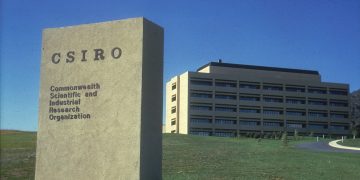
There is also a sovereignty angle that has become harder to ignore. As AI capability becomes central to everything from emergency response to resource management, there is growing appetite in Canberra and the states for keeping critical systems, and the skills behind them, onshore. Research that proves itself in Australian conditions, built by Australian institutions and increasingly in partnership with bodies such as the CSIRO, feeds directly into that ambition.
What happens next
The immediate question is whether the finalists go on to win, but the more important one is what follows the recognition. A place on a shortlist can open doors to industry partners, government pilots and the kind of funding that turns a prototype into a deployed system. The fire-safety project will ultimately be judged not by a panel but by how it performs when the temperature climbs and the wind turns. The river work will be measured over years, in water quality readings and the slow return of degraded systems.
For the sector as a whole, the shortlist is a reminder that the most compelling AI stories in Australia are not always the ones about chatbots and valuations. They are the ones where the technology meets a problem the country cannot afford to get wrong. If universities can keep carrying work from the lab to the field, and if the funding and commercialisation gaps that sit in between can be narrowed, the pairing of fire-safety AI and native river tech may come to look less like an awards curiosity and more like a template.
Sources: The Australian.