



































For most of the past half-century, the story we told ourselves about automation ran in one direction. Machines came for the factory floor, the loading dock and the assembly line, while the office, the classroom and the professions were assumed to be safe behind a wall of human judgement. A new analysis of how artificial intelligence is reshaping Australian work suggests that comfortable assumption has been quietly turned on its head.
According to a report covered by The Guardian, the workers most exposed to generative AI in Australia are not the ones the old scripts predicted. They are women and university graduates, concentrated in the clerical, administrative and knowledge-heavy roles that large language models are proving unexpectedly good at. It is a finding that lands awkwardly against years of policy framing built around retraining tradespeople and protecting manufacturing jobs.
Why the exposure has shifted
The logic is not hard to follow once you look at what today’s AI systems actually do well. Generative models excel at drafting, summarising, classifying, scheduling and pattern-matching across text and data. Those are precisely the tasks that fill the working day for administrative officers, HR coordinators, paralegals, junior analysts, marketers and a long list of graduate professionals. They are also, in the Australian labour market, tasks performed disproportionately by women, who make up the bulk of the clerical and administrative workforce.
University graduates sit in the firing line for a related reason. A degree has long been treated as insurance against automation, on the theory that cognitive work is harder to mechanise than manual work. The current wave of AI inverts that assumption. It is the routine cognitive work, the memo, the first-draft contract, the spreadsheet reconciliation, that automates most readily, while jobs requiring physical dexterity, on-site presence and improvisation in unpredictable environments have so far proved stubbornly resistant. An electrician crawling through a roof cavity is, for now, far harder to replace than a graduate summarising documents in an open-plan office.
Two ways to read the numbers
Exposure, though, is not the same as displacement, and this is where the debate gets genuinely interesting. One reading of the analysis is alarming: if the roles most saturated with AI-friendly tasks are held by women and recent graduates, then the benefits and the pain of the transition will fall unevenly, potentially widening a gender gap that Australian workplaces have spent two decades trying to narrow. Entry-level graduate positions are a particular worry, because those roles often exist partly to give young workers a foot in the door. If AI absorbs the grunt work that juniors once cut their teeth on, the bottom rung of the professional ladder starts to look rickety.
The more optimistic reading is that exposure often means augmentation rather than elimination. A worker whose tasks overlap heavily with AI capabilities may find the technology doing the tedious 30 per cent of their job, freeing them for the parts that still require a human. On this view, the graduate who once spent Monday mornings formatting reports gets to spend that time on analysis, client work or judgement calls that the model cannot make. Whether that rosier outcome actually materialises depends less on the technology and more on how employers choose to redesign roles, and on whether the productivity gains are shared with workers or simply banked.
It is worth noting that the picture is contested even within Australian officialdom. Earlier analysis from the Department of Employment and Workplace Relations concluded that AI is not, at least not yet, driving measurable job losses across the economy, a finding FluentSea has covered previously. The tension between that reassurance and this latest report captures the honest state of the evidence: exposure is real and measurable, but the translation of exposure into unemployment is slow, uneven and heavily mediated by human decisions.
What it means for Australia
For a country that has leaned hard on services, finance, education and public administration as engines of employment, the stakes here are not abstract. These are the sectors that have soaked up graduates for a generation, and they are exactly the sectors the report flags as most exposed. Australia’s universities, already under financial and political pressure, now face an uncomfortable question about what they are preparing students for. If the first job that a commerce or arts graduate would traditionally land is the one most vulnerable to automation, the value proposition of a degree needs a sharper answer than it currently has.
There is a gender-equity dimension that Australian policymakers cannot afford to treat as a footnote. Women’s workforce participation and pay have improved slowly and hard-won, and a shock that lands hardest on female-dominated occupations risks unwinding some of that progress. That makes the design of the transition a matter of national interest, not just corporate HR policy. It argues for targeted reskilling that reaches administrative and clerical workers rather than defaulting, as programs often do, to the stereotype of the displaced factory worker.
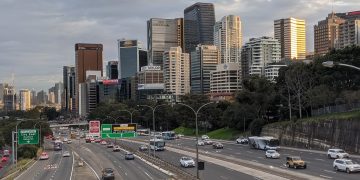
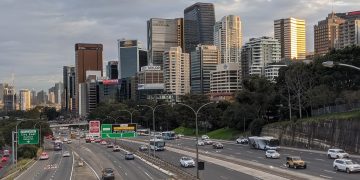
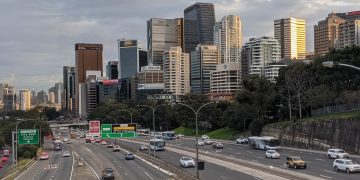
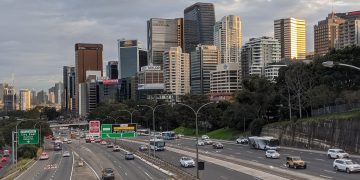
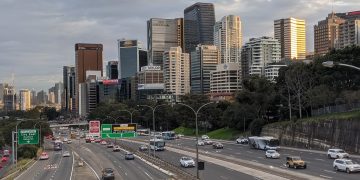
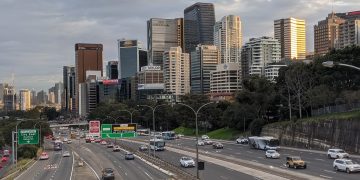
The regional and structural picture matters too. Much of Australia’s AI-exposed employment is clustered in the capital-city CBDs of Sydney, Melbourne and Brisbane, where knowledge work concentrates. A disruption to office employment therefore has knock-on effects for city economies, commercial property and the cafes and services that depend on office foot traffic. This is not a niche labour-market story; it touches the shape of urban Australia.
What happens next
The near-term test is whether Australia’s response matches the specificity of the problem. Blanket reassurances that AI creates as many jobs as it destroys are cold comfort to a 24-year-old graduate watching entry-level postings thin out. Equally, panicked predictions of mass unemployment are not supported by the current data. The useful middle path involves better measurement of which tasks are actually being automated, faster and more targeted reskilling, and a genuine conversation about how the productivity dividend is distributed.
The federal government’s growing appetite for AI policy, including its work on a national framework and a dedicated office for AI, gives it the machinery to act. The question is whether that machinery will focus on the workers this report identifies, or whether it will keep fighting the last war. For now, the most valuable thing the analysis does is force a rethink. The safest job in the age of AI may not be the one with the most letters after your name, and that alone should reshape how Australia talks about the future of work.
Sources: The Guardian.