

















































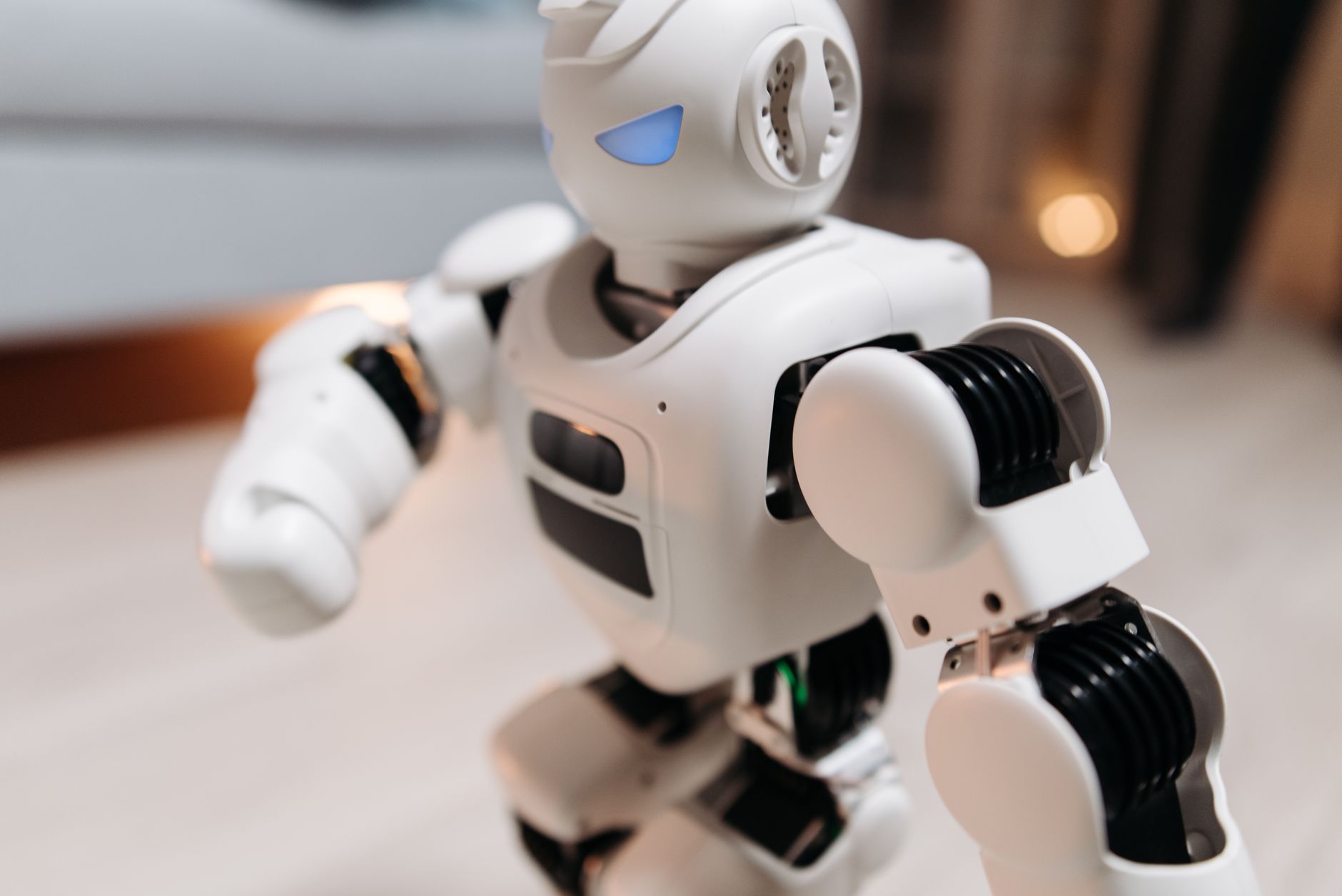
Embodied artificial intelligence, the branch of the field that puts algorithms inside machines that move through the physical world, has spent the past two years graduating from research demos to something closer to a product line. Now that shift is arriving on Australian shores. A dispatch from Chinese state news agency Xinhua reports that a Chinese embodied AI firm is expanding its applications across sectors in Australia and New Zealand, extending the reach of its robots into workplaces on both sides of the Tasman.
The framing matters as much as the news. Xinhua is an arm of the Chinese state, and its business coverage tends to present the international growth of Chinese technology companies as a success story worth telling. That does not make the underlying development untrue. Chinese firms genuinely lead much of the world in the hardware side of embodied AI, from the actuators and battery systems inside a walking robot to the manufacturing scale that lets them build the things cheaply. It does mean Australian readers should treat the report as the opening move in a commercial expansion, not a neutral audit of it.
What embodied AI actually does
For most of the past decade, the AI that captured public attention lived on a screen. It answered questions, wrote code and generated images. Embodied AI is the attempt to give those same learning systems a body, so that a machine can perceive a room, plan a path and manipulate objects without a human scripting every step. The category spans quadruped robots that scramble over uneven ground, wheeled units that ferry stock around a warehouse, and the humanoid platforms that have become the sector’s showpiece. What unites them is software that adapts to the mess of the real world rather than a fixed factory line.
The commercial logic for pushing this technology into Australia is not hard to follow. The sectors most often named as early adopters, logistics, retail, hospitality, aged care, agriculture and mining, are precisely the ones where Australian employers report the deepest and most persistent labour shortages. A robot that can restock shelves overnight, move pallets in a distribution centre, or carry out repetitive inspection work in a mine site is being pitched not as a replacement for a full workforce but as a way to cover shifts that go unfilled. For a Chinese firm looking to prove its systems outside its home market, an advanced, English-speaking, high-wage economy such as Australia is an attractive shop window.
Two ways to read the expansion
The optimistic case treats this as ordinary and welcome. Australia has never manufactured robots at scale, and it is unlikely to start now. Buying capable, competitively priced automation from wherever it is best made is how the country has always equipped its farms, ports and factories. On this view, a Chinese embodied AI firm setting up local applications is no different in principle from Australian businesses running German machine tools or Japanese industrial robots for decades. If the machines lift productivity in industries that are short of workers, the argument goes, the origin of the supplier is a secondary concern.
The cautious case starts from the same facts and reaches a more guarded conclusion. Australia has already lived through one bruising debate about Chinese technology in sensitive infrastructure, when Huawei was blocked from the national broadband and later the 5G rollout on national security grounds. Embodied AI raises a related set of questions in a new form. These robots carry cameras, microphones and sensors, they map the interiors of workplaces, and they typically depend on software and updates delivered from the vendor. Where that data goes, who can see it, and how much a critical operation would depend on a foreign supplier for spare parts and patches are all live concerns, particularly if the machines end up in logistics hubs, ports or aged-care facilities. Chinese national security laws that can compel companies to cooperate with the state sit in the background of every such deployment.
The Australian stakes
This lands at a pointed moment in Australia’s own AI story. Canberra has spent the past year standing up an Office of AI and debating what sovereign capability should mean, while data-centre operators and cloud providers argue over whether the country is building its AI future or merely hosting someone else’s. Embodied AI adds a physical dimension to that debate. Software sovereignty is one thing, but if the robots that come to move goods and tend to people are designed, built and remotely maintained offshore, the dependence is harder to unwind than a cloud contract.
There is also a competitive angle that cuts the other way. Australia has a genuine, if small, robotics and autonomy sector, with companies such as Brisbane’s Emesent in autonomous mapping and a research base in the CSIRO and universities that punches above its weight. A wave of cheap, capable imported robots could either smother that homegrown effort or, more hopefully, seed a services layer of local integrators, safety specialists and software firms that adapt foreign hardware to Australian conditions and regulations. Which of those outcomes prevails depends heavily on how governments and large buyers choose to procure.
Regulation is the missing piece. Australia does not yet have a settled framework for physical AI operating alongside people in workplaces. Questions of workplace safety, liability when an autonomous machine causes harm, data handling and foreign investment review all apply, but they are scattered across agencies rather than gathered into anything resembling a robotics policy. The arrival of a well-resourced foreign entrant tends to force those questions into the open faster than a domestic rollout would.
What’s next
Expect the near term to be about pilots rather than fleets. Embodied AI still struggles with the long tail of edge cases that a human handles without thinking, and Australian workplaces, unions and insurers will want evidence before signing up at scale. The more telling signals to watch are which specific sectors move first, whether any deployments touch critical infrastructure that would draw the attention of the Foreign Investment Review Board or national security agencies, and whether Australian firms position themselves as partners and integrators rather than bystanders. The technology is coming either way. The open question is how much of the value, and how much of the control, stays onshore.
Sources: Xinhua, via Google News.


