

































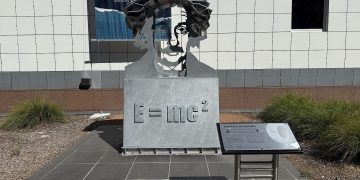












Adelaide’s Flinders University has moved to stake out new ground in Australian business education, announcing what it describes as the country’s first Master of Business Administration built specifically around artificial intelligence. The launch, reported by MBA News Australia, positions the university as an early mover in a market where AI literacy is fast becoming a boardroom expectation rather than a nice-to-have.
The context
The MBA has long been the default credential for ambitious managers, but the format has faced sustained criticism for lagging behind the technologies reshaping the industries its graduates go on to run. Generative AI, in particular, has forced a rethink. Tools that can draft strategy memos, model financial scenarios and summarise legal contracts in seconds have unsettled assumptions about what a well-paid knowledge worker actually does, and, by extension, what a business school should teach.
Australian universities have responded in fits and starts. Most have bolted AI electives onto existing programs, run short executive courses, or updated data-analytics units to mention machine learning. A degree built from the ground up around artificial intelligence is a bolder proposition, and it is that framing, a dedicated AI MBA rather than a traditional MBA with an AI flavour, that Flinders is leaning on to differentiate itself.
The news
According to the report, Flinders is pitching the qualification as Australia’s first of its kind: an MBA in which artificial intelligence is the organising theme rather than a single subject. The intent, broadly, is to produce managers who can evaluate where AI genuinely adds value, oversee its deployment responsibly, and lead teams through the disruption that follows, without necessarily needing to write code themselves.
That distinction matters. The shortage in most Australian organisations is not data scientists, who command premium salaries and cluster in a handful of firms, but managers who understand enough about AI to ask the right questions, manage the risks and avoid being sold hype. A program aimed squarely at that gap is a reasonable read of where demand is heading.
Two ways to see it
Supporters of the approach argue that embedding AI across a whole degree is exactly what the moment calls for. The technology is not confined to the IT department; it touches procurement, marketing, HR, finance and customer service all at once. On that view, teaching AI as a standalone elective understates how thoroughly it is reshaping day-to-day management, and a purpose-built program signals that a university is taking the shift seriously rather than papering over an ageing curriculum.
Sceptics will counter that the fundamentals of good management, judgement, ethics, communication, financial discipline, do not change because a new tool arrives, and that dressing an MBA in AI branding risks chasing a trend that could date quickly. There is also a genuine question about shelf life: the specific tools and platforms taught this year may be superseded within the length of a part-time degree. The test for any AI MBA will be whether it teaches durable capability, how to reason about automation, data and risk, or merely how to prompt whichever chatbot happens to be popular. Flinders, like its eventual rivals, will be judged on which side of that line it lands.
What it means for Australia
For Australia, the launch lands at a pointed moment. Successive reports have warned that the country risks being a taker rather than a maker of AI, importing the technology while lagging on the skills to deploy it well. The Productivity Commission and industry groups have repeatedly flagged AI as a potential lever for lifting Australia’s stubbornly weak productivity growth, but only if managers and organisations know how to use it. Training that targets the management layer, not just the technical one, speaks directly to that bottleneck.
There is a South Australian dimension too. Adelaide has spent years trying to reposition itself as a technology and defence hub, anchored by the AUKUS submarine program, a growing space sector and a cluster of cyber and AI firms around Lot Fourteen. A local university producing AI-literate business leaders feeds that ambition, potentially helping the state retain graduates who might otherwise drift to Sydney or Melbourne, or overseas, in search of relevant work.
The move also puts pressure on the sandstone universities and the larger business schools, several of which market their MBAs as national flagships. If a mid-sized South Australian institution can credibly claim first-mover status on AI, expect rivals in the eastern states to accelerate their own offerings. Competition of that kind tends to benefit students, who gain more options, and employers, who gain a deeper pool of managers comfortable with the technology.
The catch
Enthusiasm should be tempered with realism. Being first is not the same as being best, and the value of any MBA ultimately rests on teaching quality, the calibre of the cohort and whether employers respect the credential. AI-branded programs also carry a reputational risk: if the content proves thin or quickly dated, the label could invite scepticism rather than confidence. Prospective students would be wise to look past the marketing to the actual units, the expertise of the staff delivering them and the industry partnerships behind the degree.
What’s next
The immediate questions are practical. How many students will Flinders enrol in the first intake, and who are they, early-career professionals, or established managers retooling mid-stream? What will employers make of the qualification when graduates start appearing on résumés? And how quickly will other Australian universities respond with competing programs of their own?
The broader story is about whether business education can keep pace with a technology that is moving faster than most curricula are designed to accommodate. Flinders has planted a flag. Whether an AI MBA becomes a genuine category, or a passing bit of branding, will be settled not at launch but a few years down the track, when the first cohort is in the workforce and the results can be measured. For now, the bet is that Australia’s next generation of managers will need to lead alongside artificial intelligence, and that the classroom is where that leadership should start.
Sources: MBA News Australia.