

















































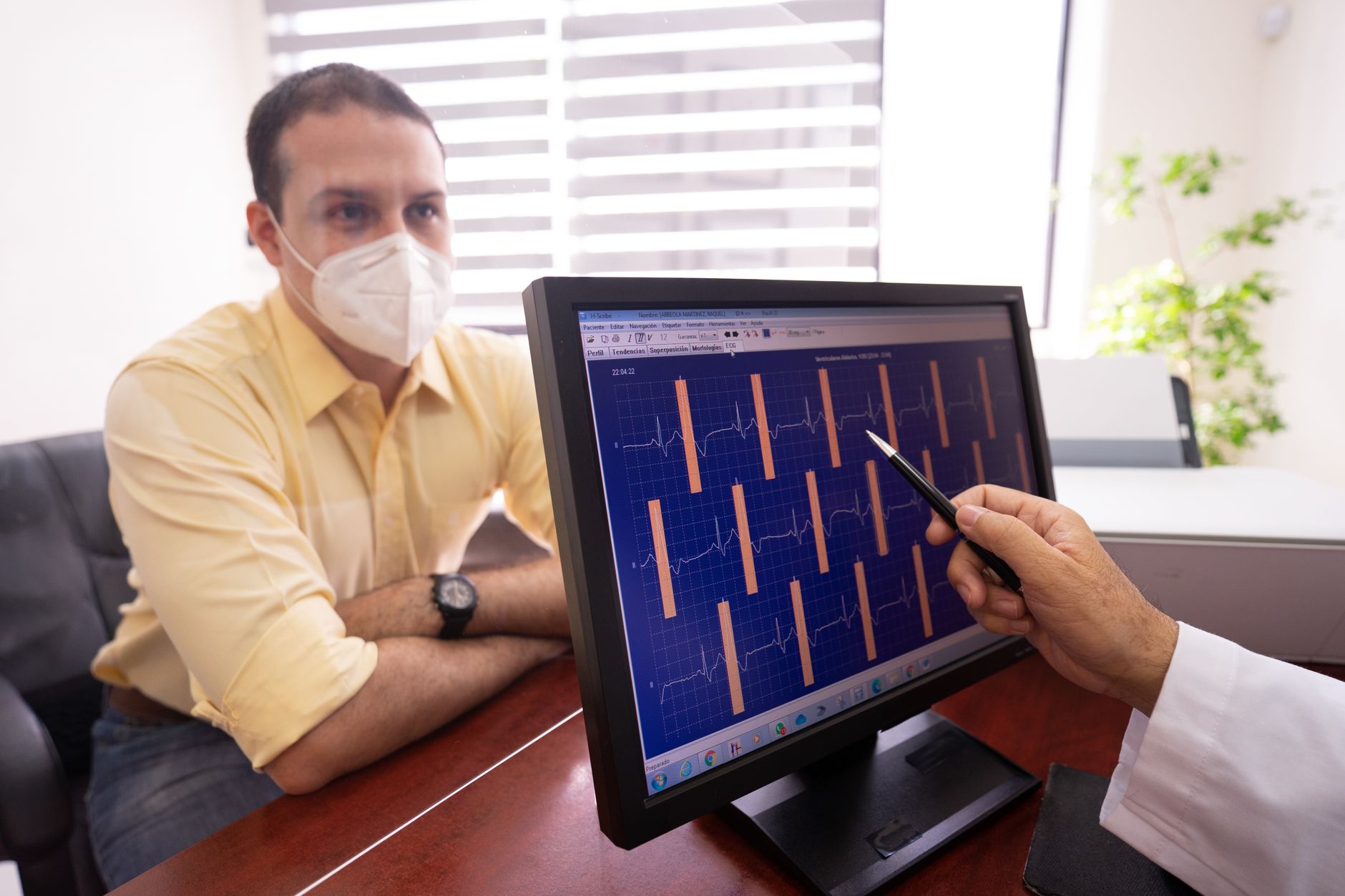
Heart disease remains the single biggest killer in Australia, and it often hides in plain sight. Conditions such as aortic stenosis and other structural heart problems can progress quietly for years, showing up in an echocardiogram that a busy clinician may read differently to a specialist down the hall. That gap between the data captured and the diagnosis made is exactly where a small Australian medtech is trying to build a business.
EchoIQ, listed on the ASX under the ticker EIQ, has been steadily assembling the pieces of an artificial intelligence platform aimed squarely at cardiology. According to reporting via Kalkine, the company is channelling a combination of new funding and healthcare partnerships into scaling that platform, the twin ingredients any clinical AI outfit needs to move from promising pilot to something hospitals will actually pay for and rely on.
What EchoIQ is actually building
The core idea is deceptively simple. Echocardiography, the ultrasound imaging of the heart, generates a rich stream of measurements about how the heart is pumping and how its valves are behaving. EchoIQ’s software is designed to sift through that data and flag patients who may have serious structural heart disease, giving clinicians a decision-support prompt rather than replacing their judgment. The pitch is that a machine trained on large volumes of echo data can pick up subtle patterns that point to disease earlier, and more consistently, than screening that depends on how stretched a particular clinic happens to be on a given day.
That places EchoIQ in a category regulators and investors have grown more comfortable with over the past few years: AI as a triage and detection aid that surfaces at-risk patients for a specialist to confirm. The value proposition is catching people who would otherwise slip through, because early detection of something like aortic stenosis can be the difference between a manageable intervention and a medical emergency.
Funding and partnerships matter here in a way that goes beyond the usual startup runway story. Clinical AI lives or dies on two things: access to enough real-world data to prove the model works across diverse patients, and the willingness of health systems to embed the tool into existing workflows. Hospital partnerships deliver both. They open the door to the imaging data that trains and validates the software, and they create the reference sites that turn a regulatory clearance into commercial traction.
Two ways to read the story
The bullish case is that EchoIQ is doing exactly what a maturing medtech should. Rather than chasing a splashy consumer launch, it is quietly stacking the unglamorous assets that make a diagnostic company defensible: validation studies, clinical relationships, and the regulatory groundwork that competitors cannot shortcut. If the platform proves it can lift detection rates without drowning clinicians in false positives, the addressable market is enormous, because echocardiography is one of the most common cardiac tests performed worldwide.
The more cautious reading is that the AI cardiology field is getting crowded, and the moat is narrower than the enthusiasm suggests. Global players and well-funded American startups are chasing the same structural heart disease opportunity, and larger imaging and device companies can bolt similar capabilities onto hardware they already sell into hospitals. For a company of EchoIQ’s size, the risk is not that the technology fails to work, but that it works while a better-capitalised rival captures the distribution. Reimbursement is the other perennial hurdle. A tool can be clinically excellent and still struggle commercially if health systems have no clean way to pay for it, and that question tends to be answered slowly, market by market.
Why this matters for Australia
For Australia, EchoIQ is a useful test of whether the country can turn its medical research strength into listed, exportable companies rather than watching the intellectual property drift offshore. The local sector has quietly become one of the more interesting corners of the AI story. On the ASX alone, EchoIQ sits alongside names such as Artrya, which is also chasing AI-assisted heart disease detection, and imaging players like ImexHS, while private companies including Heidi Health have vaulted into unicorn territory on the strength of clinical AI. The pattern is consistent: Australia’s teaching hospitals, universities and clinician base produce credible medical AI, and the open question is whether that translates into durable businesses.
There is a national health angle too. Cardiovascular disease costs the Australian health system billions each year and hits regional and remote communities hardest, precisely the places where specialist cardiology is thinnest. A screening tool that helps a general clinic flag a patient for a specialist review, without needing a cardiologist physically present, speaks directly to the tyranny of distance that shapes so much of Australian healthcare. Whether EchoIQ’s platform ends up deployed that way will depend on how it clears the Therapeutic Goods Administration and equivalent overseas regulators, and how it is funded once it reaches the clinic.
For ASX investors, the company also fits a broader appetite for AI exposure that is not simply a bet on offshore chipmakers and hyperscalers. Local medtech offers a way to back the technology through a domestic, regulated, revenue-seeking business, though the same investors will be watching cash burn and the path to recurring revenue closely, because clinical adoption cycles are measured in years, not quarters.
What to watch next
The near-term signals worth tracking are concrete. Any regulatory clearances in Australia and abroad will set the ceiling on where the platform can be sold. New hospital or health-network partnerships, especially ones that convert into paid deployments rather than research collaborations, will show whether the technology is moving from validation to genuine commercial pull. And the numbers behind the funding, how much has been raised and how far it stretches, will determine how aggressively EchoIQ can compete against deeper-pocketed rivals before it needs to return to the market.
The larger arc is familiar to anyone watching Australian AI: a technically credible local company, a real clinical problem, and a global field crowding in at the same time. EchoIQ’s task is to prove that being early and Australian is an advantage rather than a footnote, and the next stretch of funding announcements and partnership deals will tell that story faster than any pitch deck.
Sources: Kalkine, via GNews (ASX 200 + AI).