
























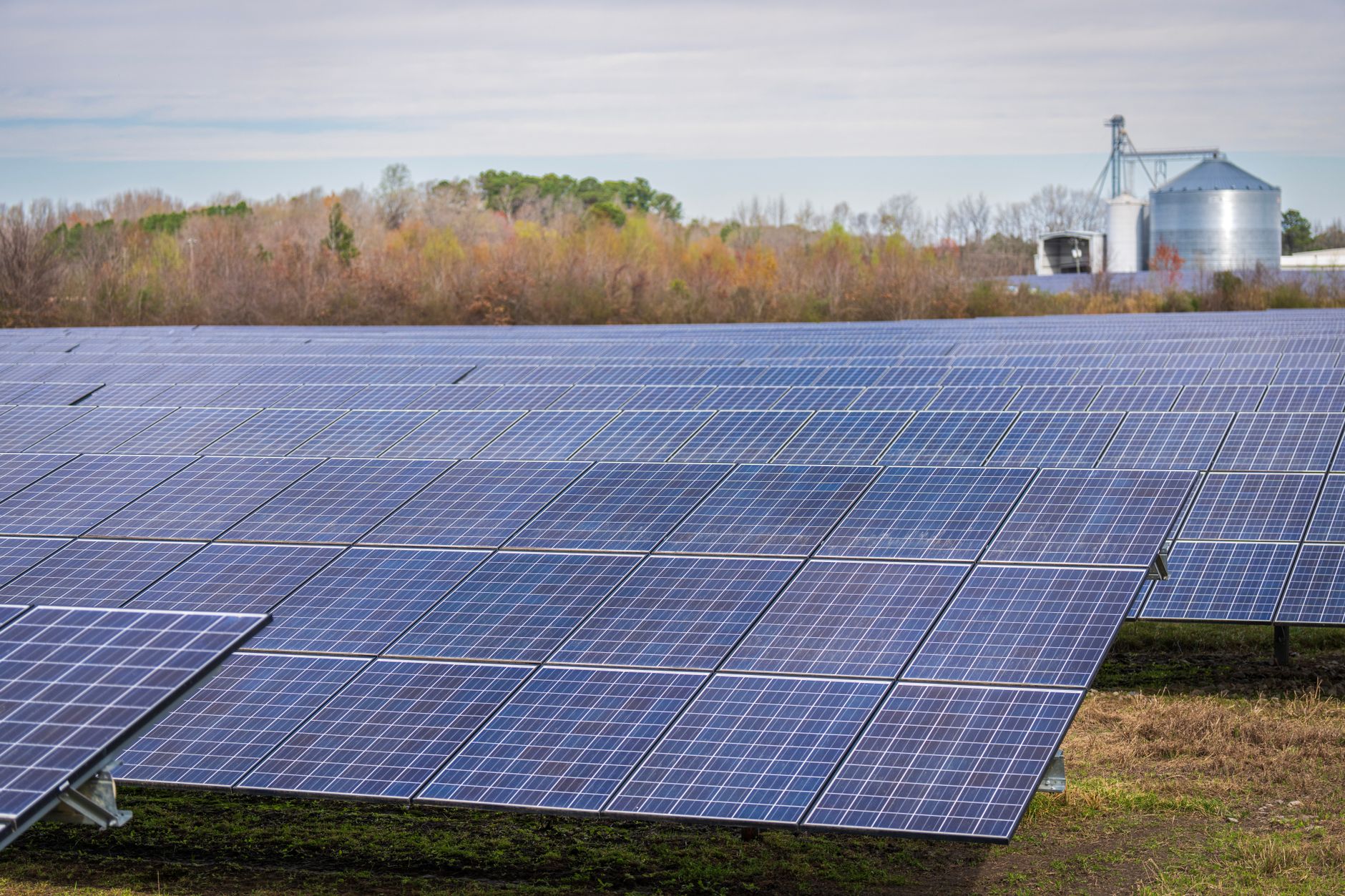
The two companies most responsible for Australia’s fast-growing cloud footprint have taken another step to power it with sunshine. Google and local data centre giant AirTrunk have brought a 25 megawatt solar farm online in Australia, a project that lands at the exact moment the industry is scrambling to explain how it will keep the lights on for artificial intelligence.
Reported this week by AsiaTechDaily, the milestone is modest in raw megawatts but heavy in symbolism. It ties Google’s clean-energy procurement in Australia directly to AirTrunk, the Sydney-founded hyperscale operator that has become the physical landlord for much of the AI boom in this part of the world.
The news
At its simplest, a 25 MW solar farm is enough capacity to supply the equivalent of several thousand homes during peak daylight generation. In data centre terms it is a single building block, not a whole grid. But the significance lies in who is behind it and why. Google has spent years signing power purchase agreements to match its Australian electricity use with renewable generation, part of a global pledge to run on carbon-free energy around the clock. AirTrunk, for its part, has publicly committed to powering its campuses with renewables and has struck a series of solar and wind deals across the country.
Bringing this particular project to commercial operation matters because it moves a contract off a press release and onto the grid. In an industry where announced pipelines routinely dwarf what is actually generating electrons, a farm that is genuinely exporting power is worth more than a hundred memorandums of understanding. It is also a signal to regulators, investors and rival operators that the renewables-for-AI model can be built and switched on, not just promised.
Where it fits in the build-out
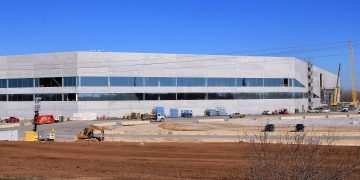
AirTrunk operates some of the largest data centre campuses in the Asia-Pacific, with major sites in Sydney and Melbourne and a growing footprint across the region. The company was founded by Robin Khuda and was acquired last year in a landmark deal led by Blackstone that valued it at roughly A$24 billion, one of the largest infrastructure transactions in Australian history. That price tag was, in effect, a bet on AI-driven demand for computing space and the power to run it.
Google is one of AirTrunk’s marquee customers, leasing capacity to run cloud and AI services for Australian businesses and consumers. So a solar project that connects the two is less a one-off and more a template: the tenant that needs clean power and the landlord that needs to supply it, jointly underwriting new renewable generation rather than simply drawing from an increasingly stretched grid.
The context is a build-out moving at speed. Data centre capacity in Australia has been expanding rapidly as global hyperscalers, including Amazon Web Services and Microsoft, commit billions of dollars to new local infrastructure. AI training and inference workloads are far more power-hungry than the web and storage tasks that defined the previous cloud era, which is why every major operator is now talking as much about electricity as about silicon.
Two ways to read it
Supporters will see the announcement as proof that the tech sector can grow responsibly. On this view, pairing new data centre demand with newly built solar means the load is at least partly additive to the clean-energy system rather than crowding out households and industry. Google has long argued that its procurement helps bring fresh renewable capacity onto grids that need it, and a live 25 MW farm is a concrete example of that logic in action.
Sceptics will point to the arithmetic. A single hyperscale campus can draw well over 100 MW of continuous power, and the very largest AI facilities being planned globally are measured in the hundreds of megawatts or more. Against that, 25 MW of intermittent daytime solar is a rounding error. Critics also note that solar does not generate at night, when data centres run flat out, so without storage or firming the clean-energy claim rests heavily on accounting that matches annual totals rather than powering the servers hour by hour. The gap between “100 per cent renewable on paper” and “running on renewables at 2am” remains the industry’s most awkward question.
What it means for Australia
For Australia the stakes are unusually direct. The nation is trying to push coal off the grid, hit an 82 per cent renewables target for the electricity system by 2030, and reassure voters worried about power bills and reliability. Into that transition walks one of the most energy-hungry industries on earth, growing faster than almost any other. If data centre demand is bolted onto the grid without new generation, it competes with everyone else and risks pushing prices up. If, as with this project, it comes bundled with fresh solar and wind, it can help fund the very build-out the country needs.
There is an economic upside too. Renewable projects tied to data centres create construction jobs, often in regional areas, and give clean-energy developers the long-term, creditworthy customers that make new farms bankable. The flip side is grid connection, one of the biggest bottlenecks in the Australian system. Every new solar farm and every new data centre has to queue for a connection point, and the market operator has repeatedly warned that the pipeline is congested. Coordinating where compute and generation are built could ease that pressure, or worsen it if everyone chases the same corners of the network.
What’s next
Expect more of these paired deals rather than fewer. As AI capacity expands, the pressure on hyperscalers to show clean-energy credentials, and to secure power at all, will only intensify. The next frontier is firming: batteries, longer-duration storage and round-the-clock clean supply that can keep a data centre humming after sunset. Google has publicly chased 24/7 carbon-free energy globally, and Australia, with its abundant sun and maturing battery market, is a logical place to test it.
The 25 MW farm will not, on its own, power the AI era. But it is a marker of how the industry now intends to grow in Australia: not by quietly plugging into the grid and hoping no one notices the bill, but by building the generation alongside the demand. Whether that keeps pace with an AI appetite doubling every couple of years is the question the next round of announcements will have to answer.
Sources: AsiaTechDaily.