















































Australia does not yet have a single, dedicated law governing artificial intelligence, and that absence is precisely what makes the current moment so consequential. Instead of one sweeping statute, the country is assembling a patchwork of voluntary standards, existing laws stretched to cover new problems, and proposed guardrails that industry and creators are watching closely. A recent explainer published by Anadolu Agency set out to unpack that framework for both the companies building AI systems and the writers, musicians and artists whose work increasingly feeds them.
The short version is that Australia has chosen a staged, risk-based path rather than a single big-bang regulation. That approach carries real trade-offs, and understanding them matters for anyone whose livelihood now brushes up against generative tools.
How the framework came together
The foundations were laid over the past two years. After a national consultation on safe and responsible AI, the federal government published a voluntary AI Safety Standard setting out practical guardrails for organisations deploying the technology, covering things like accountability, testing, transparency and human oversight. Alongside it came a proposals paper canvassing mandatory guardrails for AI used in high-risk settings, the idea being that a hospital triage tool or a recruitment screening system should face tougher obligations than a novelty photo filter.
Running underneath all of this is a bedrock of laws that already apply to AI even though they were never written with it in mind. Privacy legislation governs how training data and personal information are handled. Consumer law bites when an AI product misleads or causes harm. Anti-discrimination provisions apply when an automated system produces biased outcomes. Copyright law, meanwhile, sits at the centre of the fiercest arguments about how large models are trained. The government’s message has been that these existing protections do not switch off simply because a machine is involved.
What it means for tech companies
For businesses building or buying AI, the practical takeaway is that voluntary today can become mandatory tomorrow. Firms that adopt the safety standard now are effectively rehearsing for obligations that may later be legislated for high-risk uses. That means documenting how systems are trained, keeping humans in the loop on consequential decisions, disclosing when content or interactions are AI-generated, and being able to explain outcomes when regulators or customers ask.
Industry groups have generally welcomed the light-touch, principles-based direction because it avoids locking a fast-moving technology into rigid rules that could be obsolete within a year. The Tech Council of Australia and similar bodies have argued that regulatory certainty, rather than heavy prescription, is what gives companies the confidence to invest locally. The counter-worry from the same quarter is fragmentation: if states, sectors and agencies each bolt on their own AI expectations, compliance becomes a maze, and smaller Australian firms without legal teams are the ones who get lost in it.
What it means for creators
The other half of the story, and the more emotionally charged one, belongs to creators. Writers, illustrators, musicians and screen professionals have spent the past two years watching their catalogues become raw material for models they never licensed and cannot easily audit. Their central grievance is consent, credit and compensation: work has been scraped at scale, often without permission, and there is currently no clear domestic mechanism forcing developers to pay for it or even reveal that they used it.
Rights holders and unions have pushed for transparency obligations that would require AI companies to disclose what they trained on, together with a licensing regime so creators can be paid when their material is used. Their fear is that a framework built primarily to reassure investors will treat creative labour as a free input. On the other side, some technology advocates warn that overly strict training-data rules could hobble Australian model development and simply push the work offshore to jurisdictions with looser standards, leaving local creators with neither protection nor a homegrown industry to negotiate with.
The Australian stakes
This is where the debate stops being abstract. Australia is a net importer of foundation models, which means most of the systems shaping local workplaces, classrooms and newsrooms are trained and governed elsewhere. A framework that is too permissive risks importing harms while exporting the value; one that is too rigid risks leaving the country a rule-taker with little leverage over the global players it depends on. The government has repeatedly framed AI as a productivity opportunity the economy cannot afford to miss, yet the same officials acknowledge that public trust collapses the moment people feel the technology is being done to them rather than for them.
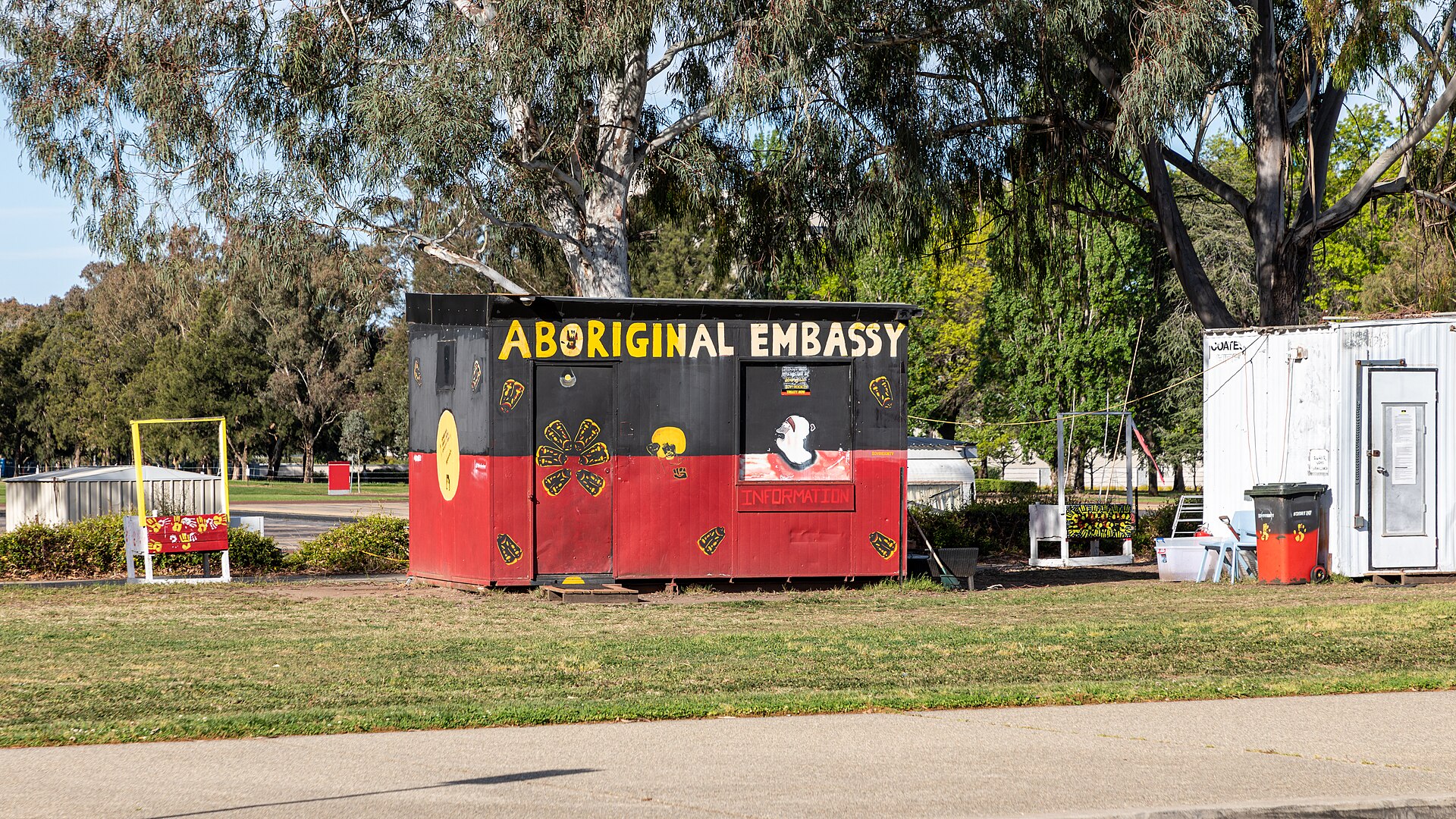
The creative sector adds a distinctly Australian dimension. A relatively small domestic market with a strong tradition of local storytelling is unusually exposed to models that flatten cultural specificity and reproduce work without attribution. Protecting Indigenous knowledge and cultural expression from unauthorised training use has become a particular flashpoint, one that generic international rules are poorly equipped to handle and that any credible Australian framework will have to address directly.
What happens next
The immediate question is whether the mandatory guardrails for high-risk AI move from proposal to law, and how narrowly or broadly “high-risk” ends up being defined. That single definition will decide how much of the economy faces binding obligations and how much stays on the voluntary honour system. Industry Minister Tim Ayres and his department are also weighing how AI rules interact with the separate, long-running review of copyright and text-and-data-mining, a process creators regard as the real battleground.
For tech companies, the sensible posture is to treat the voluntary standard as a floor rather than a ceiling, and to build governance now that can survive being made compulsory later. For creators, the coming months are about organising loudly enough that transparency and payment are written into the framework rather than promised and deferred. Australia has deliberately left itself room to shape its own AI settlement instead of importing someone else’s. The unresolved question is whose interests that settlement will ultimately serve, and the answer is still very much up for grabs.
Sources: Anadolu Agency.