




































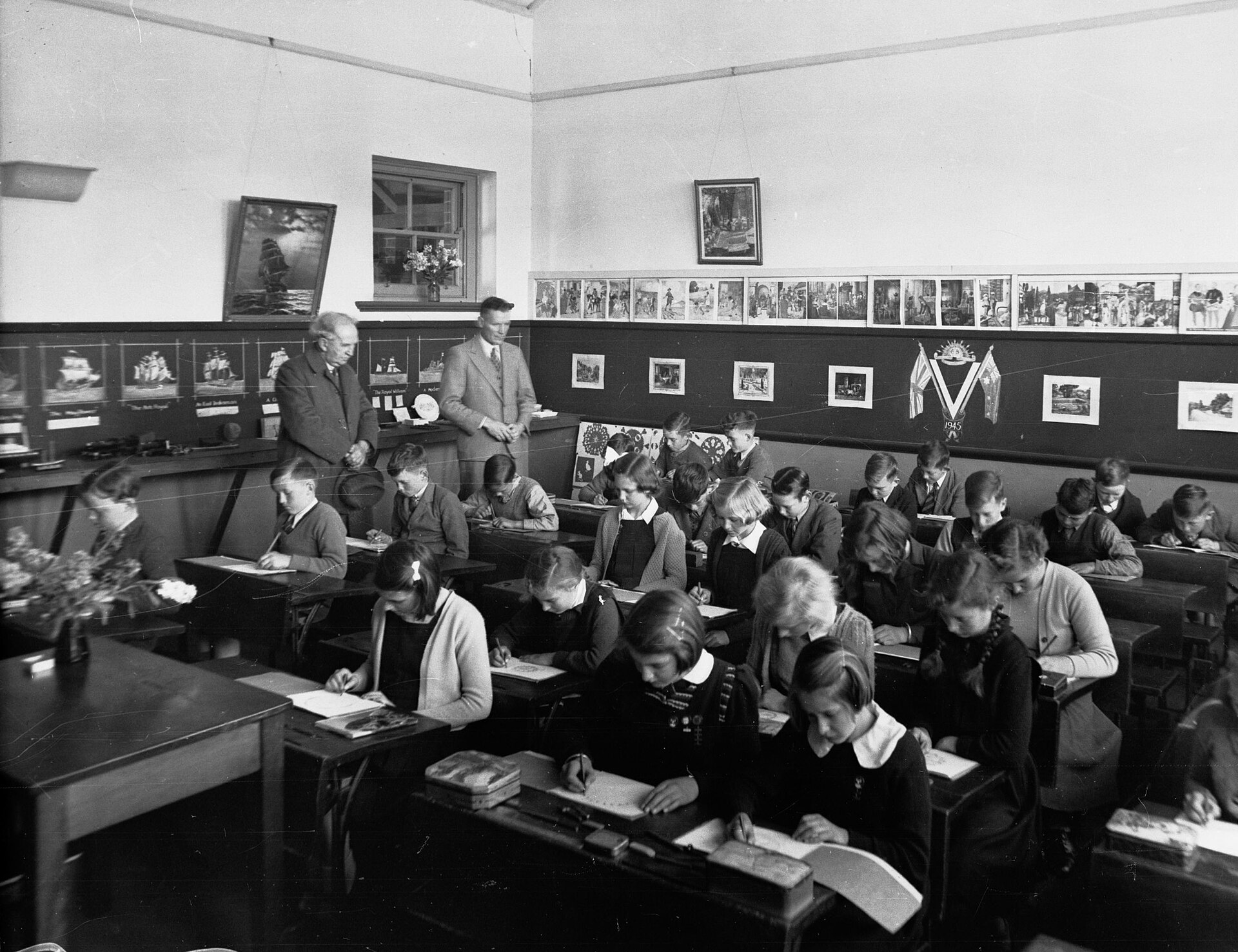
Every term, thousands of Australian schools do something that feels entirely ordinary: they post photos of students. A sports carnival gallery on the school website, a class of beaming faces in the fortnightly newsletter, a Book Week parade shared to a Facebook page followed by parents and grandparents. For decades this has been the harmless connective tissue of a school community. Now, as generative artificial intelligence makes it trivial to alter, fake and repurpose images, that ordinary act is being reconsidered.
Schools across the country are being urged to review how they share student photographs, amid growing warnings that publicly available images can be scraped and fed into AI tools to produce manipulated or explicit content. The concern, reported by Digital Watch Observatory, is not that any single photo is dangerous on its own, but that the barrier to abusing it has collapsed. What once required real skill and specialist software can now be done by anyone with a phone and a free app.
Why the calculus has changed
The advice lands against a backdrop of real cases here in Australia. In recent months police have investigated the creation of explicit AI-generated images involving students at schools on the Gold Coast, and separate cases have surfaced elsewhere in the country. The pattern is grimly consistent: an offender takes an innocuous, publicly available photo of a real child and uses AI to fabricate sexualised imagery that never existed. The source material is often nothing more sinister than a school photo or a shot lifted from a social feed.
That is what has shifted the risk equation for principals and administrators. A decade ago, the main worry about posting a student’s photo online was garden-variety embarrassment or the occasional privacy complaint. Today the same image can become the seed for something far more harmful, and it can be produced quickly, cheaply and at a distance. Because AI-generated material can be near-impossible to trace back to a source, prevention has become far more valuable than any hope of clean-up after the fact.
What schools are being asked to do
The guidance being pushed at schools is practical rather than alarmist. It encourages institutions to audit where student images appear, to tighten who can access them, and to think carefully about the difference between a closed parent portal and a public-facing website or open social media page. Simple measures carry a lot of weight: avoiding full names alongside faces, using photos that do not identify individuals where possible, restricting galleries behind logins, and refreshing consent forms so parents genuinely understand where an image might end up and for how long.
There is also a cultural shift being asked of school communities. Parents and staff who casually photograph events and post them to personal accounts are part of the same exposure, and no school policy reaches a grandparent’s public profile. Advocates argue the answer is not to wrap children in cotton wool or strip all joy and celebration from school life, but to build a shared understanding that a face online is now data, and data can be weaponised.
Two sides of a hard trade-off
Not everyone agrees on how far to go. Child-safety and privacy advocates take the firmer line, arguing that in an environment where AI abuse is documented and rising, schools have a duty of care to minimise the digital footprint of the students in their charge. From this view, a slightly less vibrant newsletter is a small price for reducing the raw material available to bad actors.
On the other side sit educators and community members who worry about the corrosive effect of treating every photo as a threat. School photography is how families stay connected, how migrant and rural communities feel part of something, and how schools tell their own story to prospective enrolments. Lock everything behind logins and you risk hollowing out that sense of belonging, while doing little to stop a determined offender who can find images elsewhere. The honest position acknowledged by most in the sector is that this is a genuine trade-off, not a problem with a clean solution.
The Australian stakes
For Australia specifically, the pressure is building on more than one front. The nation’s eSafety Commissioner, led by Julie Inman Grant, has spent years warning about image-based abuse and the accelerating threat of AI-generated child sexual abuse material, and has pushed platforms and services to take more responsibility. Federal moves to introduce age assurance and to restrict under-16s from certain social media platforms add another layer, but they do not address photos that schools and families put online themselves.
State education departments and the Catholic and independent sectors each set their own image-consent frameworks, which means guidance is uneven across the country. A student in one state may be covered by tighter default settings than a student in another, purely by accident of jurisdiction. For a national problem that ignores borders entirely, that patchwork is a weakness. It echoes a recurring theme in Australian AI policy, where the technology moves faster than the fragmented rules meant to govern it, a gap this masthead has covered repeatedly in education and child-safety contexts.
There is also a reputational and legal dimension that school leaders cannot ignore. If a manipulated image of a student can be traced back to a photo the school itself published without adequate care, questions of duty of care and negligence are not far behind. That prospect alone is likely to concentrate minds in administration offices well ahead of any formal mandate.
What happens next
In the near term, expect more schools to quietly tighten their settings: fewer open galleries, more logins, refreshed consent processes and clearer guidance to parents about what to share. Peak bodies and departments are likely to issue updated advice, and the eSafety Commissioner’s office will keep pressing both platforms and the AI tools that enable the abuse. The harder, longer conversation is about the tools themselves, and whether the companies building image generators can be compelled to make manipulation of children’s faces meaningfully more difficult.
For now, the message to Australian schools is modest but urgent. The photograph has not become the enemy, but the world around it has changed, and the old habits of sharing deserve a fresh look. In an age where a single class portrait can be turned into something monstrous, caution is no longer overreaction. It is simply part of the job.
Sources: Digital Watch Observatory


