

















































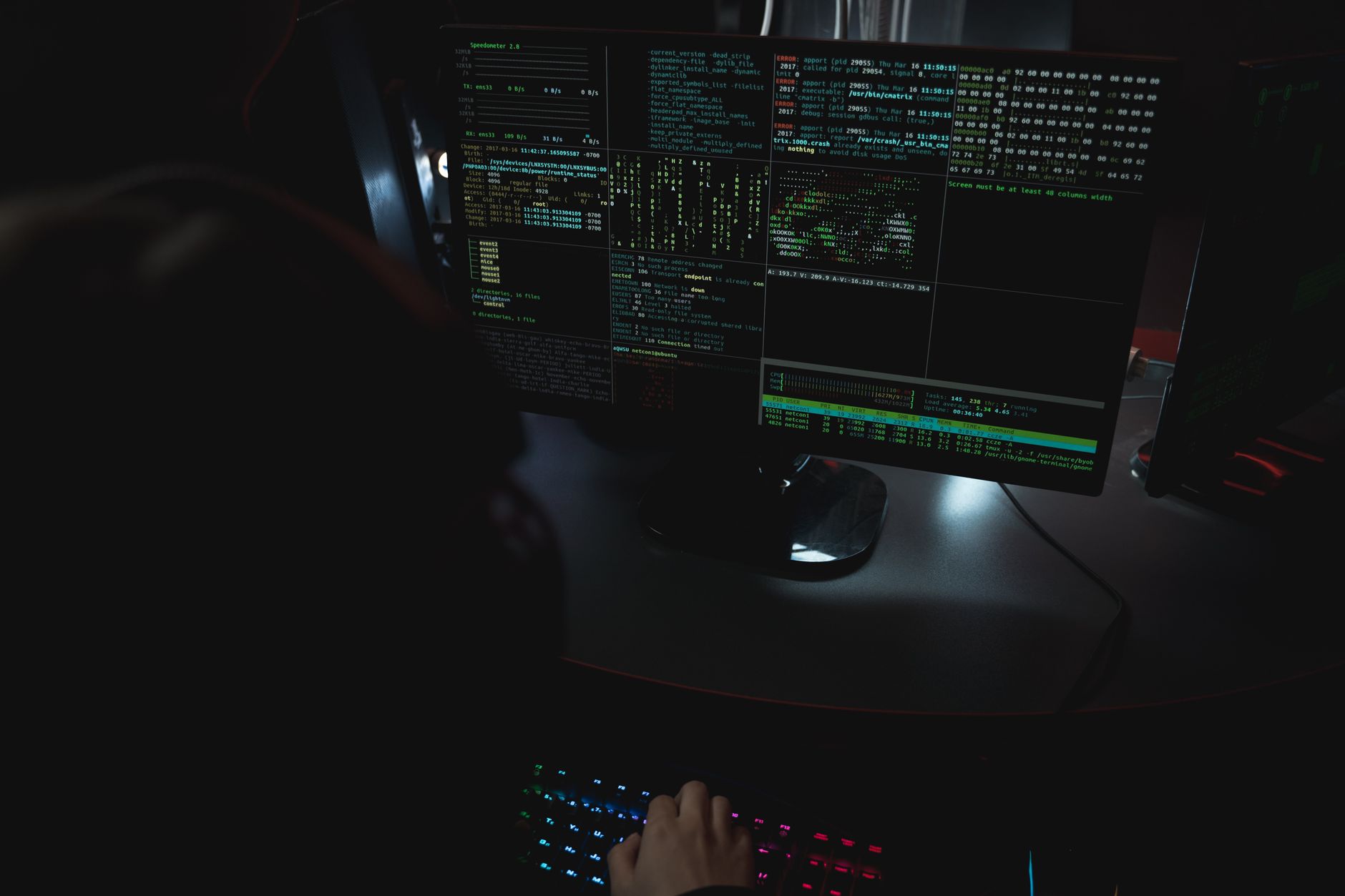
The uneasy marriage of artificial intelligence and state-sponsored hacking has been building for a couple of years, and the security industry is now putting numbers and warnings behind what many defenders already suspected. According to a warning reported by SecurityBrief Australia, a cybersecurity vendor says AI is measurably boosting the speed, scale and sophistication of nation-state cyberattacks, giving well-resourced government-backed groups a fresh edge over the organisations trying to keep them out.
The claim is not that AI has invented a new class of weapon. Rather, it is that generative models and automation are compressing the time and skill it takes to run the old attacks. Reconnaissance that once took a human analyst days can be farmed out to a model. Phishing lures that used to give themselves away with clumsy grammar can now be written in flawless, localised English, or any other language, at industrial volume. Malicious code can be drafted, tweaked and obfuscated with the help of the same tools that legitimate developers use to ship software faster. When those efficiencies are handed to intelligence services with deep pockets and political direction, the result is a threat that adapts more quickly than the defences arrayed against it.
What the warning actually says
The core of the argument is about asymmetry. Defenders have to be right every time, while an attacker only has to be right once, and AI tilts that already lopsided contest further. State-backed operators can use large language models to sift stolen data, map an organisation’s suppliers and staff, and personalise social-engineering campaigns against specific individuals. They can automate the tedious parts of an intrusion, freeing skilled operators to concentrate on the targets that matter most. The firm’s broader point is that the barrier to entry for convincing, well-crafted attacks has dropped, and that the volume of activity a single team can sustain has risen sharply.
None of this is happening in a vacuum. Microsoft, Google and OpenAI have all published research over the past two years documenting attempts by groups linked to Russia, China, Iran and North Korea to use commercial AI tools for reconnaissance, scripting and translation. The vendors say they have disrupted many of these accounts, and they argue that AI is currently more useful for improving existing tradecraft than for enabling genuinely novel attacks. That nuance matters, because it separates the marketing hype around “AI cyberweapons” from the more grounded reality: the machines are making average attackers better rather than turning them into superhackers overnight.
Not everyone is sounding the same alarm
There is a genuine debate here, and it is worth airing both sides. The pessimistic view, championed by many vendors, is that we are at the beginning of a step change, and that autonomous or semi-autonomous attack agents will soon probe and exploit networks with little human oversight. On this reading, defenders who wait to see the full picture will already be behind.
A more sceptical camp, which includes a number of independent researchers and government analysts, cautions against treating every AI-flavoured incident as proof of a revolution. They note that most breaches still start with the same unglamorous failures they always have: unpatched systems, reused passwords, weak multi-factor authentication and users clicking links they should not. From that perspective, the smartest response to AI-enabled attacks is not a shiny new AI defence product but a return to the fundamentals that were being neglected long before ChatGPT arrived. Both camps agree on one thing, at least: the same technology is also a boon for defenders, who are using AI to triage alerts, spot anomalies and shrink the window between a breach and its discovery.
Why this matters for Australia
For Australian organisations, this is not an abstract offshore concern. The Australian Signals Directorate has been blunt for several years that state-sponsored actors routinely target Australian governments, critical infrastructure and businesses, and its annual cyber threat reporting has singled out espionage against networks that carry sensitive economic and defence information. Australia’s role in AUKUS, its resources and energy exports, and its position in the Indo-Pacific all make it an attractive target for foreign intelligence collection, and anything that lets those actors work faster or cast a wider net raises the stakes here specifically.
The country is also part-way through a large regulatory shift. The federal government’s 2023 to 2030 Cyber Security Strategy, the Security of Critical Infrastructure regime and the recent cyber security legislation have all pushed operators of essential services towards mandatory reporting and stronger baseline controls. Layered on top of that is a growing national conversation about how to govern AI itself, from voluntary safety standards to debates over high-risk uses. A warning that AI is amplifying state-backed attacks feeds directly into both agendas, because it reframes AI governance as a security question and not merely an economic or ethical one.
There is a practical labour dimension too. Australia has a well-documented shortage of skilled cybersecurity workers, and smaller businesses in particular struggle to afford the monitoring that larger enterprises take for granted. If AI genuinely lets a handful of foreign operators run the workload that used to require a room full of analysts, the pressure falls hardest on the organisations least equipped to respond. That is precisely the segment, from local councils to regional health services to mid-sized exporters, that sits inside Australia’s critical supply chains without always realising it.
What happens next
Expect the next twelve months to bring more of this framing, not less. Vendors will keep publishing threat research that positions AI as both the problem and the cure, and buyers will need to read those claims with a clear eye for where evidence ends and salesmanship begins. Australian regulators, meanwhile, are likely to keep folding AI risk into existing critical-infrastructure and cyber-reporting obligations rather than writing an entirely separate rulebook, which means boards will be asked to account for AI-related exposure as a matter of ordinary governance.
The unglamorous advice from defenders has not changed, even as the tools around it have. Patch quickly, enforce phishing-resistant multi-factor authentication, segment networks, back up data offline and rehearse the incident response plan before it is needed. AI may be handing the attackers a faster car, but the fundamentals of keeping them off the road remain stubbornly familiar. The warning is less a reason to panic than a prompt to do the basics properly, and to do them at machine speed too.
Sources: SecurityBrief Australia.


