


















































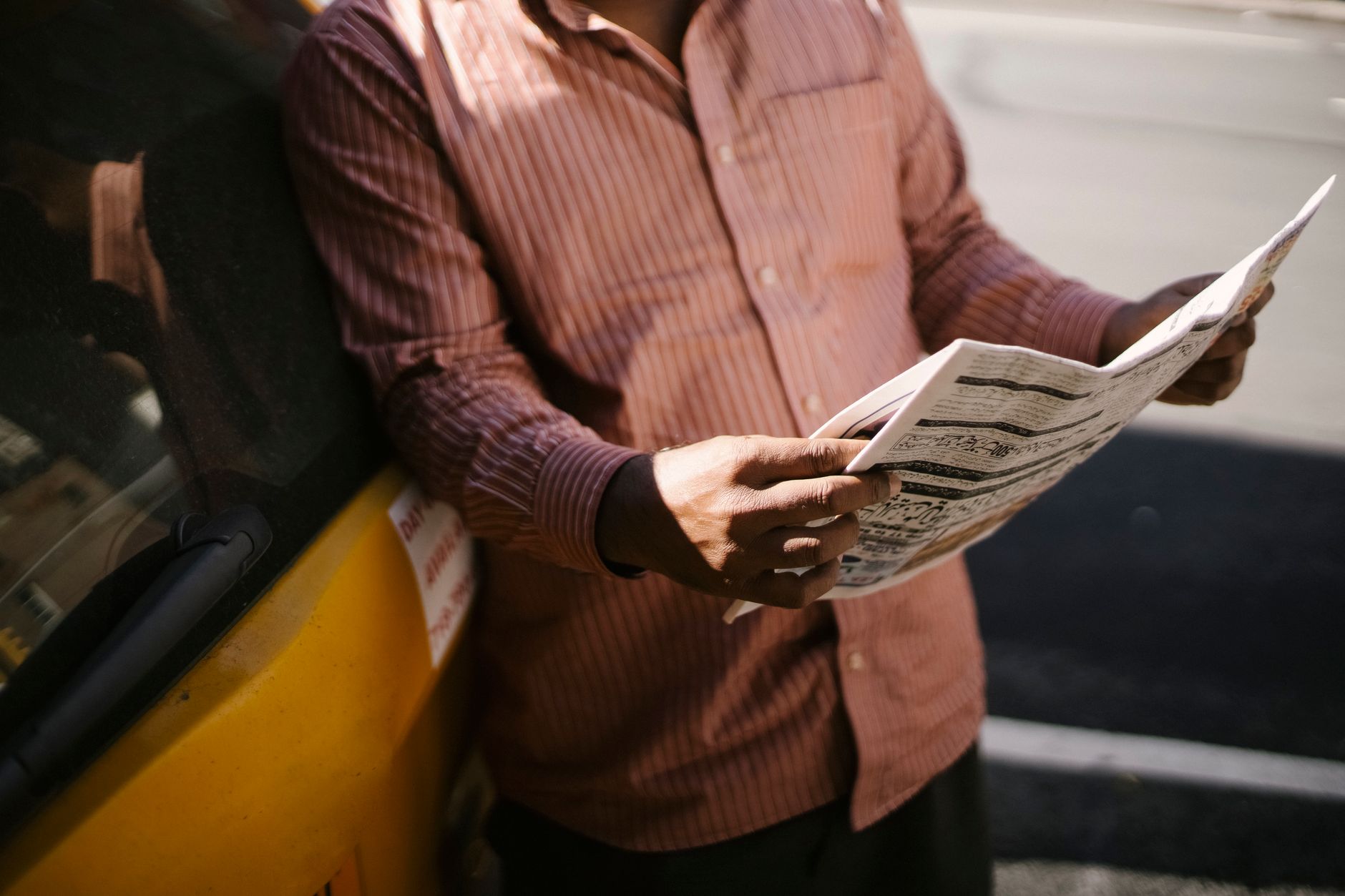
For the best part of a decade, the story of the news business has been one of decline: shrinking rivers of advertising, closing regional titles and audiences drifting to social feeds that pay nothing for the journalism they circulate. Now a quieter counter-trend is emerging, and it is one that established publishers will welcome. As artificial intelligence pumps out an ever-larger volume of automated “news”, readers appear to be recoiling from the machine-made version and placing renewed faith in mastheads staffed by human reporters.
That is the thrust of recent reporting by The Australian, which argues that traditional outlets are winning on trust precisely as doubts deepen about the reliability of AI-generated content. It is a theme that runs through much of the research into news consumption in this country, and it has sharp implications for how publishers position themselves in a market now awash with synthetic text.
How we got here
The arrival of generative AI tools has made it trivially cheap to produce something that looks like news. A prompt and a few seconds can generate a plausible-sounding article on almost any subject, complete with confident assertions, invented statistics and quotes that never passed a human’s lips. The result has been a flood of low-quality, auto-generated sites, often stuffed with programmatic advertising, that mimic the form of journalism without any of the reporting, verification or accountability that sits behind it.
Readers have noticed. The experience of asking a chatbot a factual question and receiving an answer that is fluent, authoritative and simply wrong has become common enough to breed a healthy scepticism. When those same errors turn up dressed as news, the instinct to distrust follows. Against that backdrop, a human byline on an established masthead starts to look less like a relic and more like a guarantee.
Australia’s most comprehensive tracker of these attitudes is the Digital News Report: Australia, produced annually by the University of Canberra‘s News and Media Research Centre as part of a global study coordinated by the Reuters Institute. Successive editions have charted the public’s wariness about AI in the newsroom, with audiences far more comfortable with the technology handling behind-the-scenes tasks than writing the stories they read. That discomfort is the soil in which traditional trust is now regrowing.
Two ways of reading the shift
For publishers, the optimistic interpretation is obvious and tempting. If trust is the scarce commodity in an AI-saturated information economy, then the organisations that have spent decades building it hold an asset their automated rivals cannot replicate overnight. Editors have begun to lean into that distinction, promoting the idea that journalism produced by accountable humans, subject to editorial standards and corrections, is worth paying for in a way that an algorithm’s output is not. On this view, the AI wave, far from finishing off traditional media, hands it a fresh reason to exist.
There is a more cautious reading, and it deserves equal airtime. Trust in news overall remains fragile, and the same surveys that show audiences recoiling from AI content also record persistent distrust of mainstream outlets, particularly among younger Australians who get much of their information from social platforms and creators rather than legacy brands. The danger is that the public lumps everything together. If people conclude that nothing online can be believed, whether written by a journalist or a bot, then the advantage publishers hope to bank quietly evaporates. A rising tide of distrust does not lift traditional media; it drowns everyone.
There is also the awkward fact that the very companies championing human journalism are themselves deploying AI in their operations, from drafting headlines to summarising documents and generating story alerts. Readers who prize authenticity may not draw a neat line between acceptable and unacceptable uses, and a single high-profile misstep, such as an AI-generated error slipping into print under a trusted banner, could undo a great deal of goodwill. The trust dividend, in other words, has to be earned continuously rather than assumed.
What it means for Australia
The stakes here are not abstract. Australia has already lived through a brutal contraction of its news industry, with scores of regional mastheads shuttered or moved online and the Australian Competition and Consumer Commission repeatedly warning about the power imbalance between publishers and the global platforms that distribute their work. The News Media Bargaining Code was built on the premise that quality journalism has a value worth protecting. A renewed public appetite for trustworthy, human-made news strengthens that argument considerably.
It also sharpens a live policy debate. As search engines and chatbots increasingly answer questions directly, scraping and summarising news without sending readers to the source, Australian publishers face the prospect of their journalism being used to train and feed AI systems that then compete with them for attention. If audiences genuinely value the human original over the machine summary, that preference becomes a card for publishers and policymakers to play in negotiations over payment, attribution and copyright. The willingness of readers to seek out the masthead rather than settle for the AI digest is, in effect, leverage.
For ordinary Australians, the practical upshot is a growing premium on media literacy. Knowing how to tell a reported story from a generated one, checking whether a byline belongs to a real person and treating confident AI answers with the suspicion they often deserve are fast becoming basic civic skills. Schools, libraries and public broadcasters all have a role in building them, and the return of trust to traditional outlets will depend in part on how well the public learns to distinguish the genuine article from the synthetic imitation.
What’s next
Expect publishers to make trust an explicit part of their pitch, both to subscribers and to advertisers wary of having their brands appear next to AI slop. Watch, too, for clearer labelling standards as the industry works out how to disclose where and how AI has been used in producing a story, a transparency step that could either reassure audiences or, if mishandled, deepen their suspicion. And keep an eye on the next edition of the national news research, which will show whether this trust rebound is a durable shift or a momentary reaction to a novelty that audiences will eventually take for granted.
For now, the message to Australia’s newsrooms is encouraging but conditional. The audience still wants journalism it can believe. Whether traditional outlets can hold that trust, while quietly using the same technology their readers distrust, is the question the next few years will answer.
Sources: The Australian.



