


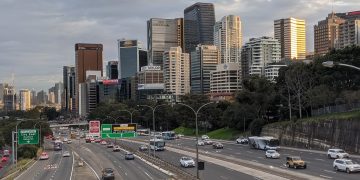






















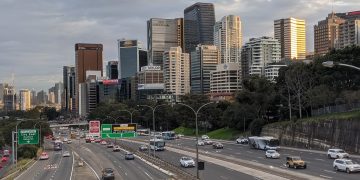



OpenAI has planted a permanent flag in Australia, opening its first local office in Sydney and wrapping a set of enterprise, infrastructure and skills commitments into a single “OpenAI for Australia” program. The launch marks the first time the ChatGPT maker has built a coordinated national footprint in the country, rather than serving it from abroad.
The office, unveiled at Sydney’s Museum of Contemporary Art, adds Australia to a short list of OpenAI hubs that already includes London, Dublin and Tokyo. According to OpenAI’s announcement, the local team will initially support customers, partners and users, then expand into technical and specialised roles over time.
Chief strategy officer Jason Kwon framed the move as a long-term bet on the country. Kwon said Australia is “well-placed to lead the world in AI” and that opening the Sydney office was about investing in local talent, per the same OpenAI post. Chief executive Sam Altman struck a similar note, telling attendees Australia has “deep technical talent, strong institutions” on which to build.
A three-part national program
The program bundles three strands that OpenAI had previously announced separately: enterprise partnerships, a sovereign-compute infrastructure deal, and a nationwide skills push. Together they represent one of the largest single commitments a frontier AI lab has made to the Australian market.
On the enterprise side, OpenAI pointed to work with homegrown technology firms Canva and Atlassian, alongside a multi-year partnership with the Commonwealth Bank. As Forbes Australia reported when the office plans first surfaced, CBA chief executive Matt Comyn said the bank’s tie-up was about “bringing world class capabilities to Australia” and exploring how AI could improve customer experiences.
The infrastructure piece is the most capital-intensive. OpenAI signed a memorandum of understanding with ASX-listed operator NEXTDC to develop a hyperscale AI campus and large-scale GPU supercluster at NEXTDC’s S7 site in Eastern Creek, in Sydney’s west. Reporting by the Australian Computer Society’s Information Age put the development at around AUD$7 billion and roughly 550 megawatts, with a first phase targeted for the second half of 2027, subject to approvals.
NEXTDC has said the facility is engineered as a sovereign AI site, with security and resilience standards aligned to Australia’s Security of Critical Infrastructure framework, and designed to serve government, finance, defence, research and enterprise workloads. The company has also flagged liquid cooling that avoids drawing on potable drinking water, and long-term power purchase agreements for new renewable generation.
Skills, startups and a founder community
The third strand targets the workforce. Through OpenAI Academy, the company is partnering with CommBank, Coles and Wesfarmers to deliver foundational AI training to more than 1.2 million Australian workers and small businesses, with a national rollout beginning in 2026. ITBrief Australia described it as one of the largest coordinated AI-skills efforts in the country’s history.
OpenAI is also courting the startup sector. According to SmartCompany, the company launched a local founder program with venture firms including Blackbird, Square Peg, AirTree, January Capital, NextGen Ventures and Boab AI, offering API credits, technical support and workshops. Australian companies already building on OpenAI’s platform include clinical-notes startup Heidi Health, customer-support firm Lorikeet and workflow tool maker Relevance AI, whose co-founder Jacky Koh welcomed the lab “doubling down” on the local founder community.
The commercial logic is visible in the usage data. OpenAI says weekly active ChatGPT users in Australia more than doubled over the prior year, and the country now sits in the global top ten both for paid subscribers and for developers building on the platform, against a backdrop of more than 700 million weekly active users worldwide.
Why it matters for Australia
A physical office changes the relationship. Until now, Australian enterprises, agencies and startups dealt with OpenAI at arm’s length; a Sydney team with a mandate to grow into technical roles means local procurement, support and eventually engineering can happen onshore. That matters for regulated sectors such as banking, health and government, where data residency and accountable local contacts are often non-negotiable.
The NEXTDC build is the more strategically loaded element. Sovereign compute has become a policy preoccupation in Canberra, and a SOCI-aligned supercluster on Australian soil could reduce reliance on offshore capacity for sensitive workloads. It also lands amid intensifying scrutiny of data centre energy and grid demand, where a 550-megawatt facility is a material addition to an already stretched system. The renewable power purchase agreements and non-potable cooling will be tested against those concerns as approvals proceed.
The presence of senior officials at the launch, including federal Industry Minister Tim Ayres and NSW Treasurer Daniel Mookhey per SmartCompany, underlines the political stakes. Treasurer Jim Chalmers has called the broader investment a “terrific outcome” for the economy and tech sector, per Information Age. For a government trying to lift flagging productivity, a foreign AI leader committing infrastructure, jobs and training is a useful headline.
The harder questions come next. Skills training at this scale only pays off if it reaches the small businesses and frontline workers it targets, not just corporate head offices. Sovereign compute claims will be judged on contract terms and governance, not launch-day framing. And a deepening dependence on a single US vendor cuts against the diversification that sovereignty advocates say Australia needs. Rivals including Anthropic, Google and Microsoft are pursuing their own local plays, so OpenAI’s Sydney bet is a starting position, not a finish line. Whether the 2027 data centre, the 2026 skills rollout and the founder program deliver on their numbers will decide if this is genuine market-building or a well-staged flag-planting.
Sources: OpenAI, Forbes Australia, SmartCompany, ACS Information Age, ITBrief Australia.