


































Few Australian workplaces carry as much industrial history as the waterfront, and few are being reshaped as quickly by machines. Now the two forces are colliding. Dock workers are pressing for a dramatically shorter working week, arguing that if automation and artificial intelligence are going to do more of the lifting at the nation’s container terminals, the humans who remain should share in the productivity rather than be shown the gate.
The demand, as reported by Cybernews, is a 28-hour working week with no reduction in pay. It is a striking number. A standard full-time load in Australia sits at 38 hours, so the claim amounts to lopping off roughly a quarter of rostered hours while holding wages steady. For the workers making it, the logic is simple: automation is meant to make the job faster and more efficient, so let that efficiency buy back time for the people on the tools rather than simply thinning their ranks.
Why the waterfront, and why now
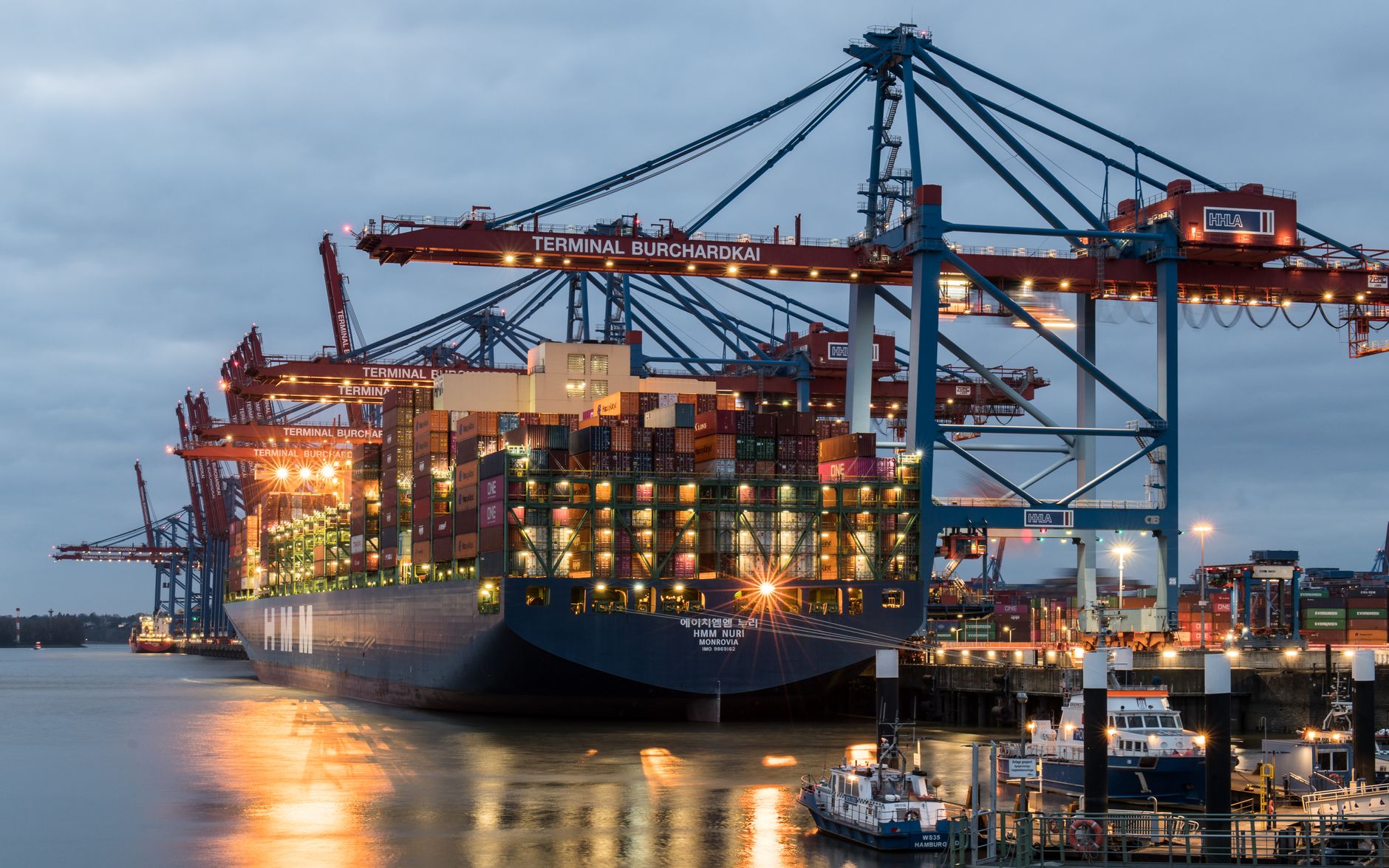
Australian ports have been a testing ground for automation for more than a decade. Terminals in Sydney’s Botany Bay and Brisbane already run automated straddle carriers and remotely operated cranes, and the sector’s big operators have made no secret of their appetite for further mechanisation. Global shipping lines want faster turnaround, lower costs and round-the-clock reliability, and machines that do not tire, strike or claim penalty rates are an obvious lever.
Layer generative AI and machine learning on top of that hardware and the picture sharpens again. AI is increasingly used to optimise how containers are stacked, to schedule vessel movements, to predict equipment failures before they happen and to route trucks through congested landside gates. Each of those gains trims the number of human decisions, and by extension the number of humans, needed to keep cargo flowing. That is the anxiety driving the shorter-week campaign: not one machine replacing one worker, but a steady erosion of roles as software quietly absorbs the coordination that stevedores and controllers once did by hand and eye.
The 28-hour claim is best read as a job-security demand dressed as a rostering one. By locking in shorter hours on full pay, the workforce would effectively force employers to keep more people on the books to cover the same operational window, blunting the headcount savings that automation is supposed to deliver.
Two ways to see it
To the labour side of the argument, this is exactly what unions are for. The waterfront has been here before: the bitter 1998 dispute over the Patrick stevedoring operation remains one of the defining industrial battles in modern Australian history, and it too turned on productivity, staffing and who controls the pace of change. Advocates say a shorter week is a humane, forward-looking answer to a wave of technology that would otherwise deliver its dividends entirely to capital. If the machines are more productive, the reasoning goes, workers have earned a slice of that in the form of time.
Employers and many economists see it very differently. Their case is that stevedoring already runs on thin margins and heavy capital costs, and that a 28-hour week on full pay would drive up the effective hourly wage sharply at precisely the moment operators are trying to compete with more automated ports overseas. In this view, the demand does not slow automation so much as accelerate it: make labour more expensive per hour and the business case for replacing it with machines only gets stronger. There is also a productivity puzzle. Australia’s container ports have long ranked poorly on international efficiency benchmarks, and critics argue that entrenching shorter hours risks baking in the very cost structure that makes automation attractive in the first place.
Both sides, tellingly, are pointing at the same technology to justify opposite conclusions. That is what makes the waterfront such a clean preview of a fight coming to many other industries.
What it means for Australia
This is not a niche squabble on the docks. Ports are the arteries of an island trading nation: the overwhelming bulk of Australia’s imports and exports move through container terminals, so disputes here ripple straight into supply chains, freight costs and, eventually, prices on the shelf. Any prolonged industrial action of the kind the waterfront has produced in the past would be felt well beyond the wharf gates.
The claim also lands in a charged national debate about AI and work. Federal agencies have spent the past year trying to reassure Australians that the technology is not, at least yet, driving mass job losses, while unions and super funds have moved to write AI protections into enterprise agreements. The dockers’ campaign is the sharp end of that same argument. It asks a question the whole economy is circling: when software makes a workforce more productive, who captures the benefit, and who decides? Governments have promised frameworks and an eventual national approach to AI, but on the waterfront the negotiation is happening now, at the bargaining table, ahead of any tidy policy.
There is a distinctly Australian flavour to it too. Shorter-hours experiments have been trialled in Britain, Iceland and parts of Europe, but few have been framed so explicitly as a defence against automation, and fewer still in a sector with the industrial muscle of the Australian waterfront. If a version of the 28-hour week were won here, it would become a reference point for every workforce watching AI creep into its own patch, from warehousing to logistics to back-office administration.
What happens next
Expect a hard, drawn-out negotiation rather than a quick resolution. Enterprise bargaining on the waterfront has historically been tense, and a claim this ambitious will not be conceded easily by operators already committed to automation roadmaps. The likeliest outcome is a compromise well short of 28 hours, perhaps trading modest hours reductions or automation-transition guarantees for productivity concessions. But even as an opening position, the demand reframes the conversation. It shifts the debate from whether automation is coming, which is settled, to how its gains are divided.
For the rest of the country, the waterfront is worth watching as a live test case. The dockers have simply asked, earlier and louder than most, the question the AI era poses to everyone: if the machine does more, should the worker do less, and be no worse off for it.
Sources: Cybernews