




































For the better part of two years, the simplest trade in global markets was also the most profitable one: buy anything with artificial intelligence attached to its name and hold on. That strategy has delivered extraordinary gains for investors from Wall Street to the Australian Securities Exchange, but the past few weeks have served as a reminder that even the most powerful bull markets do not move in a straight line.
A recent analysis in The Australian argues that the AI trade has begun to claim casualties, with some high-flying names punished sharply when results or guidance disappointed, yet the broader conclusion is that the boom is far from over. It is a nuanced message that sits uneasily with the market’s usual preference for a simple narrative, either euphoria or crash, and it deserves unpacking for anyone with money riding on the theme.
The context: a trade that outgrew its own story
The AI rally has been remarkable not just for its size but for its concentration. A handful of mega-cap technology companies, led by chip designer Nvidia and a cluster of cloud and software giants, have accounted for a disproportionate share of the gains in global equity indices. When so much performance rests on so few shoulders, any stumble by one of those names tends to ripple outward, dragging index funds, superannuation balances and sentiment along with it.
That concentration is precisely why the recent volatility has felt more dramatic than the actual price moves might justify. Investors have grown accustomed to the AI cohort only going up, so a pullback of ten or fifteen per cent in a former darling reads as a shock rather than a routine correction. The casualties referenced in the source piece are, in many cases, stocks that ran too hot on expectations that even strong results could not satisfy, a pattern as old as markets themselves.
The news: casualties, but not collapse
The central claim is that selective damage does not amount to the end of the cycle. The reasoning rests on the gap between financial-market enthusiasm and the real-world build-out of AI infrastructure. Hyperscalers are still committing enormous sums to data centres, chips and power, and that capital expenditure translates into genuine revenue for the companies supplying the picks and shovels. As long as that spending holds up, the argument goes, the earnings underpinning the trade remain intact even if valuations get a periodic haircut.
The counter-view, which the piece also acknowledges, is harder to dismiss. Sceptics point out that much of the AI spending is circular, with a small group of companies effectively funding one another’s growth, and that the return on tens of billions of dollars in capital expenditure has yet to be proven at scale. If businesses and consumers do not ultimately pay enough for AI products to justify the infrastructure being laid down, today’s confident forecasts could unwind quickly. That is the bear case, and the recent casualties are, in their reading, the first cracks rather than a healthy shake-out.
Two ways to read the same chart
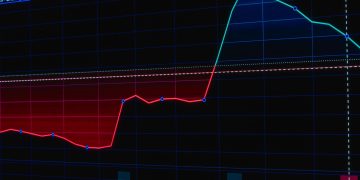
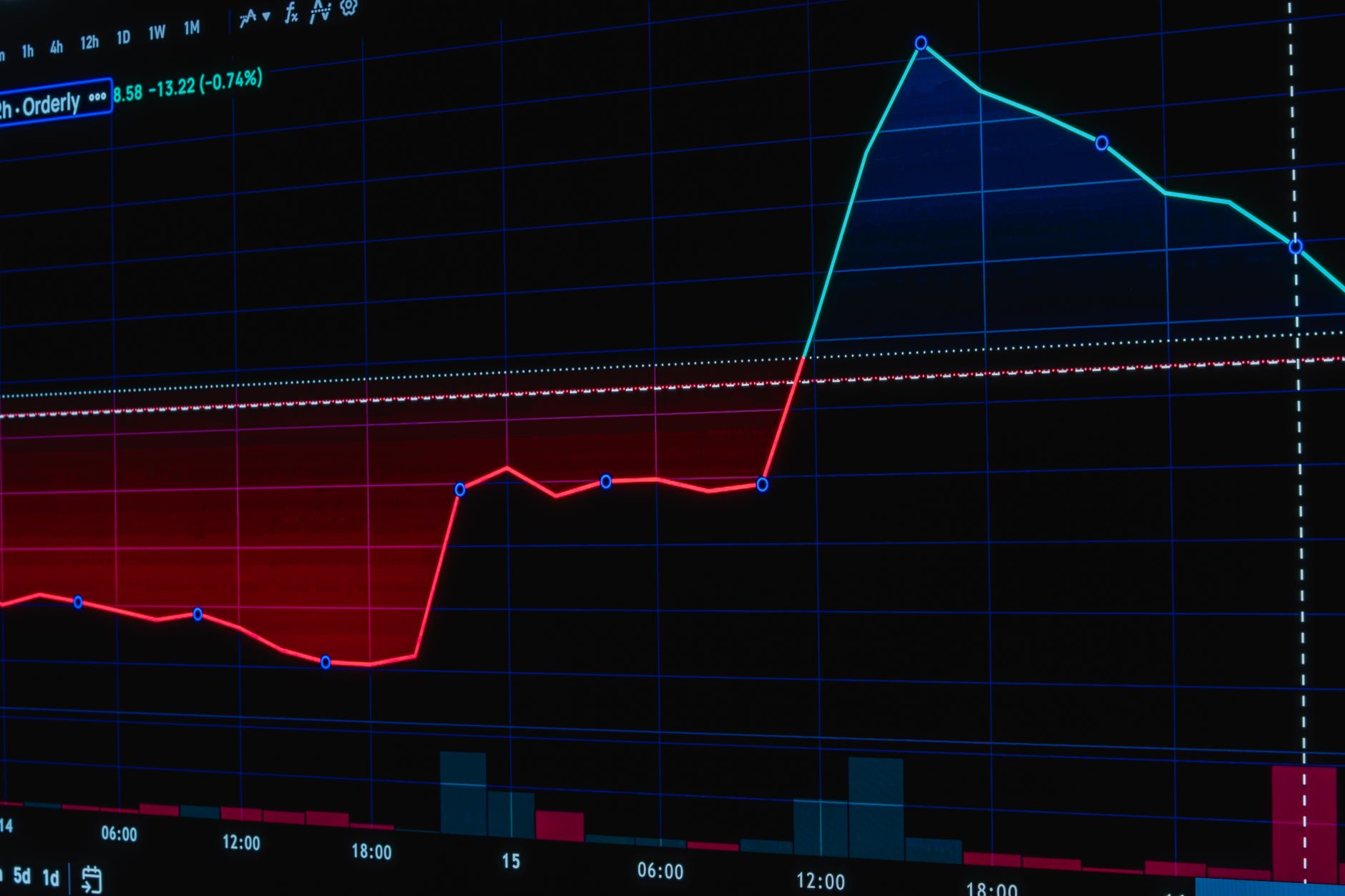
What makes this moment genuinely interesting is that both camps are looking at the same data and drawing opposite conclusions. Optimists see a maturing boom that is finally separating real winners from hype, a sign of a healthier market where fundamentals start to matter again. Pessimists see the early stage of a repricing, with the weakest hands forced out first before the selling spreads to the index heavyweights.
History offers ammunition to both. The dotcom era is the obvious cautionary tale, a technology revolution that was real yet still produced a brutal bust for investors who paid any price. But the same era also produced Amazon and Google, companies whose eventual dominance vindicated the early believers who could stomach the volatility. The lesson is less about whether AI is transformative, which few now dispute, and more about price, timing and the discipline to tell a durable business from a story stock.
What it means for Australia
Australian investors are more exposed to this debate than they might assume. The local market has no Nvidia of its own, but millions of Australians hold global technology exposure indirectly through superannuation funds, international equity ETFs and managed portfolios that have quietly ridden the AI wave to strong returns. A sharp correction in the US tech complex flows almost immediately into balances here, as the recent soft opens on the ASX following Wall Street selloffs have shown.
There is also a local corner of the trade. A growing list of ASX-listed names, from edge-AI chip designers to data-centre and healthcare software plays, have been swept up in the enthusiasm, and they tend to amplify both the upside and the downside of the global mood. For these smaller companies, a change in sentiment can matter more than any individual result, because many are valued on promise rather than profit. When the AI trade coughs offshore, the local minnows often catch a heavier cold.
Beyond portfolios, the build-out itself is reshaping the Australian economy. Data-centre construction is competing with housing for scarce building capacity, straining the electricity grid and intensifying a shortage of skilled trades. If the global capital-expenditure boom continues, those pressures grow; if it stalls, Australia could be left with half-finished infrastructure and stranded energy commitments. The market debate about casualties is, in that sense, not an abstract Wall Street argument but a question with consequences for local jobs, power bills and planning decisions.
What is next
The near-term signal to watch is corporate guidance, particularly from the hyperscalers whose spending plans anchor the entire trade. So long as those budgets keep rising, the optimists have the stronger hand. Any hint that the big spenders are pausing to assess returns would validate the bears and could trigger a broader rotation out of the crowded names.
For ordinary investors, the measured takeaway is neither to flee nor to chase. Volatility is the price of admission to a genuine structural theme, and a trade that claims casualties while the boom continues is behaving exactly as a maturing cycle should. The harder discipline, as always, is distinguishing the companies that will still be standing when the dust settles from those that were only ever riding the wave.
Sources: The Australian.