

















































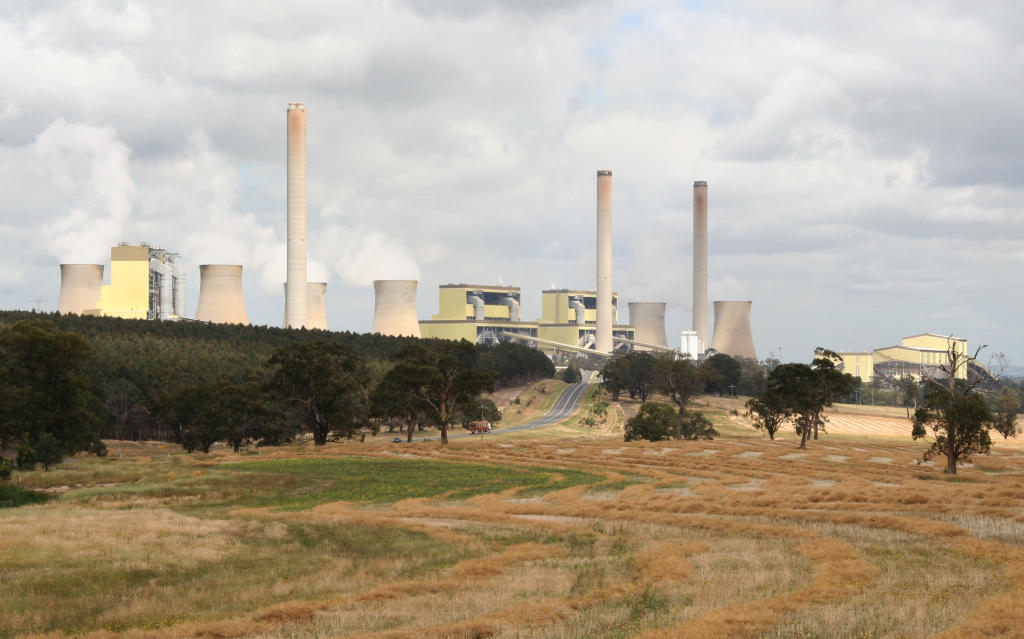
Australia has spent the past two years talking up its ambition to become a serious player in artificial intelligence, from sovereign data centres to homegrown models and the compute needed to train them. There is one problem that keeps surfacing beneath all the optimism, and it has very little to do with algorithms. It is electricity, and whether the grid can actually deliver enough of it, in the right places, at the right time.
A new analysis published this week frames the issue bluntly as a collision course, arguing that the explosive power appetite of AI workloads is running headlong into an electricity system that is already stretched by the retirement of coal, the build-out of renewables and rising household demand. You can read the original piece via GNews. The core warning is not new, but the scale of it is starting to concentrate minds in boardrooms and in Canberra.
Why the numbers make people nervous
The mechanics are straightforward enough. Training and running large AI models requires racks of high-performance chips that run hot and draw power continuously. A single hyperscale data centre can consume as much electricity as a small city, and the newest facilities being planned for Australia are measured in hundreds of megawatts rather than the tens of megawatts that were typical a few years ago. Unlike a factory that can dial back overnight, these campuses want firm, round-the-clock supply, which is precisely the kind of demand a grid built around variable solar and wind finds hardest to serve.
The Australian Energy Market Operator has repeatedly flagged that the National Electricity Market is entering its most delicate decade, with ageing coal plants set to close faster than firmed replacement capacity is being built. Layering a rapid surge of data-centre load on top of that transition changes the arithmetic. Every megawatt a data centre consumes is a megawatt that has to be generated, transmitted and firmed, and transmission is the part of the system that takes the longest to build. New high-voltage lines can take the better part of a decade to plan, approve and energise, which sits awkwardly against an industry that measures its planning horizons in quarters.
Two ways of reading the same problem
There are broadly two camps in this debate, and they are not as far apart as the headlines suggest. The first, largely from the technology and infrastructure sector, argues that demand is a feature rather than a bug. A wave of committed, creditworthy, always-on load is exactly the kind of anchor customer that can underwrite new generation, because developers are increasingly willing to sign long-term contracts and even fund their own renewable projects to secure supply. On this view, AI could accelerate the energy transition by giving investors the certainty they have been waiting for, rather than derailing it.
The second camp, which includes grid engineers and some energy economists, is more cautious. Their concern is timing and location. It is one thing for a hyperscaler to sign a power purchase agreement for a solar farm, and quite another for the physical electrons to reach a data centre in western Sydney or regional Victoria at three in the morning in the middle of winter. If firm supply is not there, the load either does not get built, which stalls the AI ambition, or it leans on gas and keeps ageing coal online longer, which cuts against the country’s emissions targets. Neither outcome is the clean growth story that has been promised.
That tension has already spilled into public argument. Mining billionaire and green-energy backer Andrew Forrest has been scathing about what he calls the industry’s energy gluttony, warning that unchecked AI power demand risks becoming an excuse to slow the shift away from fossil fuels. Others in the sector counter that the demand is coming regardless, and the responsible response is to plan for it rather than pretend it away.
What it means for Australia
For Australia specifically, the stakes are sharper than in most markets, because so much of the national pitch rests on being an attractive, stable home for compute. The country has genuine advantages, including political stability, abundant land, strong renewable resources and a growing pool of data-centre operators. It also has genuine constraints, including a grid mid-transition, planning systems that move slowly and communities that are increasingly wary of both new transmission lines and large industrial developments in their backyards. Regional towns chasing data-centre investment as an economic lifeline are discovering that the jobs and rates revenue come bundled with very large power bills for the system as a whole.
Governments are alive to the risk. Recent moves to introduce energy-efficiency and connection rules for data centres, described at the time as world-first, were an early attempt to make sure new load pulls its weight rather than simply crowding onto a shared grid. Those rules have had a bumpy start, and they hint at how contested the next few years will be as regulators try to balance investment against reliability and price. Households and small businesses will be watching closely, because if a flood of new industrial demand pushes up wholesale prices, the political tolerance for the AI build-out could evaporate quickly.
What happens next
The near-term test is whether generation, transmission and data-centre approvals can be sequenced so they arrive together rather than years apart. That will require unusually close coordination between developers, network operators and state planning agencies, and probably a willingness from AI companies to co-invest in the energy that powers them rather than treating it as someone else’s problem. Expect firming technologies, batteries, pumped hydro and gas peakers to feature heavily in the conversation, alongside renewed lobbying for faster transmission approvals.
The optimistic reading is that Australia turns a looming constraint into a competitive edge, using disciplined, well-firmed data-centre growth to pull investment into the grid it needs anyway. The pessimistic reading is that the ambition outruns the infrastructure, and the country ends up talking about sovereign AI while the projects quietly relocate to jurisdictions that can guarantee the power. Which story wins will be decided less in the labs than in the substations, and the clock is already running.
Sources: Lavender Hotel via GNews.


