







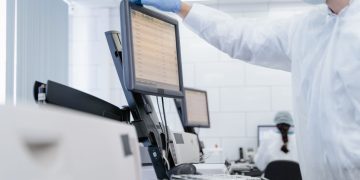























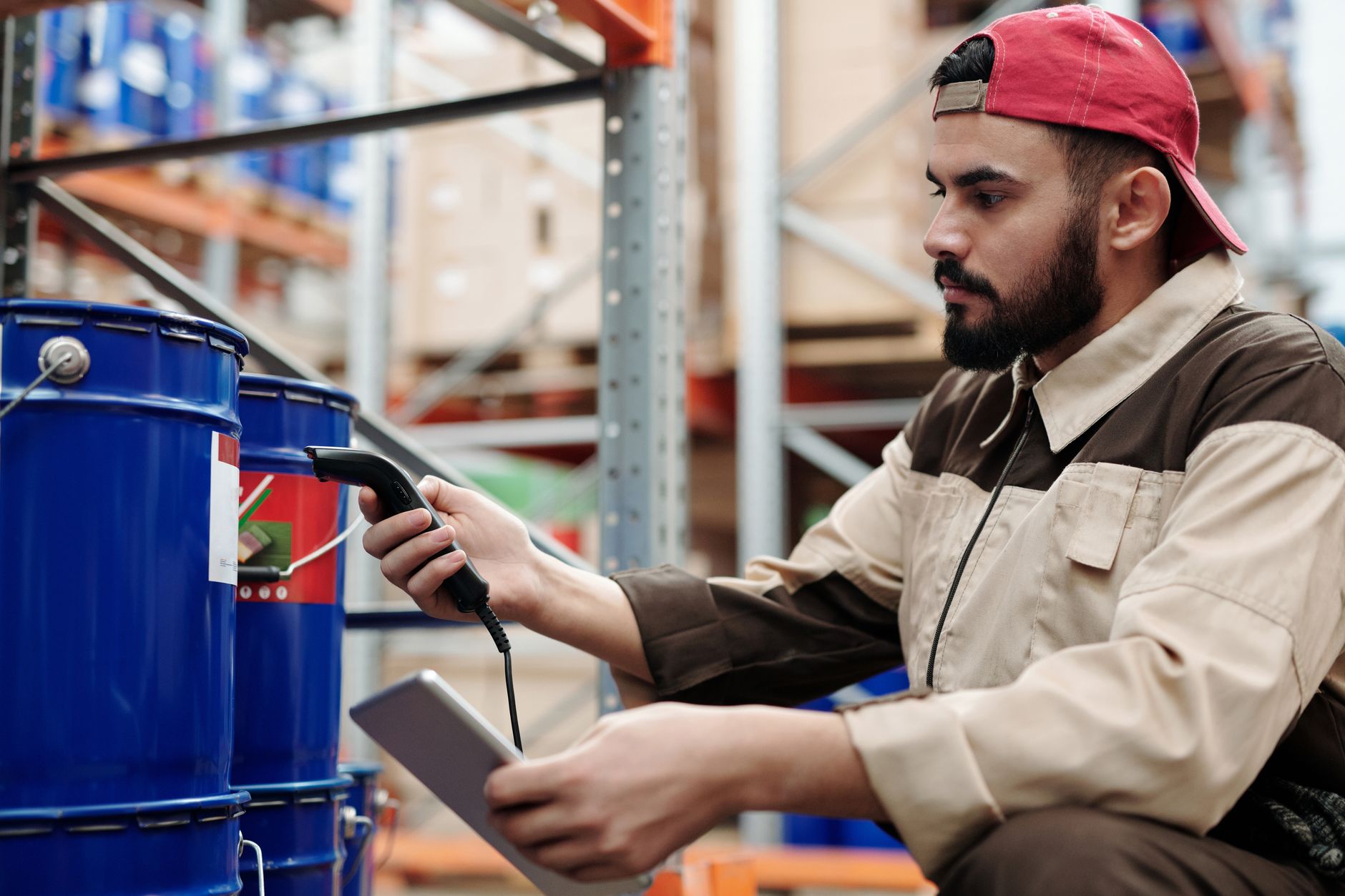
For all the noise about artificial intelligence reshaping office work, some of the clearest early returns are turning up in a very different setting: the warehouse floor, the loading dock and the retail aisle. New research from device and software maker Zebra Technologies argues that AI-enabled tools are already delivering measurable productivity gains for frontline staff, the people who scan parcels, pick orders, restock shelves and keep supply chains moving.
The findings, reported by IT Brief Australia, add to a growing body of evidence that the biggest AI dividend may not be in white-collar knowledge work at all, but in the physical economy where speed, accuracy and staff retention translate directly into margin. For a country as reliant on long supply chains and seasonal labour as Australia, that is a distinction worth paying attention to.
The context: frontline work has been left behind
Frontline workers make up the vast majority of the global workforce, yet they have historically received the smallest slice of technology investment. While head-office teams were handed laptops, dashboards and, more recently, generative AI copilots, the people doing the physical work often made do with clipboards, radios and ageing handheld scanners. That gap has become harder to justify as customer expectations for same-day delivery and always-in-stock shelves have climbed.
Zebra, whose hardware and software sit inside a large share of the world’s distribution centres and shopfronts, has been making this argument for several years through its regular vision studies of warehousing and retail. The latest research continues that theme, connecting the rollout of AI-assisted tools, things like intelligent scanning, predictive task allocation, computer vision and real-time decision prompts, to gains in how much work frontline teams can get through and how accurately they do it.
The news: AI moves from pilot to payoff
The headline takeaway is that AI is starting to show up in the numbers rather than just in the pitch decks. According to the study as reported by IT Brief Australia, organisations deploying AI-enabled devices and software are seeing improvements in throughput and task efficiency, alongside benefits that are harder to put a dollar figure on, such as faster onboarding of new staff and reduced error rates.
The mechanism is worth unpacking, because it is different from the office story. On the frontline, AI rarely writes prose or answers emails. Instead it quietly optimises the physical flow of work: routing a picker along the most efficient path, flagging a mispick before it is packed, forecasting which aisles will need restocking, or reading a damaged barcode that a standard scanner would reject. Each of these is a small saving, but multiplied across thousands of shifts and millions of items, the compounding effect is where the productivity claim comes from.
That framing matters because it sidesteps some of the anxiety that has dogged AI in knowledge work. A tool that helps a worker hit their targets and clock off on time is a very different proposition to one that appears to be auditioning for their job.
Two views: genuine uplift or optimistic vendor maths?
Supporters of the frontline AI push argue the case is strong precisely because the work is measurable. Warehouses already track picks per hour, order accuracy and dwell times to the decimal point, so any uplift from a new tool is easy to isolate and audit. In that environment, AI is less a leap of faith than a continuation of decades of process optimisation, and the labour shortages that have plagued logistics since the pandemic give operators a hard-nosed reason to adopt it.
Sceptics counter that research produced by a company selling the very tools it is measuring deserves careful reading. Vendor-sponsored studies tend to survey organisations already invested in the technology, which can flatter the results, and productivity figures drawn from controlled deployments do not always survive contact with a chaotic peak-season shift. There is also the human question. Efficiency tools that monitor every scan can shade into surveillance, and Australian unions have been vocal about the difference between technology that helps workers and technology that simply pushes them to move faster. The productivity story is real, this camp argues, but the size of the prize and the conditions attached to it deserve scrutiny.
The Australian stakes
For Australia, the frontline is not a niche. Retail and logistics together employ well over a million people, and the tyranny of distance means goods often travel thousands of kilometres between port, distribution centre and store. Every efficiency gain in that chain is amplified by the length of the journey, which is part of why local operators have been among the more enthusiastic adopters of warehouse automation and smart-scanning technology.
The labour picture sharpens the case further. Persistent skills shortages, high staff turnover in warehousing and the cost of training seasonal workers ahead of the Christmas and end-of-financial-year peaks all push employers toward tools that get new starters productive quickly. If AI can shave days off onboarding or cut the error rate on a night shift, the return lands fast in a sector where margins are thin and freight costs are stubbornly high.
There is a policy dimension too. Australian productivity growth has been weak for much of the past decade, a problem federal Treasury and the Productivity Commission have repeatedly flagged, and governments of both stripes have looked to technology adoption as one of the few available levers. Frontline AI offers a rare example of a use case where the productivity claim is concrete and the workforce impact, at least on the current evidence, looks more like augmentation than replacement. That combination is politically attractive at a time when much of the AI debate is dominated by fears of job losses.
The caveat is that Australia’s frontline workers are also protected by some of the world’s more robust workplace laws, and any deployment that strays into intrusive monitoring will draw a response from unions and regulators. The operators who capture the gains will be the ones who treat AI as a tool for their staff rather than a tool aimed at them.
What’s next
Expect the frontline to become a busier battleground for AI vendors over the next 12 months, with device makers, warehouse software firms and the major cloud players all pitching intelligent tools to retailers and logistics operators. The near-term test in Australia will be the upcoming peak retail season, the real-world stress test where throughput claims either hold up or unravel. Watch too for how employers handle the data question, because the difference between a productivity tool and a surveillance tool will increasingly define which deployments succeed and which trigger a backlash. On the current evidence, the frontline is shaping up as one of the more grounded corners of the AI boom, and one where Australia’s supply-chain-heavy economy has a genuine stake.
Sources: IT Brief Australia.