









































Australia’s long battle to tame inflation was supposed to be easing into its final stretch. Instead, two forces that have little to do with the usual suspects of rents and groceries are pushing in the opposite direction: a renewed shock in energy costs and the enormous electricity appetite of the artificial intelligence boom. A new analysis from investment research house Kalkine argues the combination is adding fresh pressure to the nation’s price outlook at precisely the moment households and businesses had hoped for relief.
The argument, set out in a piece headlined “Energy Shock and AI Boom Add to Australia’s Inflation Pressures”, lands in familiar territory for anyone who has watched their power bill over the past two years. What is new is the framing: that the rapid expansion of data centres, and the wider computing demand driven by AI, is becoming a structural driver of electricity consumption rather than a niche industrial line item.
Why energy keeps biting
Energy has been one of the stickiest parts of the inflation story. Even as goods prices moderated and global supply chains unclogged after the pandemic, electricity and gas costs stayed stubbornly elevated, cushioned only partly by government rebates that masked the underlying trend. When those rebates roll off, the headline figures tend to jump back up, a pattern the Australian Bureau of Statistics has repeatedly flagged in its monthly consumer price readings.
Layered on top of that is an ageing coal fleet winding down faster than replacement generation and transmission can be built, leaving wholesale prices exposed to volatility whenever a plant trips or demand spikes. The result is an energy market that behaves less like a settled utility and more like a commodity prone to sudden shocks, and those shocks feed through the economy in ways that are slow to reverse.
The AI dimension sharpens the problem. Training and running large models requires vast, always-on computing capacity, and that capacity lives in data centres that draw power around the clock. Operators are racing to secure electricity supply, and in doing so they are competing with households and existing industry for a resource that is already tight. More demand chasing constrained supply is, in the plainest economic terms, a recipe for higher prices.
Two ways to read the risk
Not everyone agrees on how much this matters for the inflation numbers the Reserve Bank actually targets. One view, broadly the cautionary one that Kalkine leans toward, is that energy sits upstream of almost everything. It is an input into manufacturing, transport, food production and services, so a sustained lift in power costs eventually shows up across the basket of goods and services the ABS measures. On this reading, the AI build-out is not a passing story for the technology pages but a genuine macroeconomic variable that could keep inflation higher for longer.
The opposing view is more sanguine. Data centres, for all the headlines, still account for a modest share of total national electricity demand today, and much of the new capacity being announced is paired with dedicated renewable supply and firming, including some operators pursuing off-grid solar and battery campuses specifically to avoid straining the public grid. On this reading, the inflation threat is real at the margin but manageable, and the bigger near-term driver of prices remains services and labour costs rather than kilowatt-hours.
Both readings can be true at once. The near-term inflation picture may be dominated by other forces while the energy-and-AI dynamic builds slowly in the background, becoming more significant as data centre capacity scales through the back half of this decade.
The Reserve Bank’s dilemma
For the central bank, the timing is awkward. Governor Michele Bullock and the board have spent more than two years trying to steer inflation back inside the two-to-three per cent target band without tipping the economy into recession. A fresh energy-driven impulse is exactly the kind of supply-side pressure that monetary policy handles poorly, because lifting interest rates does little to build a power station or cool a data centre’s demand. It can only dampen the broader economy in the hope that weaker overall activity offsets the energy push.
That leaves the Reserve Bank with less room to cut rates than markets had been pricing, and raises the prospect that any easing cycle is shallower or slower than households carrying large mortgages would like. Treasurer Jim Chalmers has consistently framed energy bill relief as central to the government’s cost-of-living response, but rebates treat the symptom rather than the cause, and they cannot be extended indefinitely without their own budgetary consequences.
What it means for Australia
The stakes here are distinctly local. Australia has positioned itself as an attractive home for data infrastructure, pitching stable governance, land and renewable potential to global cloud and AI players. That ambition collides directly with an electricity system under strain and a political promise to bring power prices down. The country cannot comfortably be both a magnet for energy-intensive computing and a place where households see their bills fall, at least not without a far faster build-out of generation and transmission than is currently underway.
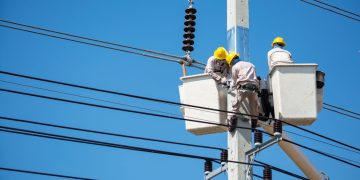
There is also a workforce angle that compounds the squeeze. FluentSea has reported on a shortfall of some 42,000 trades workers needed to deliver the energy and AI infrastructure Australia is banking on, and that labour gap feeds back into higher construction costs, which feed back into the price of the very capacity meant to relieve the pressure. The pieces of this puzzle are tightly interlocked, and pulling one lever tends to tug on the others.
What’s next
The near-term signposts are clear enough. Each monthly and quarterly CPI release will show whether energy is reasserting itself as rebates taper, and the Reserve Bank’s commentary will reveal how much weight it is placing on supply-side drivers it cannot control. Beyond that, the pace of data centre approvals, the firming of renewable projects and the progress of major transmission links will determine whether the AI boom becomes a manageable line on the demand curve or a persistent source of upward price pressure.
For now, the message from this analysis is a sobering one for anyone hoping inflation was comfortably beaten. The old drivers may be fading, but new ones are taking their place, and some of them are being built, quite literally, out of server racks and substations.
Sources: Kalkine via GNews.