











































The global race to build smarter artificial intelligence has an appetite that most people never see. Behind every fluent chatbot and every model that can fold laundry in a demo video sits a mountain of human-labelled data, gathered, sorted and tagged by workers who rarely share in the wealth their labour creates. A young entrepreneur in India now wants to change who holds the shovel in that gold rush, and her method is as provocative as it is revealing.
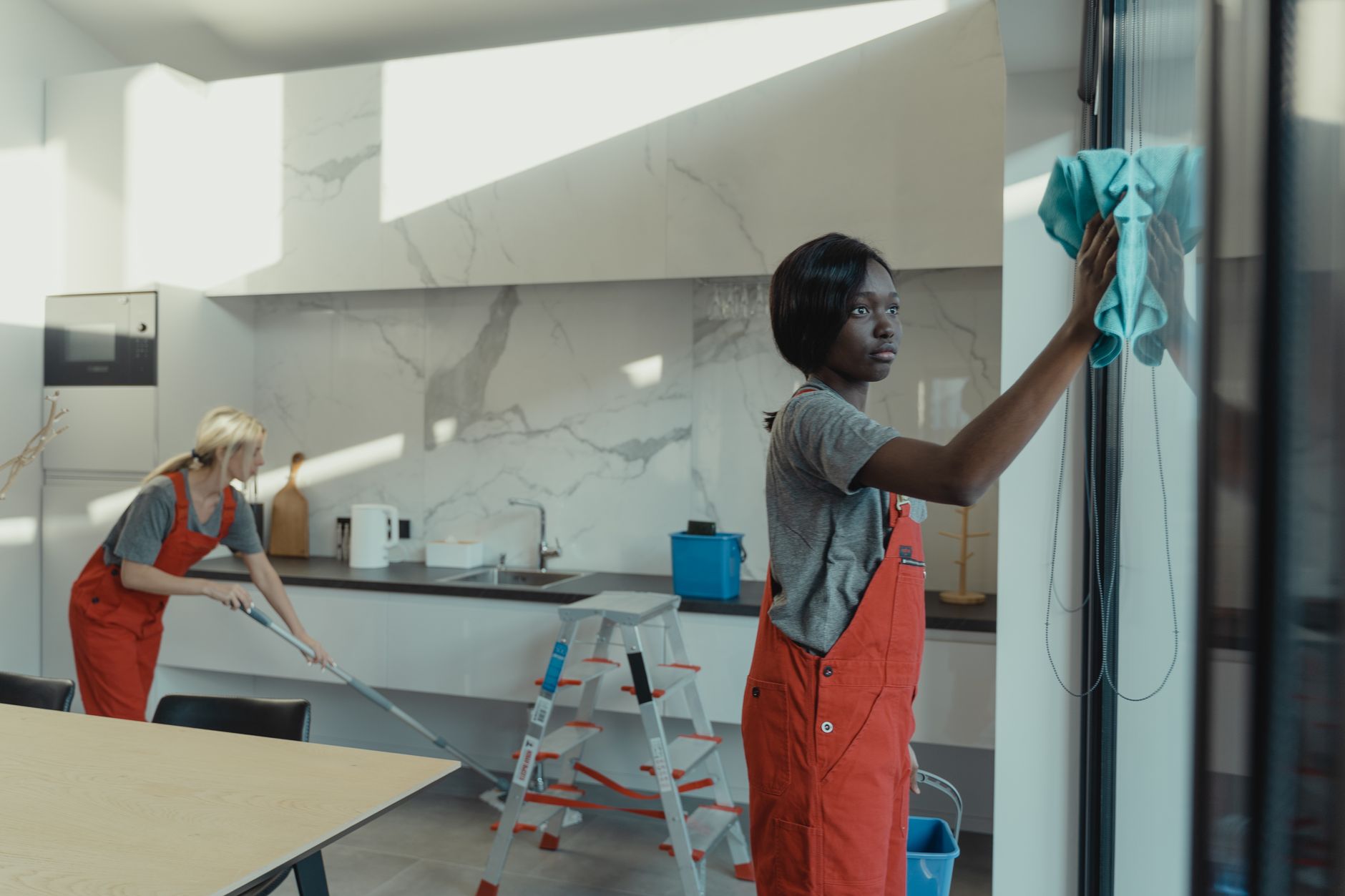
According to Forbes Australia, the 24-year-old founder Anjali Sardana is building a business that sends domestic workers into people’s homes wearing head-mounted cameras, capturing the ordinary rhythm of household chores so that footage can be turned into training data for United States AI companies. The pitch is that the everyday physical world, the way a hand grips a kettle or wipes a bench, is precisely the kind of information that the next generation of robotics and multimodal models desperately needs and cannot easily fake.
Why household footage is suddenly valuable
For years the frontier of AI was text scraped from the open web. That well is running dry, and the companies chasing physical intelligence, robots and agents that can act in the real world, have discovered that video of humans doing mundane tasks is scarce and expensive. Kitchens, cluttered living rooms and half-loaded dishwashers are messy in ways that laboratories are not, and that mess is exactly what makes the data useful. Sardana’s wager is that India’s enormous domestic workforce sits on top of a resource the AI industry has barely begun to tap.
Her stated ambition, as reported by Forbes, is redistributive. Domestic workers in India are among the country’s lowest paid and least protected, and Sardana frames the venture as a way to funnel some of the money flowing through Silicon Valley into their pockets. If US firms are going to pay handsomely for real-world footage, the argument runs, the people who actually generate it should get a cut rather than watching the value disappear offshore.
It is a genuinely novel spin on a well-worn model. The data annotation industry has quietly employed hundreds of thousands of people across India, Kenya, the Philippines and beyond, often for a few dollars an hour, drawing boxes around objects and rating chatbot answers. Sardana’s version pushes the camera off the screen and into the home, which is what makes it both commercially interesting and ethically fraught.
Two ways to read the same idea
Supporters see a rare attempt to hand agency and income to workers who are usually treated as invisible inputs. Rather than being hired anonymously through an opaque platform, the housekeepers in this model are the source of a product with obvious market value, and the founder’s promise is that they will be paid accordingly. In a country where informal domestic work offers little in the way of bargaining power, any scheme that attaches a price tag to that labour and returns some of it can be read as progress.
Critics will see something more troubling. Strapping a camera to a worker’s head inside someone else’s home raises immediate questions about consent, and not only the worker’s. The residents being filmed, the children, the private conversations, the contents of a bedroom or a bathroom, may never have agreed to become training data for a company on the other side of the world. Privacy scholars have long warned that the AI supply chain externalises its risks onto the poorest and least visible participants, and a head camera in a stranger’s kitchen is close to a textbook example. There is also the durable criticism that these arrangements dress up extraction as empowerment: the worker bears the exposure, the platform sets the terms, and the largest share of the eventual profit still lands in California.
The honest answer is that both readings can be true at once. A scheme can pay people more than they earned before and still shift surveillance onto them in ways they cannot fully control. Which effect dominates depends almost entirely on the fine print, on how consent is obtained, how footage is stored, who it is sold to and what workers are actually told about where their images end up.
What it means for Australia
It would be easy to file this under distant curiosity, but the story lands close to home. Australia is a heavy consumer of exactly the kind of AI that this data feeds, and much of the invisible labour behind our chatbots and computer-vision tools already sits offshore in precisely these arrangements. When an Australian bank, retailer or logistics firm deploys a model trained on gig-labelled or home-captured footage, it inherits the ethical supply chain that produced it, whether or not anyone in the boardroom has thought about the housekeeper who wore the camera.
There is also a regulatory angle that Australian policymakers are still wrestling with. The federal government has been consulting on mandatory guardrails for high-risk AI, and the Privacy Act reforms working their way through Canberra are meant to tighten the rules around sensitive personal information. A business model built on filming inside private homes tests those frameworks directly. If footage of Australian households were ever gathered this way, or if data captured overseas were used to train tools sold here, questions about biometric consent and cross-border data flows would move quickly from abstract to urgent.
For Australian AI founders the venture is a useful mirror. The country’s start-up scene talks often about building responsibly and about sovereign capability, yet the raw material for many products still comes from labour markets where consent and pay are murky. The Sardana model at least forces the question into the open: if real-world data is the new oil, who owns the well, and what do we owe the people standing in it.
What happens next
The immediate test is whether the business can scale without the ethical problems swallowing it. Consent from residents, secure handling of intensely private footage, and transparent pay for workers are not optional extras; they are the difference between a genuinely new labour model and a fresh coat of paint on old exploitation. US buyers, increasingly nervous about the provenance of their data after a string of controversies, will also want assurances that what they are purchasing is clean.
Whether or not this particular venture succeeds, the underlying pressure is not going away. As models move from text into the physical world, demand for footage of ordinary human life will only grow, and the people best placed to supply it are often those with the least protection. Australia can watch from a comfortable distance, or it can treat the experiment as an early warning about the labour and privacy questions baked into the AI it is so eager to buy.
Sources: Forbes Australia