









National Science Week is one of those uniquely Australian institutions that manages to make the country’s laboratories, observatories and museums feel briefly like public property. For a fortnight each August, researchers who normally publish for one another instead run talks in pubs, pop-up stalls in shopping centres and hands-on sessions for school groups. This year South Australia‘s program is doing something a little unusual: alongside the moon gardening, the fossils, the bubbles and the cosmic collisions, it has carved out room for one of the most contested questions in the country’s economy, which is what artificial intelligence will do to creative jobs.
The inclusion is telling. Science communication has long leaned on the wonder of the natural world, and the SA line-up still delivers plenty of that, from talks on the ocean that trade in equal parts love and fear to sessions unpacking how planets smash into one another across deep time. But slotting an AI-and-creative-work event into that program signals that organisers now see machine learning as part of the science story the public wants explained, not just a technology beat for the business pages. As the Medianet News Hub listing makes clear, the creative-jobs conversation is being offered to the same audiences who turn up to hear about bubbles and dinosaurs.
Why creative work keeps landing in the crosshairs
The reason AI and creative jobs make an obvious pairing for a public forum is that this is where the technology has become most visible and most disputed. Generative tools can now draft copy, compose music, sketch storyboards and produce passable illustration in seconds, which puts them squarely in the path of writers, designers, musicians, voice artists and the broader arts and media workforce. For a general audience, that is far easier to grasp than an abstract debate about large language models, because almost everyone has either used one of these tools or worried about a friend whose livelihood might depend on the work they replicate.
It is also a genuinely unsettled question, which makes it good material for the kind of open discussion Science Week is built for. There is no scientific consensus that creative jobs are simply doomed, nor a comfortable assurance that everything will be fine. That ambiguity is the point of putting it in front of the public rather than leaving it to vendors and consultants.
Two ways of reading the same tools
Broadly, two camps have formed, and both are likely to be represented in any honest Science Week conversation. The first sees AI as a threat to the economics of creative work. The concern here is not only that a machine can produce a serviceable logo or jingle, but that clients and platforms will accept “good enough” output at a fraction of the cost, hollowing out the entry-level and mid-tier work that has traditionally allowed creative careers to exist at all. Australian illustrators, session musicians and freelance writers have voiced versions of this worry repeatedly over the past two years, often pointing out that many of these systems were trained on human work that was never licensed.
The second camp frames the same tools as an amplifier rather than a replacement. On this view, AI handles the repetitive scaffolding, the first drafts, the tedious variations and the mock-ups, freeing skilled people to spend more of their time on the judgement and taste that machines cannot reliably supply. Studios and agencies making this argument tend to say the winners will be creatives who learn to direct these systems well, treating them as a fast but unreliable junior collaborator whose output always needs a human editor.
The honest answer is that both accounts are partly true and the balance between them is still being decided, which is exactly why a science festival is a sensible place to thrash it out in public rather than in a boardroom.
What it means for Australia
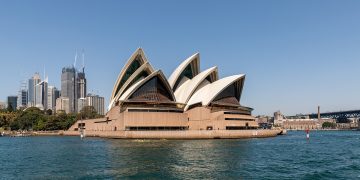
For Australia, the stakes are more than academic. The arts and cultural sector employs hundreds of thousands of people and feeds industries well beyond the studio, from advertising and games to film, publishing and design. South Australia has spent years positioning Adelaide as a creative and screen-production hub, complete with festivals, a growing games industry and a screen sector that competes for international work. A shift in how creative labour is valued lands directly on that ambition, and on the many small operators and sole traders who make up the bulk of the sector.
There is also a policy dimension that gives events like this real weight. Canberra has been grappling with how to protect creators whose work has been swept into AI training sets, and how to balance that against the productivity gains the technology promises. Public conversations at the grassroots level feed the sentiment that eventually reaches submissions, inquiries and regulation. When Science Week audiences in Adelaide ask their questions about consent, credit and pay, they are rehearsing arguments that will shape the national debate over copyright reform and AI guardrails.
Regional and outer-suburban communities have a particular stake as well. National Science Week deliberately reaches beyond the inner city, and for young people in places without a dense creative-industry ecosystem, the message that AI could either erase or transform creative pathways will influence what they choose to study and where they see a future. Getting that message right, neither doom-laden nor complacent, matters for a state trying to keep its creative talent from drifting east.
What is next
The immediate value of the SA program is that it puts scientists, technologists and working creatives in the same room as the public, which is rarer than it should be. The harder work comes afterwards, in whether these conversations translate into practical support: retraining that treats creative professionals as worth investing in, procurement and platform practices that do not simply chase the cheapest machine output, and a policy settlement that gives creators some say over how their work is used.
None of that will be resolved during a fortnight of talks and demonstrations. But there is something quietly significant about a science festival deciding that the future of creative work belongs on the same bill as fossils and cosmic collisions. It reflects a recognition that AI is no longer a specialist curiosity, and that the people most affected by it deserve a plain-English seat at the table. For a sector wrestling with genuine anxiety, being taken seriously by the country’s flagship celebration of science is a modest but real form of respect.
Sources: Medianet News Hub.