

















































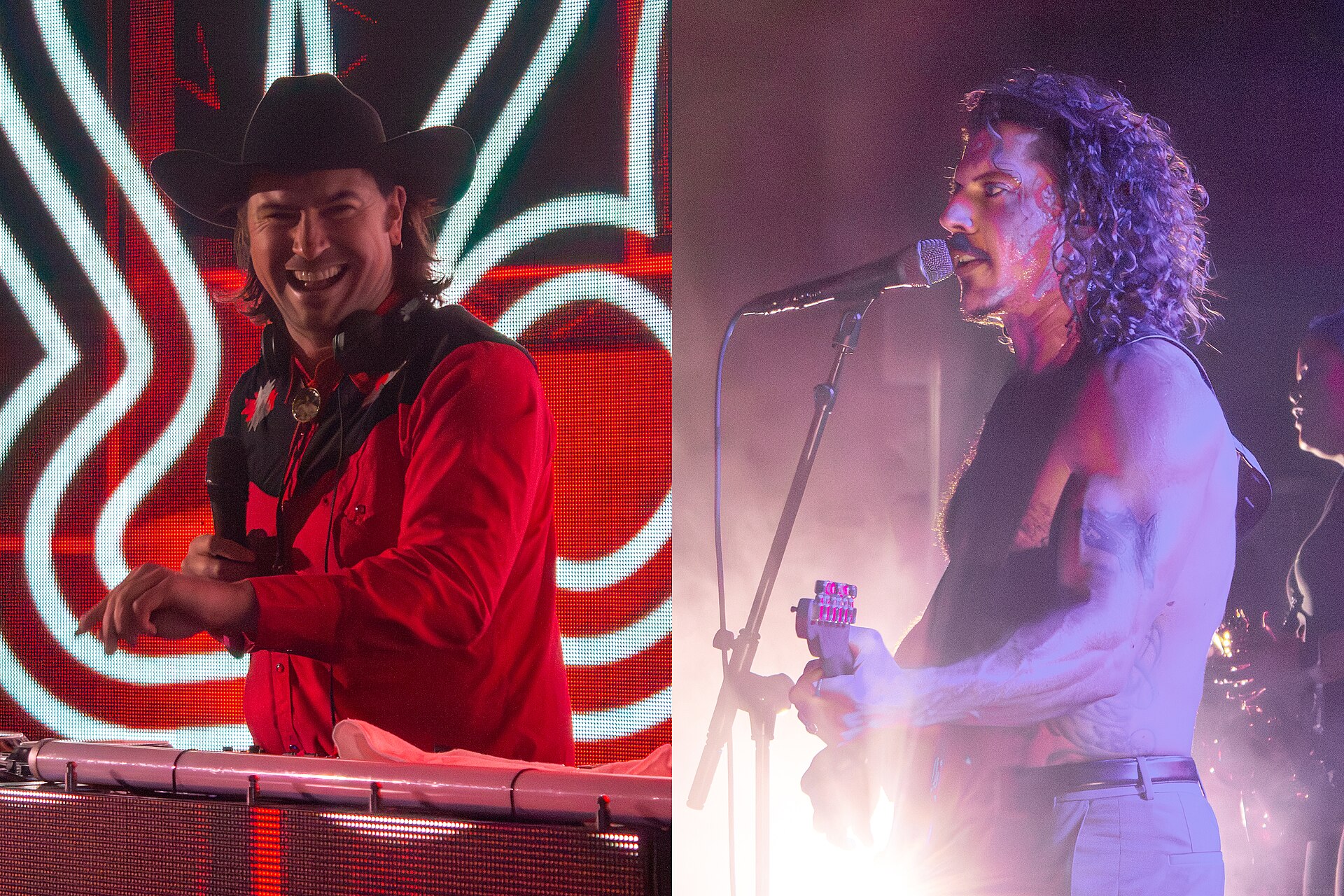
There is a particular kind of Australian humour that works best when it refuses to take itself seriously, and Peking Duk have made a career of it. So it was fitting that the Canberra-raised duo of Adam Hyde and Reuben Styles chose comedy rather than a manifesto when they waded into one of the most fraught arguments in music right now: whether artificial intelligence belongs anywhere near the craft of writing a song.
As Rolling Stone Australia reports, the pair have poked fun at the current wave of AI-generated music by reworking their own material, turning their beloved 2014 breakout single “High” into a knowing send-up of the way machines now churn out tracks on demand. The gag is affectionate rather than furious, but the target is unmistakable. In an era when anyone with a text box and a monthly subscription can conjure a passable pop song in seconds, two of Australia’s most recognisable electronic artists are drawing a line, and doing it with a wink.
Why a joke about a robot love song matters
“High” is not a throwaway choice. Released in 2014 with vocals from Nicole Millar, it was the song that pushed Peking Duk from festival tents to commercial radio, went multi-platinum, and helped define a particular strand of Australian dance-pop. Reworking it to mimic the flat, uncanny quality of machine-made music is a bit like a painter redoing their most famous canvas in the style of a colour-by-numbers kit. The humour only works because listeners know the original so well, and because they can feel the difference.
That difference is exactly what is now up for grabs. Generative music tools such as Suno and Udio have improved at a pace that has stunned even sceptics, producing full tracks with vocals, hooks and mastering that can fool a casual listener scrolling a streaming playlist. Last year’s saga of the Velvet Sundown, a band that racked up hundreds of thousands of monthly listeners on Spotify before being revealed as an AI project, showed how quickly synthetic acts can slip into the same feeds as human ones. For working musicians, the worry is not that the robots make good art. It is that they make cheap, endless, good-enough content that competes for the same attention and the same royalty pool.
Two ways of hearing the same tune
There are broadly two camps forming around all of this, and Peking Duk’s stunt sits neatly at the fault line between them.
On one side are artists and labels who see generative music as an existential threat to the value of human creativity, and to the copyright that underpins it. Their argument is partly moral and partly economic. Many of these models were trained on vast libraries of existing recordings, often without permission or payment, which means the tools competing with musicians may have been built on those same musicians’ work. Bodies representing songwriters around the world have spent the past two years lobbying for consent, credit and compensation to be baked into any legal framework, and a chorus of high-profile acts has signed open letters warning against what they call the unlicensed use of their music to train AI.
On the other side sit the technologists and a growing number of producers who treat AI as simply the next instrument, no more inherently threatening than the sampler or the drum machine once were. To this camp, a rework like Peking Duk’s is good fun but also a little overwrought, because the tools can just as easily expand what a human artist is able to do. Vocal synthesis, stem separation and AI-assisted mixing are already quietly embedded in plenty of studios, including ones that would never describe themselves as making “AI music”. The line between using a clever tool and being replaced by one is, they argue, blurrier than the debate allows.
Peking Duk’s contribution is to puncture the pomposity on both sides. By making the joke themselves, at their own expense, they avoid the finger-wagging tone that has crept into some of the artist backlash, while still making it clear which side of the argument they are on.
What it means for Australia
For Australian musicians, this is not an abstract offshore fight. The local industry is small, heavily reliant on streaming income and live touring, and acutely exposed to anything that dilutes both. Every synthetic track uploaded to a streaming service competes for finite listener hours and shaves fractions off the per-stream payouts that already sit at fractions of a cent. When a domestic act as commercially successful as Peking Duk chooses to make a public point of it, it lends weight and reach to concerns that smaller artists have been raising for a while without the megaphone.
The timing also lands in the middle of an active policy conversation. Australia’s government has been weighing how copyright should adapt to AI training, and creative-sector groups have been pushing hard for an approach that requires licensing and consent rather than a blanket text-and-data-mining exemption of the kind floated in other jurisdictions. Music bodies including APRA AMCOS have argued that Australian songwriters should not have their catalogues hoovered up to build tools that then undercut them. A cheeky rework of “High” is not a submission to a parliamentary inquiry, but it does something submissions rarely manage: it makes the stakes legible to a mainstream audience in about the length of a pop song.
There is a cultural dimension too. Australian music has always traded on personality, place and a certain larrikin authenticity, qualities that are difficult for a model trained on everyone’s music at once to reproduce. Peking Duk’s joke quietly makes that case. The reason the AI version is funny is that it sounds like nobody in particular, which is precisely what a distinctly Australian act is not.
What’s next
Expect more of this, not less. As generative tools become cheaper and more convincing, artists are likely to keep using satire, watermarking, and public statements to distinguish the human-made from the machine-made, partly as a creative gesture and partly as a marketing one. Authenticity is quietly becoming a selling point.
The harder questions sit with regulators and platforms. Streaming services are under pressure to label AI-generated tracks and to police fake artists, while governments in Canberra and abroad decide whether training on copyrighted music without consent is lawful. Those decisions will shape whether a rework like this stays a bit of fun or becomes a period piece from the moment before the rules were written. For now, Peking Duk have done what good pop does best. They have taken a serious idea and made it hum.
Sources: Rolling Stone Australia.


