

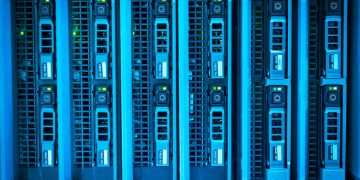









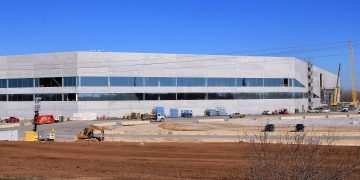
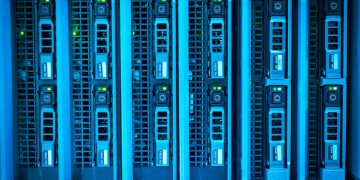











The artificial intelligence boom has a physical footprint, and in Australia it is starting to show up in paddocks, industrial estates and the national electricity market. Every large language model, every AI agent trialled by a bank, every image generator running in the cloud has to live somewhere, and that somewhere is an increasingly power-hungry data centre. The question of how those buildings will be fed, and whether the electrons behind them are clean or dirty, has now moved from an industry talking point to a matter of national planning.
According to a report from solar-sector publication TaiyangNews, Australia has begun detailing a renewable energy framework aimed squarely at the wave of AI data centres being built and proposed across the country. The thrust is simple to state and hard to deliver: as computing demand climbs, the additional load should be met as far as possible by renewable generation and storage, rather than by leaning harder on an ageing coal fleet or piling extra strain onto a grid already in the middle of its own transition.
Why the timing matters
Data centres are not new to Australia, but the scale of what is coming is. Global operators and local players alike have been racing to secure land, water and grid connections, betting that AI training and inference will keep demand rising for years. The energy implications are significant. Industry and government estimates have long put data centres among the faster-growing sources of electricity demand, and AI workloads, which run hot and rarely sleep, are accelerating that curve.
That collides with a grid that is being remade in real time. Coal-fired power stations are closing on a published timetable, renewables and storage are being built to replace them, and the Australian Energy Market Operator has repeatedly warned about reliability during the changeover. Drop a cluster of new data centres, each capable of drawing as much power as a small city, into that picture and the planning challenge sharpens considerably. A framework that ties new AI load to new clean supply is, at heart, an attempt to stop the boom from quietly rewriting the emissions maths.
The news
The framework being detailed reflects a broader shift in how governments are approaching the AI build-out. Rather than treating data centres purely as a source of investment and jobs to be welcomed, the emphasis is increasingly on the conditions attached: where the power comes from, how the load is firmed when the sun is not shining or the wind is not blowing, and how operators can demonstrate that their growth is genuinely matched by renewable generation rather than accounting sleight of hand.
For a solar-focused outlet like TaiyangNews, the interest is obvious. AI data centres represent one of the largest new sources of round-the-clock electricity demand in a generation, and much of the cheapest new supply in Australia is solar, backed by batteries and, in time, longer-duration storage. If the framework nudges hyperscalers and colocation providers toward power purchase agreements with solar and wind farms, it could underwrite a fresh pipeline of renewable projects at a moment when some developers have been struggling with connection delays and rising costs.
Two ways of reading it
Supporters of a firm renewable framework argue it is the only sensible way to reconcile two of the government’s own priorities. Australia has staked a great deal on becoming a serious player in AI and sovereign compute, and it has legislated emissions targets it does not want undermined by a surge in fossil-fuelled electricity. Marrying data centre growth to renewable supply, on this view, lets the country chase the economic upside of AI without blowing its climate commitments, while giving clean energy developers a large and creditworthy set of customers.
Sceptics are less sure the timing works. Data centres can be built in a couple of years, but transmission lines, large solar and wind farms and grid-scale batteries often take longer to plan, approve and connect. If AI demand arrives before the renewable supply and firming to match it, the practical result may be more reliance on gas or the existing fleet, or fresh pressure on power prices for households and businesses already feeling the pinch. There is also the perennial question of whether “matched to renewables” claims stand up when a facility draws from the grid at three in the morning. A framework is only as good as the accounting and enforcement behind it.
What it means for Australia
For Australia the stakes sit at the intersection of two national ambitions that do not always pull in the same direction. The country wants sovereign AI capability and the data centres to support it, a theme running through recent multibillion-dollar infrastructure deals and the federal push on an AI capability plan. It also wants an orderly energy transition that keeps the lights on and prices in check. Getting the framework right is how those two goals stop competing and start reinforcing each other.
The regional dimension is real too. Data centres cluster near cheap power, water and fibre, which increasingly means locations well beyond the Sydney and Melbourne cores. That gives renewable energy zones in regional Australia a potential anchor customer, and it hands local communities a stake in decisions that were once made in distant boardrooms. Water use, land, noise and the visual footprint of both the centres and the solar farms feeding them will all be part of the conversation, and a national framework that ignores those local realities will struggle to earn a social licence.
What is next
The detail will decide everything. Watch for how firm the renewable-matching requirements turn out to be, whether they are voluntary guidance or hard conditions on approvals and connections, and how they interact with the market operator’s reliability planning. Watch, too, for how hyperscalers respond, since their appetite for long-term renewable power purchase agreements will tell you whether the framework is shaping behaviour or simply describing it. If the settings are credible, Australia could turn its AI build-out into a demand engine for clean energy. If they are not, the country risks importing the emissions problem that other jurisdictions are already wrestling with, all in the name of keeping up in the AI race.
Sources: TaiyangNews.