


































Few Australian technology stories move at the speed of Firmus. The Singapore-founded, Sydney-headquartered infrastructure company has closed a fresh $2.85 billion raise, a sum that would have been almost unthinkable for a local hardware venture only a few years ago, and one that pushes its total funding well beyond the US$3 billion mark (roughly A$4.25 billion) in the space of just 12 months. In a market where capital is supposed to be cautious and interest rates are still doing their work, Firmus keeps writing a different script.
The figure was reported this week by SmartCompany, which noted that the latest cheque is the biggest single instalment in a run of blockbuster rounds that has turned a relatively young company into one of the most heavily backed infrastructure plays operating out of this part of the world. For a business built around the deeply physical work of cooling and powering computer chips, the momentum has been remarkable.
What Firmus actually does
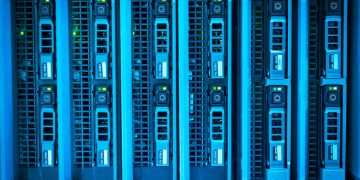
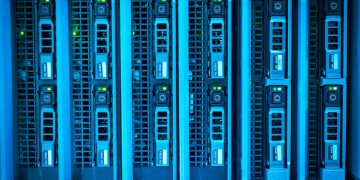
Strip away the funding headlines and Firmus is, at its core, a data centre company with an engineering obsession. Its pitch is that the artificial intelligence boom is not really a software story at all, but a story about electricity, heat and land. Training and running large models requires vast banks of graphics processing units, and those chips throw off enormous amounts of heat. Cooling them efficiently, cheaply and without drinking rivers dry has become one of the defining bottlenecks of the AI era.
Firmus, closely associated with the Sustainable Metal Cloud brand, has leaned into immersion cooling, an approach that submerges hardware in specialised fluid rather than relying on the fans and air conditioning that guzzle power in conventional facilities. The company argues this lets it pack more compute into less space while cutting energy use, a claim that matters enormously when data centres are increasingly measured not just by the jobs they run but by the grid strain they create. The capital now flowing in is destined for exactly this: more sites, more racks, more of the unglamorous plumbing that underpins every chatbot and copilot.
Why the money keeps coming
The scale of the raise reflects a broader reality investors have grown comfortable with over the past two years. Demand for AI compute has consistently outstripped supply, and the companies that control physical capacity have become the arms dealers of the boom. On FluentSea we have tracked this same logic playing out across the market, from Australian dealmakers piling into so-called picks-and-shovels businesses to the surge in data centre demand lifting the earnings of industrial names like Caterpillar. Firmus sits squarely in that category, selling the shovels rather than panning for gold.
Supporters see a genuinely differentiated business. If Firmus can prove that immersion-cooled facilities are cheaper to run and kinder to the grid, it has a structural advantage over rivals still relying on older designs, and it can offer customers a more predictable cost of compute at a time when that cost is the single biggest line item in many AI budgets. The repeat funding suggests backers believe the order book is real and the technology holds up outside a demonstration hall.
The sceptics are not hard to find either. A wave of very large raises into capital-hungry infrastructure inevitably invites comparisons to previous booms that ran ahead of the revenue to justify them. The concern is not that AI demand is fake, but that the amount of money being committed to building capacity assumes a growth curve that has to keep bending upward for years. If model efficiency improves faster than expected, or if the biggest cloud providers build enough of their own capacity, some of that committed compute could arrive into a softer market than the one being priced today. Firmus is betting heavily that it will not.
The Australian stakes
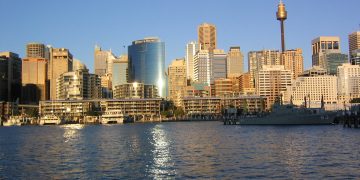
For Australia, Firmus is more than a line in a global funding table. The company runs its operations out of Sydney, and its expansion has become entangled with the country’s own ambitions around sovereign AI capacity, the idea that critical compute should sit on home soil rather than being rented entirely from offshore hyperscalers. Firmus has already featured in that national conversation through its work with locally listed partners, including an $855 million AI infrastructure arrangement with MAAS Group that FluentSea covered earlier. That deal underlined how quickly the AI build-out is reaching into regional Australia, construction supply chains and the ASX itself.
There is a Tasmanian thread to the story too. The state’s abundant hydro power and cool climate have made it an attractive base for energy-intensive computing, and companies chasing green credentials for their AI operations have taken notice. Australia’s comparative advantages here are genuine: cheap renewable energy, political stability and plenty of land. The question the Firmus raise sharpens is whether the country can convert those advantages into lasting economic value, or whether it simply hosts the physical hardware while the profits, the intellectual property and the highest-paid jobs accrue elsewhere.
That tension runs through federal policy debates already under way. Canberra is wrestling with how to power a fleet of new data centres without derailing its emissions targets or crowding households out of the energy market, a challenge FluentSea has reported on as governments try to draft a renewable energy framework fit for the AI age. Every additional billion Firmus raises makes those questions more urgent, because the facilities that money builds will draw power, water and grid connections for decades. Getting the settings right, on pricing, planning and who bears the cost of new transmission, will shape whether communities near these sites see them as an opportunity or an imposition.
What happens next
The near-term test for Firmus is execution. Raising money at this scale is one thing; deploying it into working, revenue-generating capacity on schedule is another, and the AI infrastructure business is littered with projects that slipped on power connections, planning approvals and equipment lead times. Watch for where the new capital lands geographically, how much of it flows into Australian sites, and whether the company converts its cooling story into contracts with the marquee AI customers that give a build-out its credibility.
For a business that has now gathered more than US$3 billion in a single year, the pressure only rises from here. Firmus has convinced a deep bench of investors that the demand for AI compute is durable and that its particular way of delivering it is worth backing at extraordinary scale. Whether that conviction proves prescient or premature will say a great deal about the AI infrastructure market as a whole, and Australia, as both a host and a hopeful beneficiary, has a real stake in the answer.
Sources: SmartCompany