














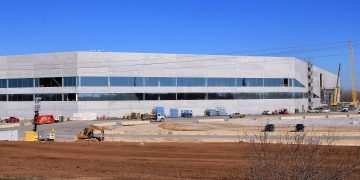
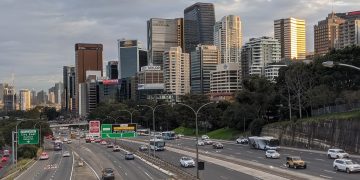
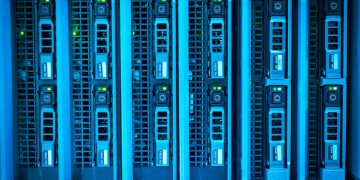














Another very large data centre is being lined up for the edge of Melbourne, and the price tag attached to it says a great deal about where Australia’s digital infrastructure is heading. A proposal valued at roughly $1.1 billion has been floated for a site outside the Victorian capital, adding to a pipeline of hyperscale-style projects that developers are racing to get in front of planners while demand for artificial intelligence computing runs hot.
The plan was reported by Data Center Dynamics, the industry publication that tracks the sector’s global buildout. The proposal joins a crowded field. Melbourne and its outer suburbs have become one of the country’s most active regions for data centre development, sitting behind Sydney but growing quickly as operators look for land that is close enough to fibre and substations yet cheaper and less congested than the inner-city clusters.
Why the fringe, and why now
The location tells the story. A billion-dollar campus needs three things at scale: land, power and water, and the outer ring of a capital city is where those can still be assembled in the quantities modern facilities demand. A single large campus can draw as much electricity as a small town, so developers gravitate to sites with a plausible path to a high-voltage grid connection. The trade-off is that these projects land in communities and on farmland that were never planned around industrial-scale energy loads, which is where much of the friction now sits.
The timing is driven by artificial intelligence. Training and running large models has pushed compute demand well beyond the steady growth the industry planned for only a few years ago, and operators are trying to secure sites and grid capacity before the queue gets longer. That urgency is visible across the Australian market. FluentSea has already covered the $855 million infrastructure contract won by MAAS Group with Firmus, the federal move to build a renewable energy framework specifically for data centres, and the scramble by regional towns to trade grid connections for investment. A $1.1 billion Melbourne proposal fits neatly into that pattern rather than standing apart from it.
Two ways to read it
For the industry and for many in government, a project of this size is straightforwardly good news. It represents construction jobs, a smaller number of ongoing technical roles, rates revenue for the host council and a vote of confidence in Victoria as a place to park sovereign and commercial computing capacity. Advocates argue that if Australia wants to host its own AI workloads rather than shipping data offshore, it needs exactly this kind of capital arriving, and it needs it soon. The alternative, on that view, is watching the compute that underpins the economy get built somewhere else.
The counter-argument is not that data centres are unwelcome, but that their appetite for shared resources is arriving faster than the systems meant to manage it. The Australian Energy Market Operator has repeatedly flagged data centres as a significant and fast-rising source of electricity demand in its long-term planning, and every large facility that connects competes for the same grid capacity that households, manufacturers and the broader electrification of the economy also rely on. Water use for cooling, noise, land value and the visual impact of large windowless sheds on the urban fringe all feature in local objections. The concern is less about any single project and more about the cumulative load if a dozen of them proceed in the same corridor.
What it means for Australia
This is a national question dressed up as a Melbourne one. Australia is trying to do two things at once: decarbonise its electricity system and dramatically expand the amount of computing it hosts onshore. Those goals can complement each other, because data centres are large, predictable buyers of power and can help underwrite new renewable generation and storage. They can also collide, if new load connects faster than clean supply comes online and simply keeps ageing fossil plants running longer. The federal government‘s work on a dedicated energy framework for the sector is an attempt to steer the first outcome rather than the second, and proposals like this one are the real-world test of whether that steering works.
There is also a sovereignty dimension that has moved from the fringes of the debate to its centre. Governments and large enterprises increasingly want sensitive workloads, from health records to defence-adjacent analytics, kept on Australian soil under Australian law. That is difficult without domestic capacity, and domestic capacity means physical buildings drawing real power in real suburbs. Every billion-dollar campus proposed on the edge of a capital is, in that sense, part of the country’s answer to a strategic question about who controls the infrastructure its digital economy runs on.
The catch for communities
The hardest part is distribution. The benefits of a data centre are diffuse and largely national: more compute capacity, a stronger claim to sovereign AI, tax revenue that flows to state and federal coffers. The costs are concentrated and local: the substation upgrade, the truck movements during construction, the pressure on a regional water supply, the transformed skyline of a particular stretch of the urban fringe. Getting that balance right, through planning conditions, community benefit agreements and genuine transparency about power and water use, is what determines whether these projects are welcomed or fought.
What happens next
A proposal is not an approval. Projects at this scale still have to clear planning assessment, secure a firm grid connection and, in most cases, line up anchor tenants before earth is moved. Any of those can slow a scheme down or reshape it, and the electricity connection in particular has become the choke point that decides which data centres actually get built and when. The genuine test will be whether this campus, and the others queuing behind it, can connect to clean power on a timeline that satisfies both their operators and the communities around them. Melbourne’s fringe is about to become a useful case study in whether Australia can build the compute it wants without blowing through the grid and goodwill it needs.
Sources: Data Center Dynamics.


