









































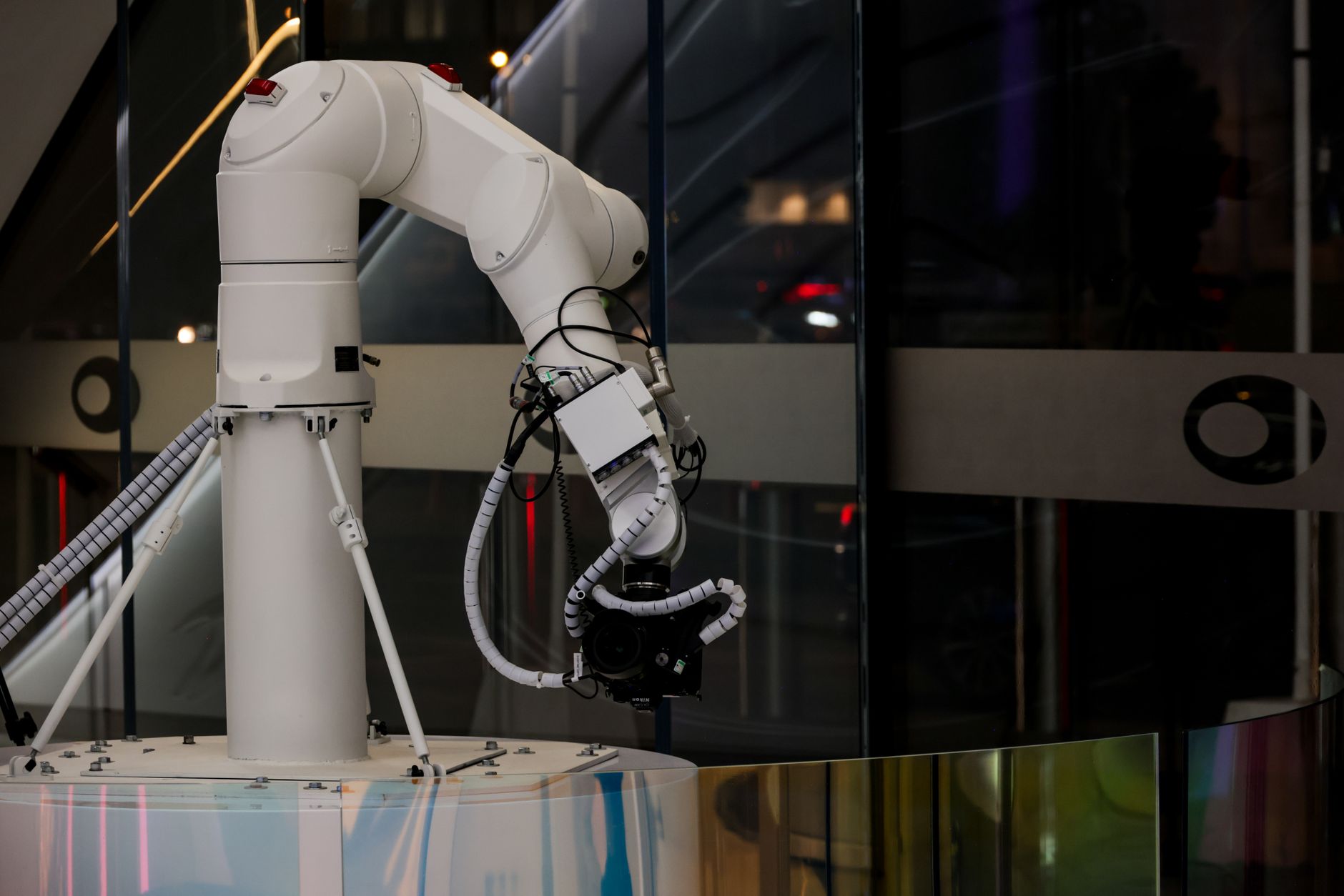
For most Australian investors, the robotics and artificial intelligence boom has been something you read about rather than something you can easily own. The marquee names sit on foreign exchanges, the supply chains run through Japan, Germany, Taiwan and the United States, and picking individual winners in a field moving this fast is a fraught exercise. That gap is exactly the one that thematic exchange-traded funds have rushed to fill, and the BetaShares Global Robotics and Artificial Intelligence ETF, listed on the ASX under the ticker RBTZ, has become one of the better-known local vehicles for the trade.
A recent explainer published by Kalkine walks through the portfolio behind the fund, and it is worth understanding what an investor is actually buying when they tap that ticker, because the label promises rather more than the holdings sometimes deliver.
What sits inside the fund
RBTZ tracks an index of companies from around the world that generate a meaningful slice of their revenue from robotics, automation and artificial intelligence. In practice that means a portfolio weighted heavily towards industrial automation and the picks-and-shovels layer of the AI story rather than the consumer-facing chatbots that dominate the headlines. Think the makers of factory robots, motion-control systems, industrial sensors, machine-vision cameras and the semiconductors that let all of it think. Names such as Japan’s Keyence and Fanuc, Switzerland’s ABB, Germany’s Siemens and the American chip designers have historically featured prominently in funds of this style.
That composition is the fund’s central feature and its central caveat. Investors drawn in by talk of generative AI may be surprised to find the bulk of their money working in the unglamorous world of factory floors and warehouse logistics. It is a portfolio built on the idea that the physical economy is being rewired by intelligent machines, from car plants to distribution centres, and that the companies supplying the hardware will capture durable demand regardless of which software model wins the day.
The bull case, and the sceptics
Supporters of the thematic approach make a straightforward argument. Automation is a structural trend rather than a passing fad, driven by ageing workforces in the developed world, reshoring of manufacturing after the pandemic exposed fragile supply chains, and the plunging cost of the sensors and processors that make robots viable. On that view, owning a broad basket removes the risk of backing the wrong single stock while still capturing the upside if the theme plays out over a decade or more. A single ASX trade, denominated in Australian dollars and free of the paperwork that comes with buying foreign shares directly, is a genuine convenience.
The sceptics push back on several fronts. Thematic ETFs tend to carry higher management fees than plain index funds, and RBTZ’s costs sit well above what an investor would pay for a broad global tracker. Concentration is another concern: a fund of a few dozen holdings, skewed towards a handful of industrial and semiconductor giants, can swing hard when sentiment turns, as the sharp sell-offs across AI-linked stocks earlier this year demonstrated. There is also the perennial worry that thematic products launch after a trend is already well understood and priced, leaving latecomers to buy the story at a premium. History is littered with hot themes that delivered exciting technology and disappointing shareholder returns.
Why this matters for Australia
The debate is not academic for local investors, because thematic ETFs have become a favourite of the self-managed super fund crowd and younger retail traders looking for exposure to trends the domestic market simply cannot offer. The ASX is dominated by banks, miners and supermarkets, with precious little in the way of listed robotics or advanced semiconductor manufacturing. For an Australian who wants a stake in the automation build-out, a product like RBTZ is one of the few off-the-shelf options that does not require opening an international brokerage account.
That reality sits alongside a broader national conversation about where Australia fits in the AI economy. The country is investing heavily in data centres and energy infrastructure to host the compute that AI demands, yet it manufactures almost none of the intelligent hardware at the heart of the industrial automation story. Buying RBTZ is, in a sense, an acknowledgement of that dependence: Australians can own a slice of the machines reshaping global manufacturing, but chiefly as investors in foreign champions rather than as builders of their own. For sectors central to the local economy, from mining and agriculture to logistics, the same automation technologies inside the fund are already being deployed on the ground, which gives the theme a tangible connection to Australian productivity rather than a purely financial one.
There is a currency wrinkle worth noting too. Because the fund holds offshore assets, its returns to Australian holders move with the Australian dollar as well as with the underlying shares. A weaker local currency can flatter the numbers, while a rally in the dollar can quietly erode gains, a factor that is easy to overlook when the headline theme is doing the talking.
What comes next
The near-term direction of funds like RBTZ will hinge on whether the enormous capital pouring into AI translates into sustained demand for the industrial and semiconductor firms in the portfolio, or whether the market has run ahead of the earnings. The volatility that rippled through AI stocks in recent months is a reminder that thematic investing rewards patience and punishes those who chase momentum near a peak. For Australians weighing the fund, the sensible questions are the usual ones: how it fits within a diversified portfolio, whether the fee is justified by the exposure, and whether they are comfortable holding through the inevitable swings.
None of that makes the robotics and automation thesis wrong. It simply means the ASX ticker is a starting point for research rather than a shortcut around it. The machines are coming for the factory floor either way. Whether they deliver for shareholders is a separate question, and one every investor has to answer for themselves.
Sources: Kalkine via GNews.