





















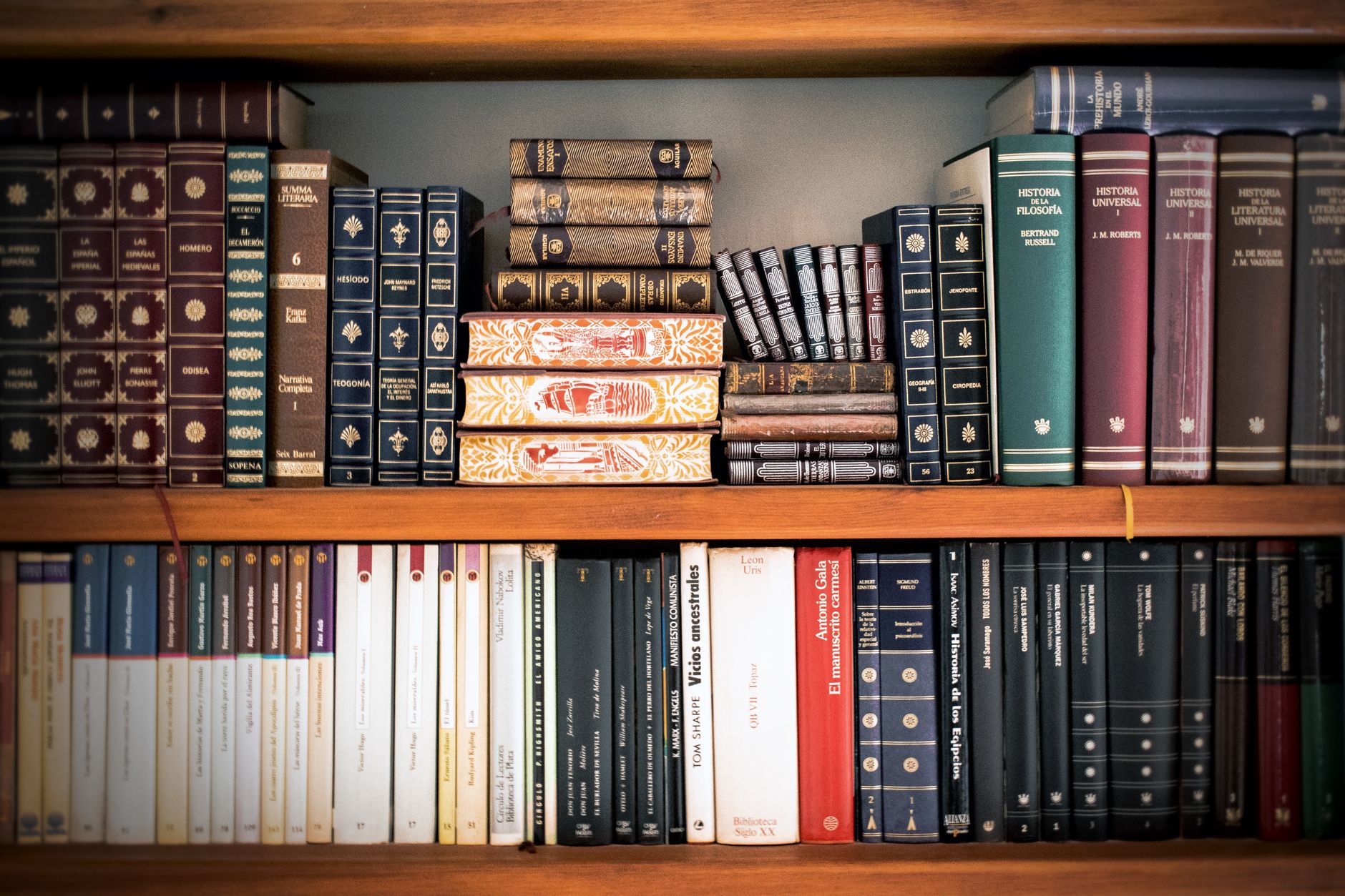
For centuries the second-hand and rare book trade has run on a simple principle: a physical book is worth keeping because it carries something a reprint cannot, whether that is a first edition, an author’s inscription, a set of marginal notes or simply the survival of a title that never made it into a modern catalogue. That principle is now running headlong into the appetite of the artificial intelligence industry, which needs vast quantities of high-quality text to train its models, and some of the people who make their living from old books say the collision is doing real and permanent damage.
Australian booksellers have told the Guardian that the practice of buying up old titles, slicing the bindings off and feeding the loose pages through scanners so the text can be harvested is, in their words, horrific. Their objection is not only that a book is destroyed in the process, but that the thing being destroyed is, as one seller put it to the paper, more than just an object. A rare volume is a piece of cultural and physical history, and once it is guillotined and pulped there is no getting it back.
Why AI companies want the paper
The reason old books have become valuable to technology companies is straightforward. Large language models are trained on enormous bodies of written text, and clean, edited, professionally published prose is exactly the kind of material that produces better results than the noise of the open internet. Books offer long-form structure, careful grammar and subject depth that social media posts and web pages rarely match. As the easy sources of digital text have been exhausted and picked over, and as more publishers and websites lock their content away or demand payment, physical books that were never digitised have become an attractive and largely unguarded resource.
The most prominent example of the industrial scanning of physical books emerged during litigation in the United States, where the AI company Anthropic acknowledged buying used print books in bulk, stripping their bindings, scanning the pages and discarding the originals to build a training corpus. That case, brought by authors, ended in a landmark settlement earlier this year and put a spotlight on the sheer scale at which books can be consumed as raw data. What the Australian booksellers are now describing is the same logic reaching down into the rare and collectible end of the market, where the stock is not mass-market paperbacks but scarce and sometimes irreplaceable titles.
Two ways of seeing the same book
There are genuinely two views here, and they do not resolve neatly. On one side sit the booksellers, archivists and collectors who see a book as an artefact. To them the value lies in the specific copy: its provenance, its binding, its edition, the fact that only a handful survive. Destroying such a copy to extract the words is like melting a coin for its metal, and it treats centuries of publishing history as little more than feedstock. This camp argues that the cultural cost is being ignored because it does not show up on any balance sheet, and that a title reduced to a data file loses everything that made it worth preserving in the first place.
On the other side sit those who argue that the words are what matter, not the paper. From this perspective, a book’s text is its real payload, and scanning it can actually widen access, preserve content that might otherwise rot or burn, and put knowledge to work in tools that millions of people use. Supporters of large-scale digitisation point out that libraries have scanned collections for decades, that many of the volumes being cut up are not unique, and that a searchable digital copy can outlive a fragile physical one. The sharp disagreement is less about whether text should be digitised and more about consent, compensation and whether the physical original needs to die for the copy to live.
What it means for Australia
For Australia the stakes are both cultural and legal. The country has a deep network of independent and antiquarian booksellers, and institutions such as the National Library and the state libraries hold collections that document Australian life in editions that exist nowhere else. If the global market for scannable text starts hoovering up scarce Australian titles, whether colonial-era printings, out-of-print local histories or small-run poetry and fiction, the risk is that material central to the national record is quietly stripped for parts before anyone notices it has gone.
There is a policy dimension too. Australia has been running a long and unresolved argument about how copyright and AI training should interact, with authors, publishers and the Australian Society of Authors pressing the federal government to protect creators, and successive inquiries weighing whether local law needs a text and data mining exception or stronger guardrails. The bookseller’s alarm adds a new wrinkle to that debate, because it is not only living authors whose work is being absorbed, but the physical heritage of the book trade itself. Any Australian framework that focuses solely on digital scraping may miss the destruction of physical originals entirely.
What is next
The immediate question is whether the market polices itself or whether governments step in. Some sellers may simply refuse to supply buyers they suspect of scanning-and-shredding operations, and reputable dealers have a strong incentive to keep rare stock intact because scarcity is what gives it value. But the economics can cut the other way when an AI buyer is willing to pay for volume, and a single anonymous purchaser can do a great deal of quiet damage before the trade catches on.
Expect the issue to feed into the broader Australian reckoning over AI and creative work, alongside the disputes already playing out over music, journalism and images. Authors’ groups are likely to seize on the destruction of physical books as a vivid illustration of an industry taking first and negotiating later. For readers and collectors, the practical advice is unglamorous but real: the titles worth saving are the ones worth documenting, cataloguing and, where possible, keeping in public hands before the scanners get to them.
Sources: The Guardian.


