

















































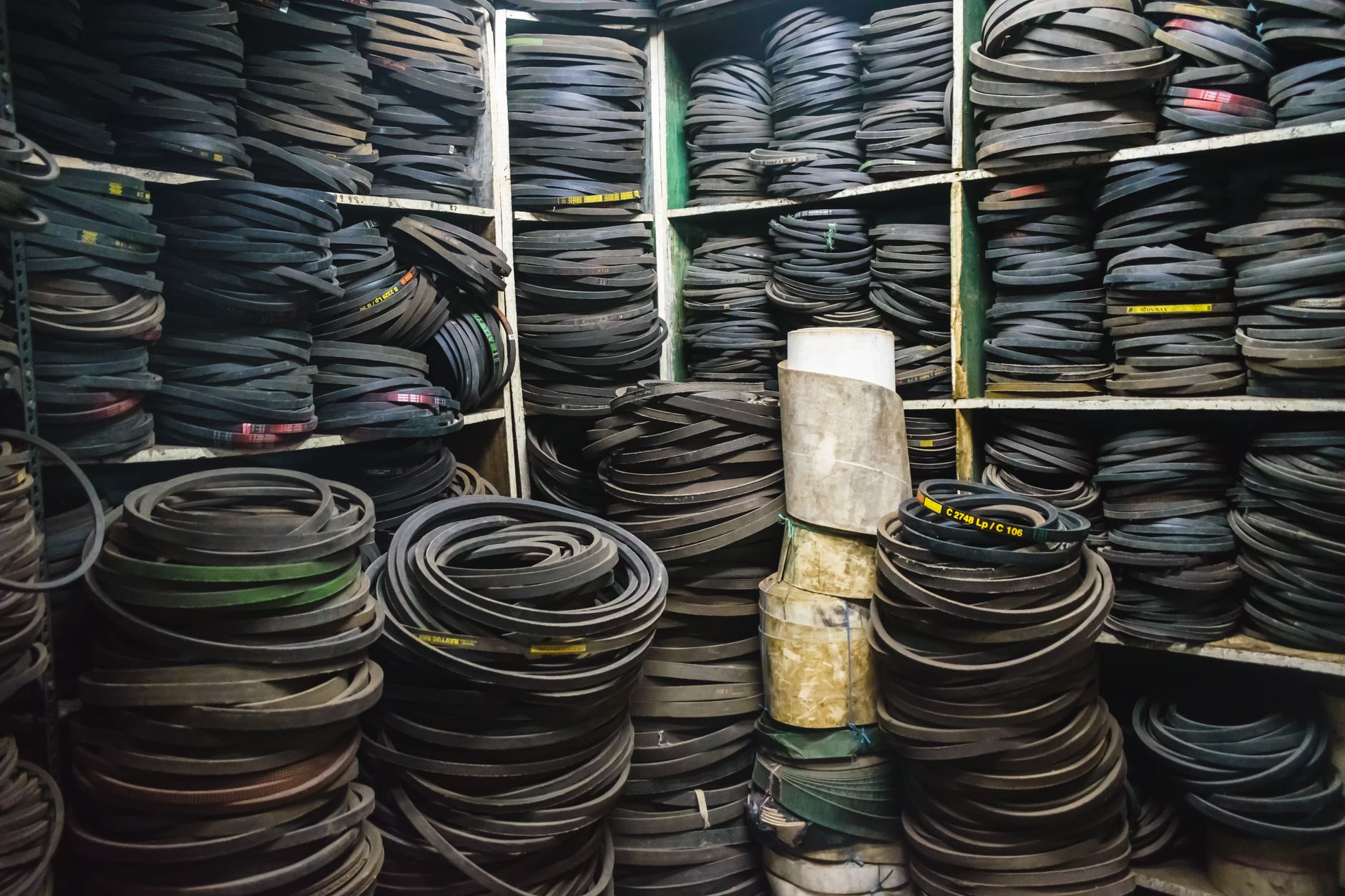
Anyone who has waited a week for the wrong part to turn up knows the automotive aftermarket runs on messy information. A single component can carry a dozen different numbers depending on who made it, who sold it and which market it landed in, and that tangle costs the repair trade time and money every day. Partly, a company that has spent the past few years trying to impose order on that chaos, has just given itself a good deal more room to keep at it.
The parts data platform has raised USD $50 million in fresh funding and flagged that a meaningful slice of the money will go towards hiring in Australia, with a particular focus on engineers and artificial intelligence specialists. For a business built around cleaning up and connecting global parts catalogues, that emphasis on local technical talent says a lot about where it thinks the hard problems, and the growth, now sit.
From a garage frustration to a global catalogue
Partly was founded by Levi Fawcett, who has spoken publicly about the aftermarket’s data problem being less about a shortage of information and more about the impossibility of trusting it. The company’s pitch is deceptively simple. It builds what it calls a universal parts catalogue, a structured layer that maps how millions of components relate to one another and to the vehicles they fit, so that a supplier, a retailer or a workshop can look up a part once and get an answer they can rely on.
Underneath that simplicity sits a genuinely thorny engineering and machine learning challenge. Parts data arrives from thousands of manufacturers and distributors in inconsistent formats, riddled with duplicates, gaps and contradictions. Turning that into something clean enough to power a search or a supply chain is exactly the kind of work that rewards good AI, and it explains why a data company is so keen to hire AI people rather than, say, a larger sales force. According to ChannelLife Australia, the raise is being framed squarely around expanding that technical capability, with Australia named as a hiring destination.
The company has been on a steady growth path for several years, having pulled in earlier rounds from venture backers drawn to the size of the global aftermarket and the stubbornness of its data problem. This latest injection is the sort of mid-stage capital that lets a scale-up push harder on product and headcount rather than simply keep the lights on, and the decision to point some of it at Australia is a deliberate one.
Why Australia, and why now
Australia is an obvious market for a parts business. The country runs one of the oldest vehicle fleets in the developed world, with the average car well over a decade old, and an ageing fleet means more repairs, more replacement parts and more of the sourcing headaches Partly is trying to solve. The domestic aftermarket is worth billions of dollars a year and supports a long tail of workshops, wreckers, distributors and retailers, most of whom still lean heavily on phone calls, personal knowledge and educated guesses to find the right component.
There is also a talent argument. Australia has a deep pool of software and machine learning engineers, and the tech downturn of recent years has loosened up a workforce that was near impossible to recruit from at the peak. A company that wants AI specialists can now find them here without competing quite so ferociously, and hiring locally gives Partly people on the ground in a market it clearly wants to grow.
The move lands at an interesting moment for the broader debate about whether Australia builds artificial intelligence or merely hosts it. Much of the recent national conversation has centred on data centres, sovereign capability and whether the country is capturing real value from the AI boom or just renting out land and power. A firm applying AI to a genuine industrial problem, and creating engineering jobs to do it, is a more grounded version of that story than another warehouse full of servers, even if it is far less flashy.
Not everyone is sold on data platforms
The optimistic reading is straightforward. Faster, more accurate parts sourcing should mean shorter repair times, fewer wrong deliveries and less capital tied up in stock that never sells. Insurers and fleet operators, both large and cost-sensitive, stand to benefit if the guesswork comes out of the supply chain, and workshops could spend less time on the phone and more time turning spanners.
The sceptical reading is worth airing too. The aftermarket has seen plenty of grand promises about digitisation, and incumbents including large distributors and established catalogue providers are not going to hand over their turf easily. Data quality is a moving target, vehicles and parts change constantly, and a platform is only as good as the suppliers willing to feed it. There is also a familiar concentration worry that runs through much of the AI economy: if one company becomes the dominant map of who sells what, it gains real leverage over an industry made up of thousands of small operators. None of that is a reason to dismiss the venture, but it tempers the idea that cleaner data alone will remake the trade.
What it means for the local trade
For Australian repairers and parts suppliers, the practical upshot is more competition to be the tool they reach for when a part needs finding. That is generally good news, provided the pricing and access terms stay fair for the smaller end of the market. For the local tech sector, a growing engineering base at a company solving a real-world logistics problem adds to the slowly building case that Australia can be a place where applied AI gets built rather than just consumed.
It also feeds into the jobs question that hangs over every AI announcement. Here the pitch is additive rather than replacive, with the company hiring people to build systems rather than trumpeting how many roles those systems will remove. Whether that holds as the platform matures is the sort of thing worth watching.
What is next
The immediate signal to watch is the hiring itself. A USD $50 million raise with Australia named as a focus should translate into visible job listings for engineers and AI specialists over the coming months, and the pace of that recruitment will show how serious the local commitment is. Beyond headcount, the real test is adoption: whether Australian distributors, insurers and workshops actually move their sourcing onto a platform like this, and whether the data proves reliable enough to earn their trust. If it does, the humble parts lookup could quietly become one of the more useful pieces of applied AI in the country’s automotive industry.
Sources: ChannelLife Australia.