












































Few health problems in Australia are as stubborn, or as consequential, as the ear disease that runs through Aboriginal and Torres Strait Islander childhoods. Middle ear infection, known clinically as otitis media, sets in for many Indigenous children within the first months of life and can persist for years, muffling the sounds a child needs to learn language, follow a classroom and grow up connected to community. A new clinical trial now hopes to change the odds, and it is betting on artificial intelligence to do it.
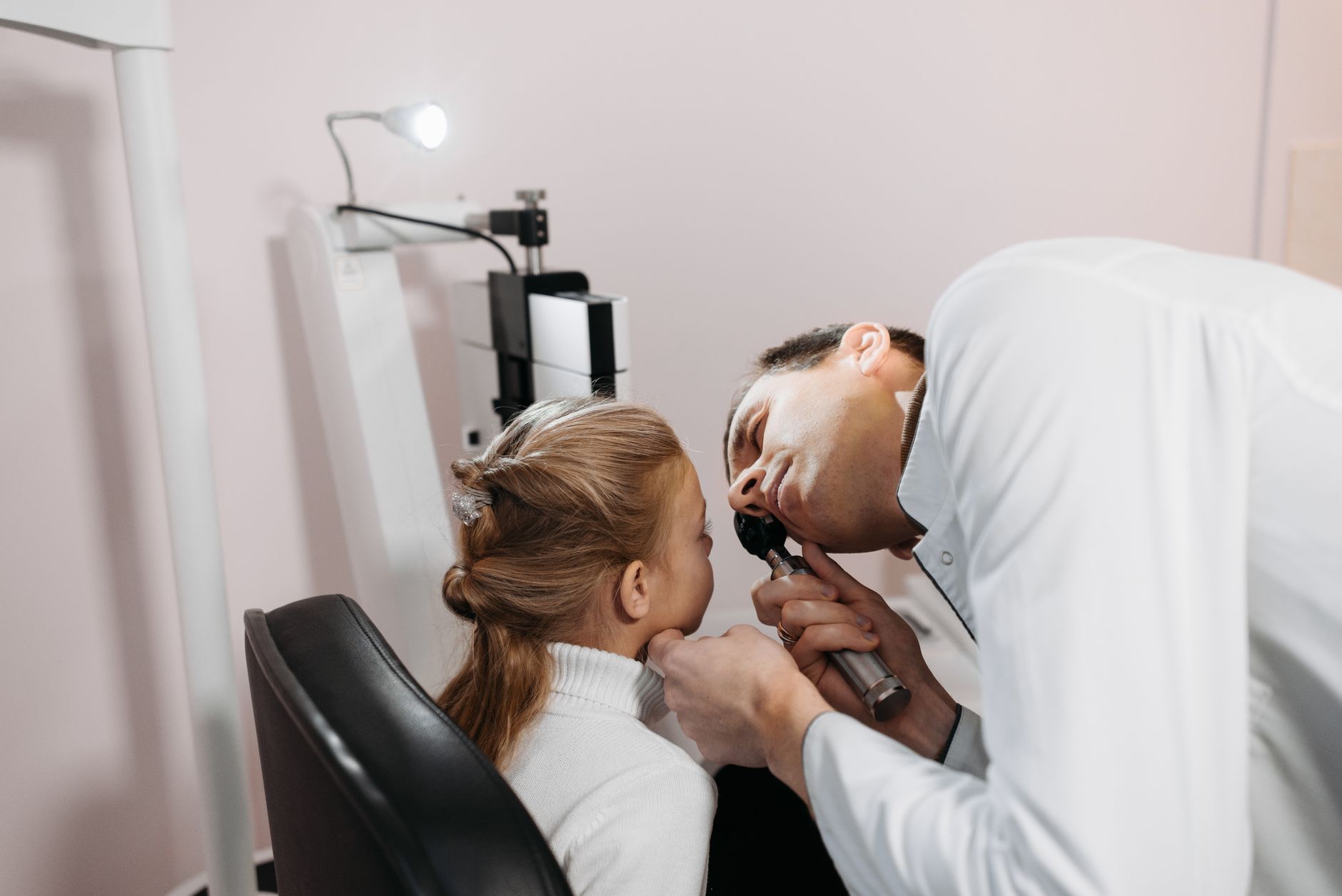
The trial, announced through the Ramsay newsroom, aims to put AI-assisted screening tools into the hands of clinicians working in the places where specialist ear, nose and throat care is hardest to reach. The idea is deceptively simple. When a health worker examines a child’s ear, software trained on thousands of images can help flag the signs of infection, fluid or a perforated eardrum, offering a second read at the point of care rather than weeks later when a visiting specialist finally arrives, if one arrives at all.
Why the stakes are so high
The scale of the problem is difficult to overstate. Aboriginal and Torres Strait Islander children experience some of the highest rates of middle ear disease recorded anywhere in the world. The World Health Organization has long held that when chronic suppurative otitis media affects more than four per cent of a population, it represents a public health emergency requiring urgent action. In parts of remote Australia, the rates measured in young children have sat many times above that threshold for decades, a statistic that has appeared in report after report without ever fully shifting.
The consequences ripple far beyond a sore ear. Hearing loss in the early years is tied to delayed speech, poorer school attendance and lower literacy, and researchers have drawn a line from untreated childhood ear disease through to disengagement from education and, later in life, over-representation in the justice system. Fixing ears early is not a niche medical concern. It is, in the words used by many Indigenous health advocates over the years, one of the most practical levers Australia has for closing the gap.
The trouble has always been access. Diagnosing ear disease reliably takes trained eyes and the right equipment, and both are thin on the ground across the outback. Children can wait months for a specialist visit, and by the time an audiologist reaches a remote clinic the picture may already have changed. That gap between examination and expert opinion is exactly what an AI tool is meant to compress.
The promise, and the caution
Supporters of the approach see a genuine chance to democratise expertise. If a nurse or Aboriginal health practitioner can capture an image of a child’s eardrum and receive an instant, evidence-based prompt about what it shows, the model of care changes. Screening can happen more often, in schools and clinics, without waiting for a fly-in specialist. Cases that need escalation can be identified faster, and the routine ones can be managed locally. Telehealth has already proven it can carry specialist judgement across distance, and AI-assisted imaging pushes that logic a step further by putting a form of decision support directly in the room.
There is also a workforce argument. Rural and remote Australia has struggled for years to attract and retain the ENT specialists and audiologists these communities need. Tools that extend the reach of the clinicians already on the ground, rather than replacing them, offer a way to do more with a stretched health workforce.
Yet the same story that excites clinicians makes others cautious, and for good reason. Any AI system used on Aboriginal children raises immediate questions about data. Who holds the images, who governs how they are used, and does the community that generated them have a genuine say? The principles of Indigenous data sovereignty, developed by Aboriginal researchers precisely because health data has too often been collected without consent or control, insist that communities must be partners rather than test subjects. A trial that gets the governance wrong risks repeating an old pattern, no matter how good the technology.
There are technical cautions too. An algorithm is only as good as the images it learned from, and models trained largely on one population can perform poorly on another. For a tool destined to be used on Aboriginal children, validation on relevant data is not optional, it is the whole ballgame. Connectivity is another practical hurdle. Software that depends on the cloud is of little use in a community with patchy mobile coverage, so any system worth deploying has to work in the conditions that actually exist beyond the reach of reliable broadband.
What it means for Australia
This trial lands at a moment when Australia is trying to work out what its own AI story should be. Much of the national conversation has fixed on productivity, sovereign models and data centres, the big-ticket items of an emerging industry. A screening tool for children’s ears is a reminder that some of the highest-value uses of the technology are quiet, unglamorous and deeply local. If AI can help catch ear disease early in a child living hundreds of kilometres from the nearest specialist, that is a return no productivity spreadsheet fully captures.
It also tests whether the country can build health AI the right way. Australia has invested heavily in the promise of medtech, and the sector is one of the areas where local research genuinely competes globally. Getting Indigenous health AI right, with community partnership at the centre and rigorous validation before any wide rollout, would set a template that stretches well beyond ear disease. Getting it wrong would harden the scepticism many Aboriginal communities already hold toward outside interventions that arrive with grand claims and leave little behind.
What happens next
As a trial, the project now has to prove itself. The measures that matter are whether the tool improves how quickly and accurately ear disease is picked up, whether it fits the workflow of busy remote clinics, and whether the communities involved regard it as something done with them rather than to them. Results from those early sites will determine whether the approach spreads or stalls.
The broader question is one of follow-through. Australia has never lacked for reports diagnosing the ear health crisis in Indigenous children. What it has lacked is the sustained investment to fix it. If an AI-assisted screening trial can shorten the distance between a child’s ear and an expert opinion, it will have done something that decades of good intentions have not. The technology is the easy part. The hard part, as ever, is the care and the commitment that have to sit around it.
Sources: Ramsay Newsroom.