


















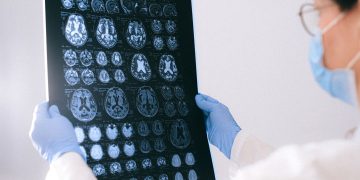































Australian healthcare has spent the better part of a decade being told that artificial intelligence is about to change everything. The pitch has become familiar: faster diagnostics, fewer administrative hours, smarter rostering and a health system that finally gets ahead of demand rather than forever chasing it. A recent industry overview from the software consultancy Appinventiv, published as AI in Healthcare in Australia: Transforming Patient Care and Operations, makes exactly that case. The more interesting question is how much of it is already happening on Australian wards, and how much remains a slide in a sales deck.
The context
The backdrop matters. Australia runs a hybrid public and private system under mounting strain: an ageing population, workforce shortages that bite hardest in regional and remote areas, and a hospital sector where elective surgery waitlists and emergency department ramping have become political flashpoints. Into that pressure has walked a wave of AI tools promising to do more with the same number of staff. Vendors frame the technology as a pressure valve. Clinicians tend to see it as one more system to learn, govern and, eventually, trust.
What separates the current moment from earlier hype cycles is that the tools have quietly become useful. Ambient AI scribes that draft consultation notes from a recorded conversation are now in real use across general practice. Radiology and pathology have been among the earliest adopters of image-analysis models, and administrative automation, the least glamorous corner of the field, is where many providers are quietly finding the fastest return.
The news, and what is actually new
The Appinventiv piece is a landscape overview rather than a scoop, and it should be read as such. Its value is as a marker of where the commercial conversation has settled: AI in Australian healthcare is being sold less as a moonshot diagnostic breakthrough and more as operational plumbing. Triage support, patient flow, coding and billing, appointment scheduling and back-office paperwork are where the argument now concentrates. That is a telling shift. The earliest AI-in-medicine narratives were built around algorithms out-reading specialists. The 2026 version is far more mundane and, arguably, more credible: give clinicians their time back.
Local evidence supports the direction of travel. Australian teams have been building tools to predict bowel cancer relapse and to help prevent diabetic limb amputations, and healthcare-adjacent AI stocks have drawn genuine investor attention on the ASX. None of that is captured by a single overview article, but together it sketches a sector that has moved from proof-of-concept to procurement.
Two views on how fast to move
Among the optimists, the case is straightforward. If an ambient scribe saves a GP even ten minutes per consultation, the aggregate recovery of clinical time across the country is enormous, and every hour returned to patient contact is an hour not lost to a keyboard. The Royal Australian College of General Practitioners has published guidance acknowledging that these tools are already in use, which is itself a signal: the profession’s peak body is now writing rules for adoption rather than debating whether adoption will happen.
The cautious view is not a rejection so much as a demand for evidence. The Australian Medical Association and a number of clinician researchers have consistently argued that a tool which drafts a note, flags a scan or suggests a diagnosis must be validated on Australian populations, must be transparent about its limits, and must never quietly shift medico-legal responsibility onto a doctor relying on a black box. Bias is the recurring worry. A model trained largely on overseas data may perform unevenly for Aboriginal and Torres Strait Islander patients, for culturally and linguistically diverse communities, or for the specific disease profiles that present in Australian clinics. Speed without validation, on this view, is how you automate an existing inequity.
The Australian stakes
This is where the local lens sharpens. Health data in Australia sits under a dense web of obligations, and AI does not get a free pass on any of it. The Therapeutic Goods Administration regulates software as a medical device, which means a diagnostic algorithm can fall squarely inside the same approval regime as a physical instrument. The My Health Record system, the Australian Digital Health Agency’s work on interoperability, and the Privacy Act reforms all shape what data can be used to train and run these models, and under what consent.
Trust is the other Australian variable, and it is fragile. Research has repeatedly shown patients are uneasy about their health information being fed into AI systems, and separate surveys have flagged that Australians can be prone to blind trust in AI in some settings and deep suspicion in others. Doctors themselves have raised privacy and safety concerns about how quickly some tools have arrived. In a public system funded by taxpayers, a single high-profile failure, a misdiagnosis attributed to an algorithm or a data breach involving sensitive records, could set adoption back years. Vendors selling transformation would do well to remember that the Australian public’s tolerance for experimentation with its health data is low.
There is also a geography argument that plays uniquely well here. Telehealth and AI-assisted triage genuinely matter more in a country where the nearest specialist can be a flight away. If any health system stands to gain from remote monitoring, decision support and asynchronous care, it is one serving vast, thinly populated regions. That is the strongest version of the Australian case for AI in healthcare, and it is the one least likely to be oversold.
What is next
Expect the near-term action to sit in three places. First, regulation: the TGA and health departments will keep refining how AI-based clinical tools are approved, monitored after deployment, and audited for drift as the underlying models change. Second, procurement: state health services and large private operators will move from small pilots to enterprise contracts, and the winners will be the vendors who can prove local validation and clean data governance rather than the flashiest demo. Third, workforce: the conversation will shift from whether AI replaces clinicians to how clinicians are trained to supervise it, because a tool that drafts a note still needs a human who is accountable for signing it.
The honest read of the current landscape is that AI in Australian healthcare is neither the revolution the marketing promises nor the overreach the sceptics fear. It is a slow, uneven, heavily governed rollout in which the boring wins, admin, scheduling and documentation, are arriving faster than the dramatic ones. For a health system under this much pressure, boring wins are not a consolation prize. They may be the whole point.
Sources: Appinventiv via GNews.