















































Every few years a fresh piece of technology arrives with the promise that it will remake Australian industry from the ground up. Right now that technology is artificial intelligence, and the language around it has grown suitably breathless: revolution, transformation, a once-in-a-generation shift for the mines, farms and hospitals that underpin the national economy. A new commentary from a prominent United States think tank invites everyone to take a breath and ask a more useful question. What, exactly, is so new?
That is the framing of an analysis published by the American Enterprise Institute, the Washington-based policy research group, which turns its attention to how AI is being adopted across Australian mining, agriculture and health. The through-line of the piece is a note of caution against hype. Much of what is now branded as an AI breakthrough, it argues, is better understood as the latest layer on top of automation and digitisation that Australian industry has been building for the better part of two decades.
The long automation story behind the headlines
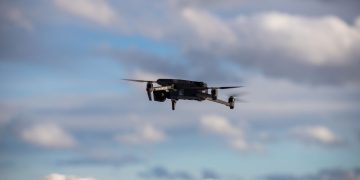
The argument lands because Australia is, in several respects, an unusually good place to test it. The resources sector offers the clearest example. Long before generative AI became a boardroom obsession, the big iron ore producers in the Pilbara were running fleets of driverless haul trucks, automated drills and remotely operated trains across sites the size of small countries. Operations centres in Perth have for years directed machinery hundreds of kilometres away in the red dirt of the north-west. Precision agriculture followed a similar arc, with GPS-guided tractors, variable-rate seeding and sensor networks becoming routine on large Australian farms well before anyone spoke of AI in the way they do now.
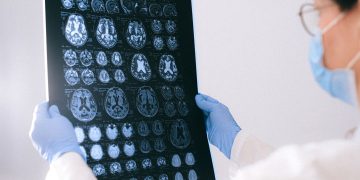
Seen through that lens, the current wave is less a break with the past than an acceleration of it. What machine learning adds is a sharper ability to make sense of the enormous volumes of data those systems already generate: predicting when a conveyor will fail, reading satellite imagery to gauge crop stress, or spotting a pattern in a patient’s scans that a busy clinician might miss. That is genuinely valuable, but the commentary’s point is that it is an evolution of existing capability rather than a bolt from the blue, and that framing matters for how governments and companies invest.
Two ways to read the same trend
There is a competing view, and it is worth stating fairly. Boosters of the technology contend that AI represents a step change precisely because it removes the last stubborn bottleneck, which is human judgement applied at scale. A precision farm that can adjust water and fertiliser paddock by paddock in real time, or a mining operation that reschedules its entire fleet the instant conditions change, is doing something qualitatively different from following a pre-programmed routine. On this account, treating AI as just more automation risks underestimating both the productivity upside and the speed at which it will arrive.
The measured camp, which the American Enterprise Institute piece sits closer to, responds that the harder problems have never really been about the algorithms. They are about data quality, integration with ageing equipment, regulation, workforce skills and trust. A hospital cannot deploy a diagnostic model it cannot audit, a farmer will not act on advice that ignores local conditions, and a mine will not hand safety-critical decisions to software it does not understand. Those constraints do not vanish because the model gets cleverer, and they explain why adoption in the real economy tends to be gradual and uneven rather than sudden.
Why the distinction matters for Australia
For Australia this is not an abstract debate. The country’s prosperity leans heavily on exactly the sectors under discussion, with mining and agriculture between them accounting for a large slice of exports, and health representing one of the fastest-growing areas of public spending. How policymakers characterise AI shapes where money and attention flow. If the technology is cast as a revolution, the temptation is to chase headline-grabbing new projects and sovereign capability. If it is understood as an extension of decades of automation, the priorities look more prosaic but arguably more useful: better data infrastructure, common standards, skills funding and sensible rules that let proven tools spread from the leaders to the laggards.
That distinction also speaks to a persistent Australian anxiety about being a technology taker rather than a maker. The resources and agriculture sectors are among the few areas where Australian operators are genuinely at the global frontier of applied automation, having solved hard problems of scale, distance and harsh conditions that few other countries face. The opportunity the commentary implicitly points to is to build on that lead, exporting the know-how and the systems, rather than importing someone else’s idea of what an AI revolution should look like and hoping it fits local ground.
The gap between frontier and average
Perhaps the most important reading of the piece for an Australian audience concerns the distance between the frontier and the average. The autonomous Pilbara mine and the sensor-laden broadacre farm make for compelling case studies, but they are not representative of the whole economy. Most Australian businesses are small, and many operate with thin margins, patchy connectivity in the regions and little in-house data expertise. For them the barrier to using AI is rarely the sophistication of the model. It is the cost, the complexity and the risk of getting it wrong. A national conversation fixated on the frontier can quietly overlook the far larger group of firms for whom the practical question is not whether AI is revolutionary, but whether it is worth the trouble at all.
What’s next
None of this amounts to a case against the technology, and the commentary does not read as one. The measured position is ultimately optimistic: Australia already has real strengths to build from, and AI can deepen them. The task now is to translate the enthusiasm into the unglamorous work that actually moves adoption, which means data standards, regulation that keeps pace, and training for the workforce that will sit alongside these systems. The honest answer to the question in the headline may be that a great deal about AI in Australian industry is not, in fact, brand new. That is not a criticism. It is a reminder that the country has been quietly good at this for years, and that the smartest next step is to keep going rather than to start over.
Sources: American Enterprise Institute, via GNews.