






































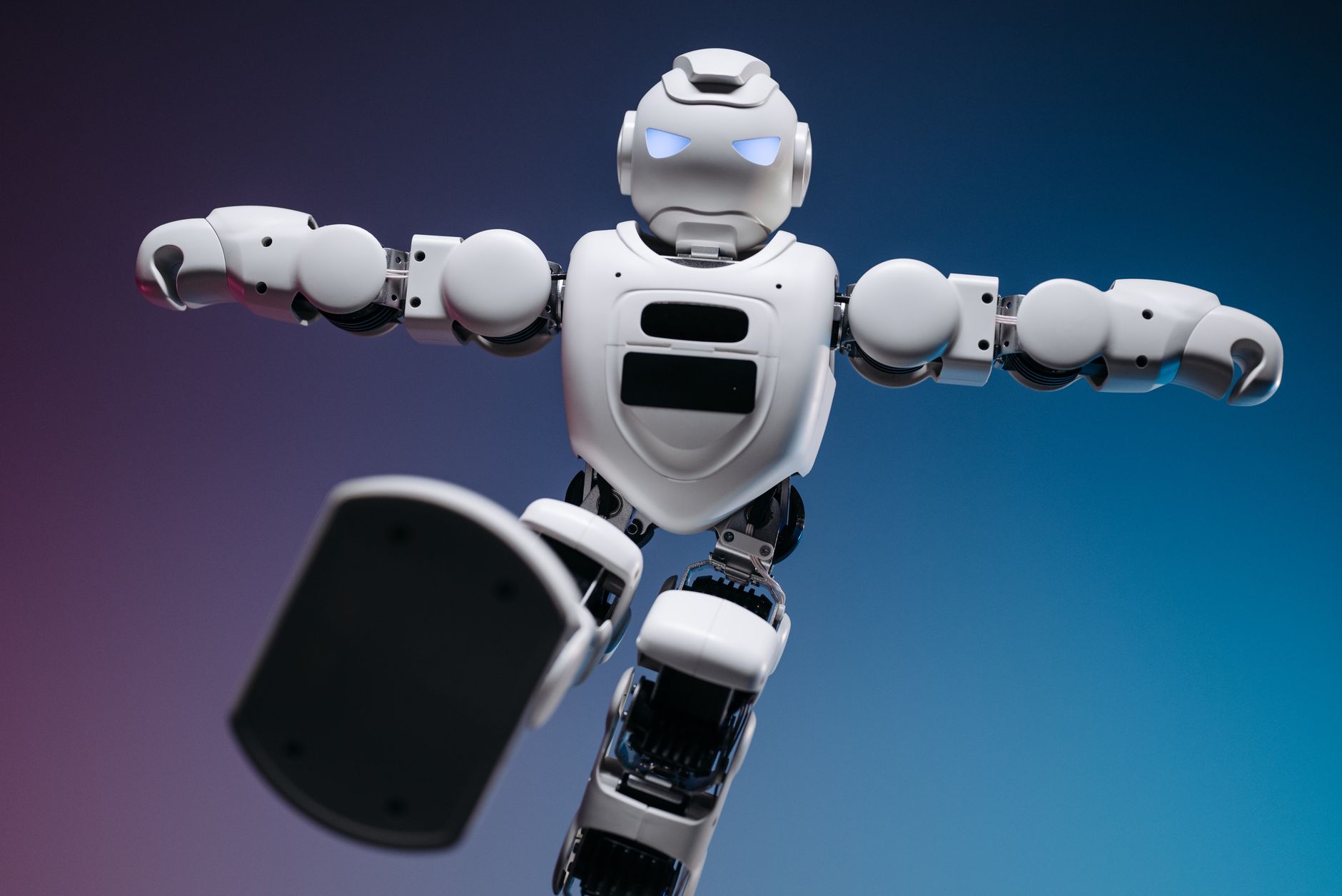
While the national conversation about artificial intelligence has fixed itself on chatbots, data centres and the future of white-collar work, a quieter and more physical project has been taking shape in Australian labs. Engineers at universities and at the CSIRO are building humanoid robots, machines designed to walk, grasp and move through the same spaces people do. The Australian Broadcasting Corporation reported this week that the effort is unfolding in the middle of what it called the country’s AI reckoning, a moment when Australians are asking harder questions about what these technologies will actually do to the economy and to their livelihoods.
The timing is not a coincidence so much as a collision. The same wave of machine learning that has powered generative AI is also what makes a credible humanoid robot possible. Better computer vision lets a machine understand a cluttered room. Reinforcement learning lets it teach itself to balance and walk rather than being painstakingly programmed step by step. Large models trained on video and sensor data give robots something closer to general dexterity. Put simply, the software breakthroughs that produced tools like ChatGPT are the same ones now being poured into metal and motors.
What is actually being built
Humanoid robotics in Australia is still a research endeavour rather than a factory line, and it is worth being clear about that. The work sits inside university engineering departments and in national science agencies, where teams are tackling the genuinely hard problems of bipedal movement, manipulation and safe interaction with people. These are not the polished stage demonstrations that companies overseas love to show off. They are prototypes, test rigs and control systems, the unglamorous scaffolding on which a local industry might eventually be built.
Australia comes to this with real strengths. The CSIRO’s robotics group has a long track record in autonomous systems, particularly the kind of rugged machines that can navigate mines, disaster zones and other places too dangerous for people. Australian universities produce strong graduates in control theory, mechatronics and machine learning. The country also has an obvious economic reason to care, because mining, agriculture, aged care and logistics all face labour shortages that a capable general-purpose robot could, in theory, help ease.
Two ways of reading the same moment
There are two broadly opposed ways to look at all this, and both have serious backers.
The optimistic case treats humanoid robotics as exactly the sort of high-value manufacturing Australia keeps saying it wants. Rather than importing finished machines from the United States or China, the argument goes, the country could design and build its own, retaining the intellectual property, the skilled jobs and the sovereign capability that come with it. Supporters point out that a nation which mines the lithium, nickel and rare earths that go into advanced hardware should not settle for shipping raw materials offshore and buying back the finished robots at a premium. If AI is going to reshape work regardless, better to own a slice of the industry doing the reshaping.
The sceptical case is harder to wave away. Australia has watched promising technology efforts wither before for want of patient capital and a domestic market willing to buy local. Humanoid robots are extraordinarily expensive to develop, and the global field is crowded with heavily funded rivals such as Tesla, Boston Dynamics and a wave of Chinese manufacturers operating at a scale no Australian lab can match. There is also the uncomfortable jobs question. A machine built explicitly to do physical work that people currently do arrives at precisely the moment when Australians are already anxious about automation hollowing out employment. The reckoning in the ABC’s headline is real, and humanoid robots sit squarely inside it.
Why this matters for Australia
For Australia specifically, the stakes go beyond any single prototype. The country has spent much of the past year debating sovereign AI capability, from calls for locally trained models to warnings that economic chaos could follow if it fails to build its own manufacturing base. Humanoid robotics is the physical expression of that same debate. It asks whether Australia wants to be a designer and maker of advanced machines or merely a customer for them.
The industrial logic is compelling on paper. An economy heavily weighted toward resources, farming and care work is exactly the kind that stands to gain from robots able to operate in harsh, remote or labour-starved settings. A humanoid form factor, awkward and expensive as it is, has the advantage of fitting into workplaces built for people without expensive retrofitting. If any country has a practical near-term use for legged, dexterous machines, it is one with vast mine sites, sprawling farms and an ageing population needing care.
Yet the same features that make robots attractive to employers make them fraught for workers and policymakers. Australia has no settled framework for how automation of physical labour should be managed, retrained around or taxed. The AI debate so far has concentrated on knowledge work, copyright and data. A generation of capable robots would widen that conversation to the warehouse floor, the farm gate and the hospital ward, and the country’s institutions are not obviously ready for it.
What happens next
In the near term, expect the Australian effort to stay firmly in the research phase, with progress measured in academic papers, grant rounds and the occasional prototype demonstration rather than commercial deployment. The bigger questions will be about money and will. Whether governments and investors are prepared to back local robotics at the scale required, and whether Australian buyers in mining, agriculture and aged care are willing to take a chance on home-grown machines, will decide if this becomes an industry or stays a laboratory curiosity.
What is already clear is that the two stories Australians have been telling themselves, one about the promise of building advanced technology at home and one about the disruption AI threatens to unleash, are in fact the same story. The humanoid robots being assembled in Australian labs are proof that the reckoning is not something coming from overseas. It is being built here, bolt by bolt, in the middle of the argument about what it all means.
Sources: ABC News.