















































In every gold rush, the reliable money is rarely made by the prospectors. It is made by the merchants selling the shovels, the picks and the sturdy trousers. That century-old piece of investing wisdom has become the organising idea for a growing group of Australian dealmakers who are looking at artificial intelligence and deciding that the safest bet is not the model builders chasing the next breakthrough, but the far less glamorous companies that keep the whole machine running.
Advisers and investors quoted in a recent analysis by ION Analytics have been making the case that Australia’s most durable AI opportunities sit in the “picks and shovels” layer: the data centres, power and cooling systems, connectivity, chips distribution, cybersecurity and enterprise software that any serious AI deployment requires. It is a pointed contrast to the frothy valuations attached to frontier model developers overseas, and it reflects a maturing local view that Australia is better positioned to supply the boom than to invent its way to the front of it.
Why the enablers are getting the attention
The logic is straightforward. Large language models are expensive to train, brutally competitive and prone to being leapfrogged, which makes them a difficult place to underwrite a return. The infrastructure beneath them, by contrast, gets used no matter which model wins. A data centre operator earns rent whether the workload is generative AI, cloud storage or streaming video. A power and cooling specialist sells into every one of those tenants. A cybersecurity provider becomes more essential, not less, as AI systems multiply the attack surface.
For a mid-sized market like Australia’s, that distinction matters even more than it does in the United States. The country does not host the giant model labs, and it is unlikely to grow one at the scale of an OpenAI or an Anthropic. What it does have is land, relatively stable governance, a skilled engineering workforce, and an abundance of the raw inputs that the AI build-out consumes, from copper and other critical minerals through to the renewable energy that operators increasingly demand. Dealmakers reason that Australia’s comparative advantage lies in the supply chain, not the software frontier.
That thinking is already visible in the flow of capital. Investor appetite has lifted valuations across ASX-listed miners exposed to AI-driven demand for copper and other metals, and it has fuelled a run of activity in data centres, connectivity and enterprise software. The picks-and-shovels thesis simply gives a name to a trend the market has been pricing in for months.
Two ways to read the same trade
Not everyone reads the enabler story as unambiguously bullish. The optimistic camp sees a rare chance for Australian capital to participate in a global technology cycle without having to win a winner-take-all race. On this view, backing infrastructure is a way of getting paid for the AI boom while sidestepping the specific risk of picking the wrong model, the wrong founder or the wrong architecture.
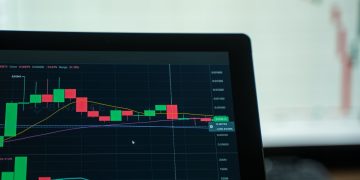
The more cautious camp points out that “picks and shovels” is not a magic phrase that neutralises risk. It relocates it. If the AI investment cycle cools, or if the eye-watering capital spending by the world’s largest technology firms is trimmed, the demand for shovels falls just as fast as the demand for prospecting licences. The businesses supplying the boom are still, ultimately, a leveraged bet on the boom continuing. Some of the same infrastructure names that have soared could correct sharply if sentiment turns, a dynamic already on display in the volatility around chipmakers and the debate over circular financing among the AI hyperscalers.
There is also a competition question. Physical infrastructure is capital-hungry and slow to build, which favours large incumbents and well-funded consortia over the smaller local operators that give a market its dynamism. The risk is that the enabler layer, far from democratising the opportunity, concentrates it in the hands of a few global players with the balance sheets to build at scale.
What it means for Australia
For Australian policymakers and investors, the picks-and-shovels framing lands squarely on a set of decisions the country is already wrestling with. The most obvious is energy. Data centres are voracious consumers of electricity, and the collision between AI-driven demand and Australia’s grid capacity has become one of the defining infrastructure debates of the year. If the nation wants to capture the enabler opportunity, it has to solve the power question first, which is why world-first attempts to write energy rules specifically for data centres are being watched so closely.
The critical minerals angle is arguably where Australia’s advantage is most concrete. The AI build-out runs on copper, and the country is one of the world’s significant suppliers. That gives Australian miners a genuine seat at the table in a global supply chain, and it gives local investors a way to gain exposure to AI demand through businesses they already understand. The same is true of the professional services, cybersecurity and enterprise software firms that will do the unglamorous work of getting AI systems into Australian banks, insurers and government agencies.
The catch is that a supplier’s role is a comfortable place to sit only for as long as the demand holds and the value stays in the supply. Australia has been here before with resources: rich in the raw material, less rewarded in the finished product. The picks-and-shovels strategy captures real revenue, but it does not, on its own, build the sovereign capability that would let the country shape the AI economy rather than merely service it. That tension between selling shovels and owning the mine is likely to define the next phase of the debate.
What’s next
Expect the enabler thesis to keep drawing capital while the broader AI investment cycle runs hot, with data centres, connectivity, cybersecurity and critical-minerals plays the most likely beneficiaries on the ASX. The signals to watch are whether global hyperscaler spending holds up through the next reporting season, how quickly Australia can clear the energy and planning hurdles that stand between ambition and construction, and whether local operators can win a meaningful share of the build rather than ceding it to offshore giants. Dealmakers have found a story they like. The test now is whether the fundamentals underneath it are as durable as the century-old metaphor suggests.
Sources: ION Analytics.