












































There is a particular kind of unease running through the current wave of writing about artificial intelligence, and it is not really about jobs or data centres or share prices. It is about the mind itself. As machines get better at tasks we once treated as proof of human intelligence, from drafting an argument to spotting a pattern in a wall of numbers, a much older question has resurfaced: what exactly is reason, where did it come from, and is it as reliable as we like to think?
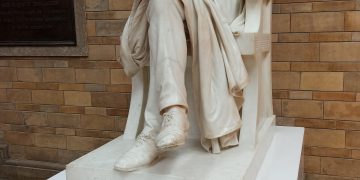
A recent essay in Science and Culture Today, titled Mind Over Matter: Darwin, AI, and the Future of Reason, reaches back to Charles Darwin to try to answer it. The argument, in essence, is that we cannot sensibly talk about the future of thinking machines without first being honest about the strange, improvised origins of the thinking animal that built them.
Reason as an evolved organ, not a gift
The starting point is one of Darwin’s most quietly destabilising ideas. If the human capacity for reason evolved, then it was not designed to find truth. It was shaped by natural selection to help our ancestors survive and reproduce on the African savannah. Truth and survival often line up, which is why we can build bridges and vaccines, but they are not the same thing. A mind tuned for quick judgements about predators, food and social standing carries a long list of built-in shortcuts and biases that served our forebears well and routinely lead us astray in a modern world of statistics, probability and abstraction.
That framing matters because it undercuts a comforting story we tell about ourselves. We tend to imagine human reason as a clean, general-purpose instrument, and artificial intelligence as a flawed imitation of it. The Darwinian view flips the picture. Human reasoning is itself a patched-together, error-prone system, full of overconfidence and motivated thinking, that happens to run on wet biological hardware. Seen this way, the interesting question is not whether machines can match a perfect human reasoner, because no such creature exists, but how two very different kinds of flawed intelligence might correct or amplify each other.
Two ways of reading the same argument
From here the essay opens onto a genuine divide, and it is worth setting out both sides rather than pretending there is a settled answer.
The optimistic reading is that AI could become a prosthetic for the parts of reason we do worst. Humans are famously bad at holding many variables in mind at once, at resisting the pull of a good story over dull evidence, and at noticing when we are simply wrong. A well-built machine has no ego to protect and no evolutionary baggage about tribe or status. In this account, pairing human judgement with machine consistency is not a threat to reason at all. It is the first real chance to shore up the weaknesses Darwin’s account predicts, in the way that writing extended memory and mathematics extended calculation.
The pessimistic reading is harder to shake off. Large language models are trained on human output, which means they inherit our biases rather than escaping them, and they present their conclusions with a fluency that can be far more persuasive than the reasoning behind it. If people begin to outsource not just calculation but judgement itself, the worry is that the muscle of reason, already fragile, simply wastes away. A generation that reaches for a chatbot before it reaches for its own scepticism may end up less able to reason, not more, while feeling more certain than ever. Mind over matter, in that scenario, quietly becomes machine over mind.
Neither view is obviously right, and the honest position is that both trends can run at once. Some people will use these tools to think harder, and others will use them to stop thinking. Which tendency wins is less a fact about the technology than a choice about how we build, teach and regulate it.
Why this lands differently in Australia
It would be easy to file all this under overseas philosophy and move on, but the argument has a sharp local edge. Australia is in the middle of deciding what kind of AI nation it wants to be, from the new national AI office to debates about sovereign models, data centres and copyright. Most of that conversation is about infrastructure and economics. Far less of it is about cognition, and about whether Australians will end up more capable or more dependent as these systems spread through classrooms, courtrooms, newsrooms and boardrooms.
The stakes are concrete. Australian universities are wrestling with what it means to assess reasoning when a student can generate a passable essay in seconds. Regulators and public servants are being asked to trust model outputs in areas where a confident wrong answer carries real cost. Employers rolling out AI copilots are discovering that the tools are only as good as the judgement of the person checking them, which is precisely the human faculty the Darwinian account warns is unreliable. A country that treats AI purely as a productivity lever, without also investing in the harder skill of knowing when to doubt the machine, may find it has automated its blind spots rather than its chores.
There is a cultural dimension too. Australia likes to see itself as a plain-speaking, evidence-minded place with a healthy suspicion of authority. That instinct is an asset in an age of fluent, authoritative-sounding software, but only if it is actively taught rather than assumed. Scepticism is not a national character trait so much as a practised habit, and habits can be lost.
What comes next
The essay does not pretend to resolve the tension it raises, and that restraint is part of its point. Reason, on Darwin’s account, was never a finished product handed down to us. It is a work in progress, cobbled together over deep time and still very much under construction. Artificial intelligence is now part of that construction site, whether we like it or not.
The practical takeaway for Australia is that the future of reason will be decided less in philosophy departments than in the everyday design of these systems and the way we choose to lean on them. That means building AI that shows its working and flags its uncertainty rather than radiating false confidence. It means teaching people, from school students to senior executives, to treat a machine’s answer as a claim to be tested rather than a verdict to be accepted. And it means keeping room for the slow, uncomfortable, distinctly human work of changing our minds when the evidence demands it.
Darwin spent decades resisting his own conclusions before he published them, precisely because he understood how easily a clever mind fools itself. That patience, more than any single tool, may be the faculty most worth protecting as the machines get smarter.
Sources: Science and Culture Today.