

















































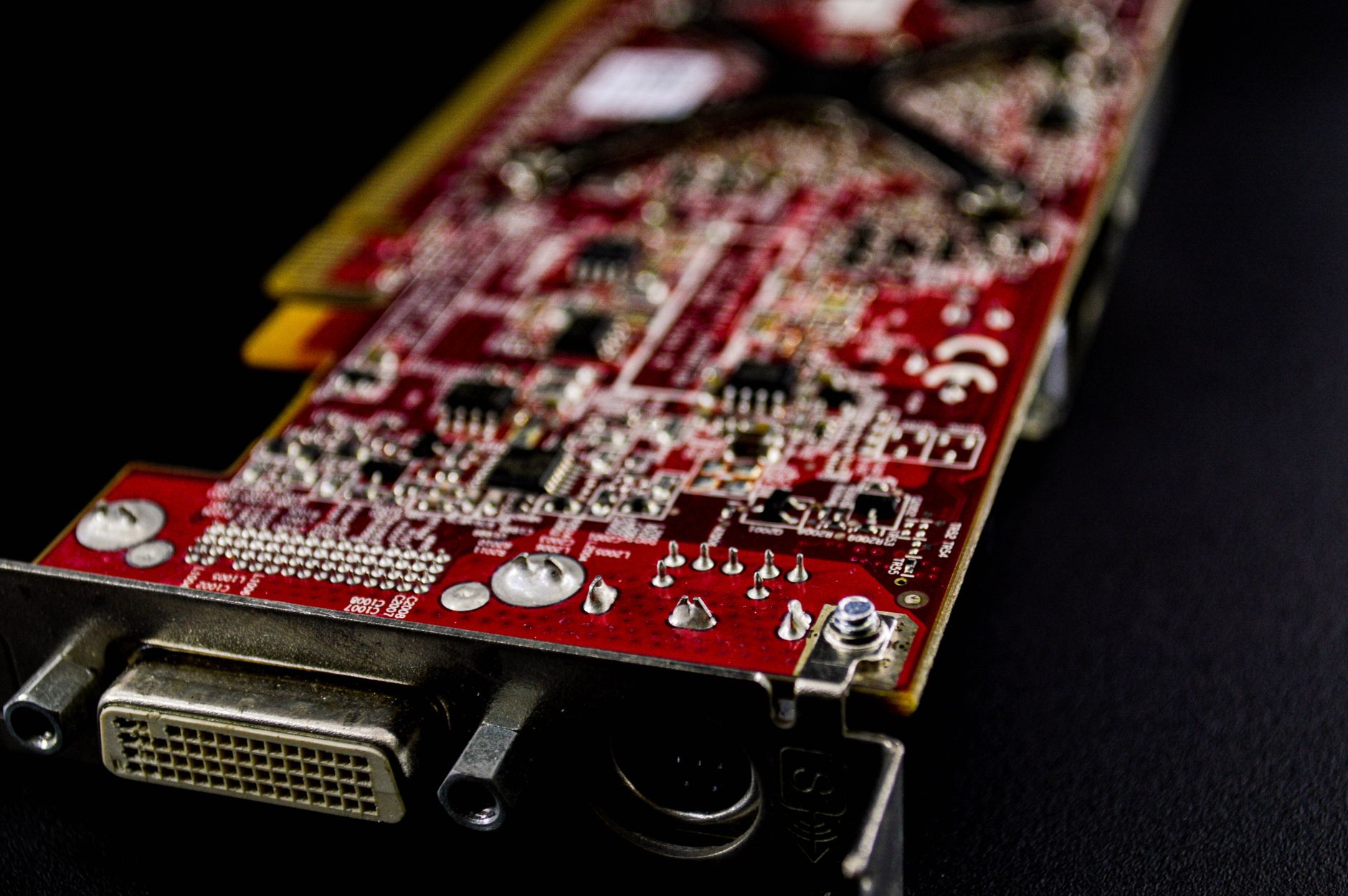
A young American chip company that has bet its future on a single, narrow idea is now reportedly worth as much as a mid-sized ASX-listed miner. Etched, a startup building silicon that does nothing except run transformer models, the architecture behind ChatGPT, Claude and most of today’s generative AI, is seeking a valuation of about US$20 billion in a fresh funding round, according to a Wall Street Journal report picked up by Investing.com Australia. For a company that only came out of stealth in mid-2024, that is a startling number, and it says a great deal about where the money in artificial intelligence is flowing.
Context: why a chip startup can be worth billions before shipping
To understand the enthusiasm, it helps to understand what Etched is trying to do. Nvidia’s graphics processing units, the H100 and its successors, are general-purpose engines. They can train and run almost any kind of neural network, which is precisely why Nvidia has become one of the most valuable companies on earth. Etched has taken the opposite view. Its founders, Gavin Uberti and Chris Zhu, dropped out of Harvard to build a chip called Sohu that hard-wires the transformer architecture directly into the silicon. The wager is that transformers have become so dominant that it is worth surrendering flexibility for raw speed and efficiency on that one job.
If that bet pays off, the reward could be enormous. A chip that does one thing can, in theory, do it far faster and far more cheaply per unit of work than a general-purpose rival. Etched has claimed its design can serve large models at a fraction of the cost and power of comparable Nvidia hardware. If it fails, the company will have poured hundreds of millions of dollars into a beautifully optimised solution to a problem that has moved on. That is the essential tension in the story, and it is why the reported valuation is both eye-catching and contested.
The news: a valuation that has multiplied
Etched raised roughly US$120 million in a Series A round in 2024 at a much smaller valuation. A jump to around US$20 billion, if the round closes anywhere near that mark, represents a dramatic re-rating in the space of little more than a year. The company has not shipped Sohu at commercial scale, which makes the figure a pure statement of investor conviction rather than a reflection of revenue. Investors are effectively pricing in the possibility that specialised inference chips will capture a meaningful slice of a market that analysts expect to run into the hundreds of billions of dollars annually as generative AI moves from training to everyday use.
The timing is not accidental. The industry’s centre of gravity is shifting from training enormous models to running them, a task known as inference, which happens every time someone types a prompt. Inference is where the ongoing electricity bill lives, and it is the part of the AI stack where efficiency translates most directly into profit. That is the exact territory Etched has staked out, and it is the reason a string of well-known backers have been willing to attach a large number to an unproven product.
Two views: believers and sceptics
Supporters argue that the age of general-purpose AI hardware is giving way to an age of specialisation, much as the early graphics-card era eventually produced dedicated video and networking silicon. On this reading, Etched is early rather than reckless, and a US$20 billion valuation simply reflects the scale of the prize if transformers remain the dominant architecture for another five years.
The sceptics are not hard to find. Their central worry is architectural lock-in. By etching the transformer into the chip itself, Etched has tied its fortunes to the assumption that the field will not move on. Researchers are already exploring state-space models, mixture-of-experts variations and other designs that could reduce the transformer’s grip. Nvidia, meanwhile, is not standing still, and its software ecosystem, CUDA, remains a formidable moat that no amount of raw silicon speed automatically overcomes. A chip that is brilliant at running yesterday’s architecture is worth very little, and that risk sits underneath every dollar of the reported valuation.
What it means for Australia
Australia does not design frontier AI chips, and it is unlikely to start. That is exactly why this story matters here. Every sovereign AI ambition being debated in Canberra, every data centre being built at Tailem Bend or across Sydney’s western suburbs, and every enterprise rollout at a bank or a supermarket ultimately depends on silicon designed and manufactured offshore. If the inference layer becomes cheaper and more efficient through companies like Etched, Australian firms running AI at scale stand to benefit from lower operating costs and less strain on the power grid, a concern that has become acute as data centre demand collides with an already stretched electricity network.
There is a strategic angle too. Australia’s push for sovereign AI capability, backed by the new national AI office and by local players building data centre capacity, is really a push to control the layers of the stack we can plausibly own: data, compute hosting, models tuned for local needs. The chip layer will almost certainly remain imported, which means diversity of supply is a national interest. A credible challenger to Nvidia, even a narrow one, gives Australian buyers more options and less exposure to a single vendor’s pricing and allocation decisions. For fund managers, the local superannuation giants and the venture investors watching the semiconductor boom, Etched is also a data point on how far private valuations in AI infrastructure have run, and how much of that value rests on forecasts rather than shipments.
What’s next
The immediate questions are whether the round closes at the reported figure, who leads it, and when Sohu actually reaches customers in volume. The deeper test will come when the chip meets real workloads and buyers can compare its cost per query against Nvidia’s latest generation in production, not on a slide. Australian enterprises are unlikely to be first in the queue, but the outcome will shape the price and availability of the compute they rent for years to come. For now, a US$20 billion valuation on a company yet to ship at scale is best read as a barometer of just how convinced Silicon Valley remains that the AI build-out is only getting started.
Sources: Investing.com Australia (WSJ report).


