

















































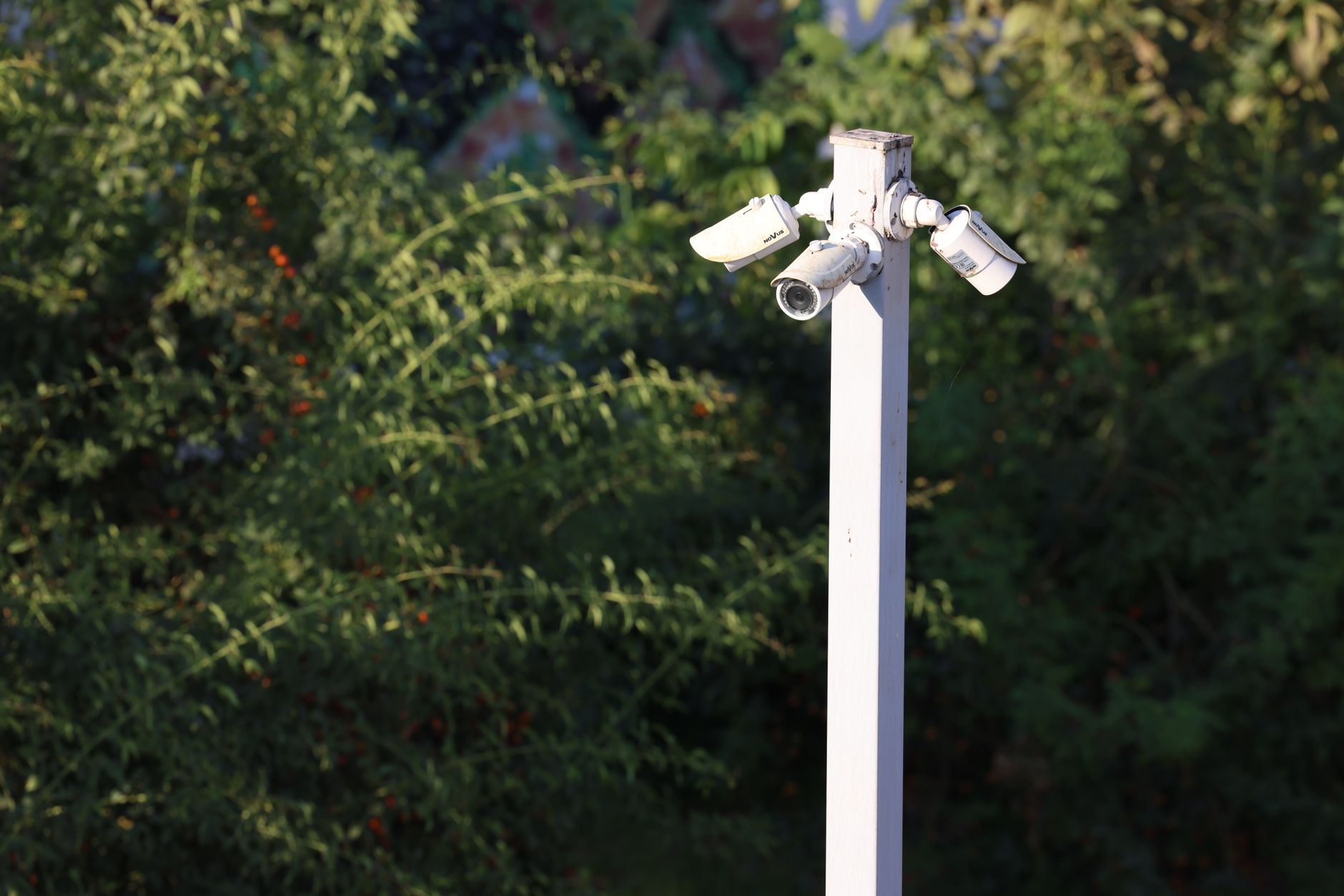
When the City of Vincent last set down rules for its closed-circuit television network, the iPhone was two years old, ChatGPT did not exist, and “biometric matching” was the stuff of airport security lines rather than suburban high streets. Sixteen years on, the inner-Perth council is preparing to drag its CCTV policy into the present, and in doing so it has opened a debate that reaches well beyond Leederville, Mount Hawthorn and North Perth.
According to 7News, the City of Vincent is considering whether artificial intelligence, facial recognition and body-worn cameras should play a larger role in community safety under a proposed overhaul of its CCTV policy. The document has not been meaningfully revised since 2009, and the new draft would, for the first time, contemplate the kind of automated analytics that were barely conceivable when the original was written.
What is actually on the table
The proposal does not commit the council to bolting facial recognition onto every camera pole in the municipality. What it does is create the policy scaffolding that would allow such technology to be used, or at least trialled, without the council having to start from scratch each time a new tool comes along. That is a meaningful distinction. A policy that merely acknowledges AI and biometric capability is different from a rollout, but it is also the step that tends to precede one.
The technologies being canvassed sit on a spectrum. At the lighter end are AI-assisted analytics that can flag unusual movement, loitering or an unattended bag without identifying anyone in particular. At the heavier end is facial recognition, which compares a face captured on camera against a database and attaches an identity to it. Body-worn cameras, increasingly common among rangers and parking officers, add another stream of footage into the mix. Each of these raises its own questions about accuracy, storage and who gets to look at the recordings.
For a council the size of Vincent, the appeal is straightforward. Local governments are under constant pressure to be seen to be doing something about antisocial behaviour, property damage and the perception, if not always the reality, of rising crime in shopping strips and public reserves. Cameras that can do more than passively record are pitched as a force multiplier for a small ranger service that cannot be everywhere at once.
Two ways of reading it
Supporters of a modernised policy will argue that the technology has moved on and the rules should too. Leaving a 2009 framework in place does not stop the march of surveillance capability; it simply means new tools get deployed against an outdated set of guardrails, or without clear guardrails at all. On that view, writing AI and biometrics explicitly into the policy is the responsible move, because it forces the council to define the limits, the retention periods and the accountability up front rather than after the fact.
Privacy advocates read the same facts very differently. Their concern is that facial recognition in public space normalises a form of mass identification that most residents never consented to and would struggle to opt out of. Unlike a number plate, a face cannot be swapped or covered without drawing attention, and once a council builds the plumbing for biometric matching, the temptation to expand its use tends to grow. The technology also carries well-documented accuracy problems, with studies repeatedly showing higher error rates for women and people with darker skin, which means the burden of false matches does not fall evenly.
There is also the question of function creep. A camera network justified on the grounds of vandalism and late-night safety can, over time, be pointed at protests, rough sleepers or people the system simply flags as behaving oddly. None of that is inevitable, but it is the reason privacy specialists tend to want hard boundaries written into policy rather than left to administrative discretion.
The Australian backdrop
Vincent is not making this decision in a vacuum. Facial recognition has become one of the more contested privacy issues in the country over the past two years. In late 2024 the Office of the Australian Information Commissioner found that Bunnings had breached the Privacy Act by capturing the faces of hundreds of thousands of customers through in-store facial recognition without adequate notice or consent, a determination that put every operator of the technology on notice. Kmart faced a parallel complaint. The message from the national regulator was blunt: biometric information is sensitive, and collecting it at scale demands a high bar of justification and transparency.
That national context matters for a suburban council because the same legal principles apply. A local government that deploys facial recognition is collecting sensitive biometric information, and it must be able to show the collection is reasonably necessary and proportionate. Western Australia is also in the middle of long-running efforts to modernise its own privacy and information-sharing laws through the state’s Privacy and Responsible Information Sharing framework, which will shape how public sector bodies, councils included, handle personal data. A policy drafted today needs to anticipate where that regime lands, not just where the law sits right now.
There is a broader pattern here too. Australian institutions have been racing to adopt AI faster than the rules governing it have settled, a tension that has surfaced everywhere from the Australian Taxation Office’s abandoned AI recruitment trial to schools grappling with deepfakes. Councils are simply the latest layer of government to reach the same crossroads, and they are doing it with far fewer specialist resources than a federal agency can muster.
What happens next
The immediate future of the policy rests with Vincent’s councillors, who will consider the draft and, in the usual way of local government, most likely put it out for community consultation before anything is locked in. That consultation window is where the real argument will play out, because residents of an inner-city council with an active, engaged population are unlikely to wave through facial recognition without a fight. Expect submissions from privacy groups, questions about who would hold the biometric data and how long it would be kept, and pressure to spell out exactly which cameras, if any, would ever run identification software.
The likeliest outcome in the near term is a policy that leaves the door open to AI analytics while treating facial recognition as a possibility to be tightly controlled rather than an immediate deployment. Even that would be a significant shift from a document written in 2009. For other Western Australian councils watching how Vincent handles the politics, and for residents wondering how closely their local high street is about to be watched, the decision will be an early test of how far community safety arguments can carry the most contested surveillance technology of the moment.
Sources: 7News.


