
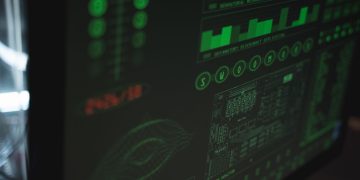

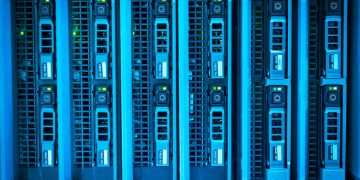


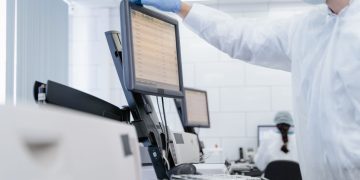





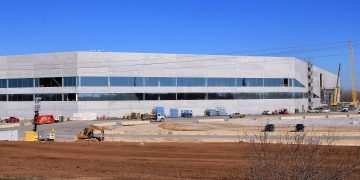
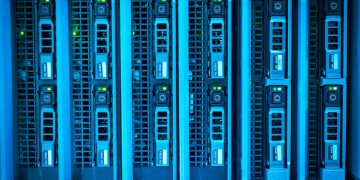











The machines that run artificial intelligence do not look like much from the outside. They sit in low, windowless sheds on the edges of our cities and in paddocks near regional towns, humming behind security fences that most Australians will never pass. A new 7NEWS Spotlight investigation sets out to change that, taking cameras inside the warehouse-sized “AI factories” that are quietly reshaping the country’s power grid, its water use and its economy.
The framing is deliberately provocative. Calling these buildings “factories” strips away the soft language of “the cloud” and reminds viewers that the intelligence we summon from a phone or laptop is manufactured somewhere physical, at enormous cost. Every chatbot answer, every AI-generated image and every corporate model trained on Australian data passes through racks of specialised chips that run hot, drink electricity and, in many designs, consume water to stay cool. Spotlight’s promise is to show the public what sits behind the abstraction.
Why the timing matters
The program lands in the middle of a construction wave that has few precedents. Global operators and local players alike are pouring capital into Australian sites, betting that the nation’s political stability, appetite for renewable energy and position between Asia and the Pacific make it an attractive home for compute. Regional centres such as Wagga Wagga have been pitched as candidates for their own data centre “gold rush”, while the Northern Territory has floated Beetaloo Basin gas as a way to power the industry near Darwin. The scale of the money involved has drawn comparisons to the mining boom, complete with the same promises of jobs and the same anxieties about who is left holding the costs.
That is the tension Spotlight is built around. On one side sits a genuine economic opportunity: sovereign computing capacity that keeps sensitive data onshore, high-value construction and engineering work, and a foothold in an industry that governments around the world are scrambling to attract. On the other sits a set of hard physical limits. Data centres need firm, reliable power, and lots of it, at the very moment Australia is trying to decarbonise its grid and keep household bills in check. When a single campus can draw as much electricity as a small city, the question of who gets that power, and at what price, stops being abstract.
Two ways of reading the boom
Industry advocates argue the alarm is overblown. Modern facilities, they say, are increasingly designed around renewable supply, waste-heat reuse and closed-loop cooling that recycles water rather than evaporating it. They point out that concentrating computing in purpose-built centres is far more efficient than the alternative of thousands of businesses running their own inefficient server rooms. In this telling, the “factory” is actually the greenest way to deliver the AI services people are already demanding, and Australia is better off building the capacity here than importing it from overseas jurisdictions with dirtier grids and weaker privacy laws.
Critics are less convinced. They note that the industry’s energy appetite is growing faster than the renewable supply meant to feed it, and that firm power for a data centre often means gas or continued reliance on coal in practice. Mining magnate Andrew Forrest has been among the louder domestic voices warning that AI’s “energy gluttony” risks becoming a licence for fossil fuel expansion dressed up as progress. Community groups near proposed sites, meanwhile, have raised the more immediate worry of water. In a country that lives with drought, the idea of a data hall consuming millions of litres to keep chips cool is a hard sell, and one that operators have not always been transparent about.
The secrecy is part of the story. Many facilities decline to disclose exactly how much power or water they use, citing commercial confidentiality and security. That opacity is precisely what makes a mainstream television investigation useful. When information is scarce, the public conversation is shaped by whoever is willing to talk, and until now that has largely been the companies doing the building.
What it means for Australia
For Australian households and businesses, the stakes are concrete. The competition for grid capacity between data centres and ordinary consumers could influence power prices and the pace of the energy transition for years to come. Regional communities weighing a data centre against a wind farm or new housing are being asked to trade local resources for national infrastructure, often without a clear picture of the benefits flowing back to them. And there is a sovereignty dimension that goes beyond economics: if the compute underpinning government services, banking and defence sits in facilities owned and operated by foreign firms, the country’s digital independence rests on arrangements most citizens cannot see.
Governments are starting to respond, though unevenly. Federal and state politicians have courted data centre investment as a marker of Australia’s AI ambitions, even as regulators grapple with governance frameworks that lag well behind the pace of construction. The result is a policy environment where approvals, energy planning and privacy oversight are being written after the concrete has already been poured. Reporting like Spotlight’s adds pressure for a more honest accounting of what these facilities cost the communities that host them, not just what they promise.
What’s next
Expect the disclosure question to sharpen. As more Australians grasp that AI has a physical footprint in their own state, calls for mandatory reporting of energy and water use are likely to grow, and operators that get ahead of that demand may find it easier to win social licence for their next project. The broader test is whether Australia can capture the economic upside of becoming a regional compute hub without letting the industry’s resource appetite outrun the grid, the water table or the public’s patience. A prime-time investigation will not settle that debate, but by putting cameras inside the sheds, it forces a conversation that the sector has preferred to keep behind the fence.
Sources: 7NEWS Spotlight.