













































For most of the past two years, the more a technology company said about artificial intelligence, the more its share price seemed to climb. That reflex is now being tested. Investors have spent the past fortnight marking down one of the most valuable companies in the world, and the reason is not that its AI plans have failed. It is that they have become expensive, open-ended and difficult to price.
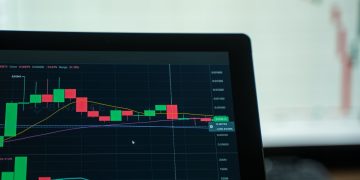
Shares in Meta, the parent of Facebook, Instagram and WhatsApp, have slid through what Forbes Australia described as a losing streak stretching towards eleven consecutive trading sessions. The decline has been steep enough to lop about US$18 billion off the paper fortune of founder and chief executive Mark Zuckerberg, whose wealth is tied overwhelmingly to his holding in the company. When a single executive’s net worth can move by the size of a mid-cap Australian company in a couple of weeks, it is a useful reminder of how concentrated the AI trade has become.
What has actually spooked the market
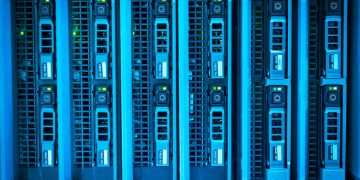
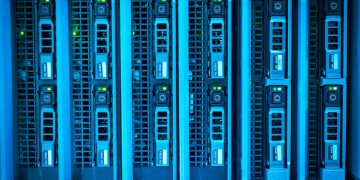
The catalyst is not a scandal or a product recall. It is a spending plan. Meta has told investors it intends to pour tens of billions of dollars into the data centres, specialised chips and engineering talent needed to build ever-larger AI models, and that the bill will keep rising into next year. Zuckerberg has been candid that he would rather overbuild capacity than be caught short, framing the risk of underinvesting in artificial general intelligence as far more dangerous to the company than the risk of spending too much.
That is a coherent strategy, but it collides with an uncomfortable question that Wall Street keeps returning to: where is the revenue? Meta’s core advertising business remains a formidable cash machine, and the company has argued that AI already sharpens its ad targeting and content recommendations. What it has not yet produced is a clearly separate, fast-growing AI product line that obviously justifies the scale of the outlay. Until that gap closes, every fresh commitment to capital expenditure reads to nervous investors as a subtraction from future profit rather than an addition to it.
Two ways of reading the sell-off
There are two honest interpretations of what is happening, and both deserve a hearing. The bullish case is that this is exactly what building durable infrastructure looks like. The companies that laid fibre and built cloud platforms in earlier cycles also frightened their shareholders with heavy upfront costs, and the ones that held their nerve captured markets for a decade. On this view, the current weakness is a buying opportunity created by short-term investors who cannot stomach a long-term bet.
The bearish case is more sobering. It holds that the industry is collectively spending far ahead of demonstrated demand, that much of the hardware being bought depreciates quickly, and that a good deal of the promised productivity has yet to show up in customers’ willingness to pay. If AI turns out to be genuinely transformative but slower to monetise than the marketing suggests, then the companies furthest out on the capital-expenditure limb will be the ones that hurt most. Meta, having chosen to build aggressively, has volunteered to be a test case for that thesis.
Neither camp can claim victory yet, which is precisely why the share price is so jumpy. The market is not pricing certainty in either direction. It is pricing doubt, and doubt is expensive.
Why this matters in Australia
It would be easy to file this as a distant story about an American billionaire’s fluctuating wealth, but the tremors reach the local market directly. A large slice of Australian retirement savings sits in global equity index funds, and those funds are heavily weighted towards a handful of US technology giants. When Meta wobbles, superannuation balances quietly wobble with it, even for members who have never opened the Facebook app. The AI trade has become so central to global indices that ordinary Australians are exposed to it whether they intend to be or not.
There is a second, more structural connection. Meta’s spending spree is part of the same global appetite for computing capacity that is now reshaping Australia’s own infrastructure debate. The scramble for data centres has already collided with questions about grid capacity and energy supply here, a tension FluentSea has tracked from the world-first rules being drafted for data-centre energy use to the fierce argument over whether the nation’s power system can support its AI ambitions at all. Every dollar Meta commits to new capacity adds to worldwide demand for the chips, power and cooling that Australian projects are also chasing, which keeps prices firm and lead times long.
For local investors on the ASX, the episode carries a plainer lesson. A cohort of Australian-listed companies has been rewarded for attaching the AI label to their strategies, and valuations in that pocket of the market have run hard. Meta’s experience shows that the market’s patience with AI spending is conditional, not unlimited. Sentiment can turn quickly once investors decide they want to see returns rather than roadmaps, and smaller companies with thinner balance sheets have far less room to absorb that shift than a US giant does.
What to watch next
The immediate signal will be whether the slide steadies or deepens once the initial wave of selling exhausts itself. Beyond the day-to-day price action, the more meaningful test comes at Meta’s next set of results, when management will be pressed to show concrete evidence that the AI investment is translating into either higher advertising revenue or a genuinely new income stream. Analysts will be listening closely for any softening of the company’s spending guidance, since a retreat would calm the market but also concede that the critics had a point.
The wider question is whether this proves to be a Meta-specific stumble or the first crack in the broader AI-spending narrative that has propelled global markets. If other large technology companies signal similar restraint or face the same scepticism, the recalibration could spread, and Australian portfolios would feel it. For now, the story is a pointed reminder that spending on artificial intelligence and profiting from it are not the same thing, and that the gap between the two is where fortunes, including an $18 billion slice of one, are made and lost.
Sources: Forbes Australia.