










































An Australian-founded company that most people have never heard of has just pulled off one of the largest capital raisings in the local technology sector, and it did so by promising to build the physical plumbing of the artificial intelligence era. Firmus, the developer of renewable-powered “AI factories”, has locked in roughly $3.1 billion in fresh backing from a heavyweight trio of investors: private capital giant Blackstone, technology-focused fund Coatue, and the world’s most valuable chipmaker, NVIDIA.
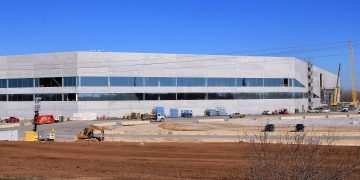
The scale of the commitment says a great deal about where global money now believes the returns are. AI factories are, in plain terms, purpose-built data centres crammed with graphics processing units and wired specifically to train and run large AI models. They are enormously expensive, power-hungry and, right now, in desperately short supply. Firmus has positioned itself as a builder that can deliver that capacity while running on clean energy, a pitch that has clearly resonated with backers willing to write cheques of this size.
From a Melbourne idea to a global bet
Firmus was co-founded by Tim Rosenfield and Oliver Curtis, who set out to solve a problem that has dogged the AI boom from the beginning: the sheer energy intensity of the hardware. Rather than simply chasing the cheapest grid connection, the company has built its strategy around immersion cooling and locations with abundant renewable power, with Tasmania’s hydroelectric resources central to its earliest plans. The company’s HyperCube technology, which submerges servers in liquid to strip out heat, is the sort of engineering that lets operators pack more computing into less space while cutting the electricity wasted on air conditioning.
The new funding, reported by Business News Australia, is designed to accelerate that rollout at pace. Capital of this magnitude does not just buy buildings and chips; it buys credibility with the utilities, governments and hyperscale customers a company needs on side before it can break ground on gigawatt-scale campuses.
Why these three names matter
The composition of the investor group is arguably as significant as the dollar figure. Blackstone has been one of the most aggressive institutional players in data centre infrastructure globally, treating the sector as the next great real asset class alongside logistics and housing. Coatue brings a technology investing pedigree and a network of relationships across the AI supply chain. NVIDIA’s involvement is the one that will draw the most attention, because the chipmaker rarely puts its balance sheet behind a customer without a strategic reason.
When NVIDIA invests in a company that buys its GPUs, it is effectively helping to finance demand for its own products while securing a beachhead in a market it wants to grow. For Firmus, having NVIDIA as a shareholder should translate into better access to the very chips that are the tightest bottleneck in the industry. That access, more than the money itself, may prove the most valuable part of the deal.
The case for optimism, and the case for caution
Supporters of the deal will frame it as a rare Australian success in a field dominated by American and Middle Eastern capital. For years the national conversation has fretted that Australia would end up renting its AI capacity from offshore providers, sending both the data and the economic value overseas. A well-funded local champion building sovereign compute on home soil, powered by Australian renewables, is close to the ideal outcome that policymakers have been describing in speeches.
The more sceptical view is worth airing too. The AI infrastructure market is running hot, and history is littered with capital-intensive booms that ran ahead of real demand. Building AI factories requires enormous upfront spending on land, power connections and hardware that depreciates quickly, and the economics only work if customers keep paying premium rates for compute over many years. If the current frenzy cools, or if the cost of running models falls faster than expected, operators who over-built could be left with expensive, half-full facilities. There are also legitimate questions about water use, grid strain and whether communities near these sites see enough benefit to justify the footprint.
What it means for Australia
For Australia specifically, the raise lands at a moment when the country is trying to work out how to host the AI boom without breaking its energy system. Data centres are already competing with households and industry for electricity, and the debate over how to power them with renewables rather than coal or gas has become a genuine policy flashpoint. A company built around clean energy and efficient cooling is, in principle, exactly the kind of operator regulators would prefer to see, provided the promises translate into practice.
There is also a jobs and skills dimension. Projects of this size need construction crews, electricians, network engineers and data centre technicians, many of them in regional areas that have struggled to attract high-value work. Tasmania in particular stands to benefit if Firmus follows through on its hydro-powered ambitions, turning a legacy of twentieth-century dam building into a twenty-first-century compute advantage. Whether the state’s grid and workforce can absorb that demand smoothly is a question that will need close attention from both the company and government.
The deal also sharpens the strategic argument about sovereignty. As governments and large enterprises grow uneasy about running sensitive workloads on foreign-owned infrastructure, having domestic capacity becomes a matter of resilience as much as economics. A locally founded operator with global capital behind it offers a middle path, keeping ownership and control closer to home while still tapping the international funding pools that ventures of this scale require.
What’s next
The immediate test will be execution. Raising the money is one thing; converting it into operational megawatts on a timeline that satisfies impatient investors is another entirely. Expect Firmus to move quickly to firm up power agreements, land and customer contracts, and to say more about where its next campuses will be built. Watch, too, for how the broader market reacts, because a raise of this size tends to set a benchmark that rivals and would-be entrants will measure themselves against.
For a sector that has spent the past two years talking about Australia’s AI potential in the abstract, this is a rare piece of concrete news with real dollars attached. The next twelve months will show whether it marks the start of a genuine domestic infrastructure industry or simply another chapter in a global spending race that Australia is scrambling to keep pace with.
Sources: Business News Australia