






















The global scramble to build artificial intelligence infrastructure has landed on the Australian sharemarket in a way few investors would have predicted a couple of years ago. The materials that make AI possible, from the copper wound through data centre cabling to the power needed to keep tens of thousands of servers humming, are increasingly Australian preoccupations, and that has put a fresh bid under the local bourse.
According to News.com.au, appetite tied to the AI theme has been helping to lift the ASX and, in particular, breathing life back into the big resources names that dominate the top of the index. It is a notable turn for a market that spent much of the past decade being told the future belonged to software, not to the diggers and dumpers of the Pilbara.
Why AI is a mining story
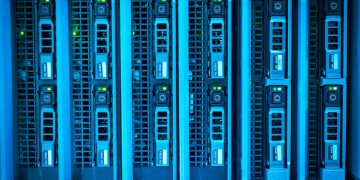
The link between a chatbot and a copper mine is not obvious until you follow the electricity. Training and running large AI models happens inside data centres, and those centres are ferociously power-hungry. Every rack of graphics processors needs cooling, cabling and a reliable grid connection, and all of that leans heavily on copper, aluminium and steel. Analysts have taken to describing copper as the metal that ties the whole AI economy together, because there is no version of the build-out that does not consume enormous quantities of it.
That has flowed through to the Australian names investors reach for when they want exposure to the theme. The country’s iron ore giants remain the ballast of the index, but the sharper interest has been in copper producers and diversified miners with a foot in the metals that electrification and computing both demand. Uranium has ridden a parallel wave, as the idea that nuclear power could underwrite always-on data centres has moved from fringe speculation to mainstream investment conversation. For a market long accused of being a leveraged bet on Chinese construction, a second structural demand story is an attractive proposition.
It is worth being clear about what is actually moving the needle. Much of the enthusiasm is anticipatory. Investors are pricing in years of forecast demand rather than orders already booked, which is a familiar pattern whenever a genuinely new technology arrives. The optimists argue that the scale of committed spending from the world’s largest technology companies makes this more than a passing fad, and that the metals bottleneck is real regardless of which AI applications ultimately succeed.
Two views on the rally
The bullish case is straightforward. If the hyperscalers keep pouring capital into data centres, and if governments continue to treat computing capacity as a matter of national competitiveness, then demand for the physical inputs is close to guaranteed. Australia sits on world-class copper and uranium resources and has the mining expertise to bring them to market, which makes the local index a rational place to express a global thesis. On this reading, the current strength in resources is the early innings of a multi-year cycle rather than a spike.
The cautious camp is less sanguine, and its argument has grown louder as valuations have climbed. Sceptics point to the circular nature of some AI financing, where chipmakers, cloud providers and model developers invest in one another in ways that can flatter demand figures. Those concerns spilled onto local screens recently when jitters about that circularity contributed to a slide in Nvidia and rippled through AI-exposed stocks, a reminder that sentiment can reverse quickly. The worry is not that AI is fake, but that the market may be extrapolating a smooth, unbroken build-out when history suggests these cycles arrive in fits and starts, with air pockets along the way.
There is also a more prosaic risk. Commodity prices are notoriously cyclical, and a rally built partly on a narrative can unwind if supply catches up or if the grand data centre plans slip. Several proposed projects around the world remain conditional on power availability, planning approvals and financing that has yet to be locked in. Should a few of those stall, the demand curve the optimists are pricing could soften.
What it means for Australia
For Australia the stakes run well beyond a good week for the index. Mining royalties and company taxes are central to state and federal budgets, so a durable lift in resources earnings would show up in the Treasury’s numbers and in superannuation balances, given how heavily the big local funds are weighted towards the top of the ASX. A market that had been searching for a growth story beyond the banks and iron ore now has one, and it happens to play to genuine national strengths.
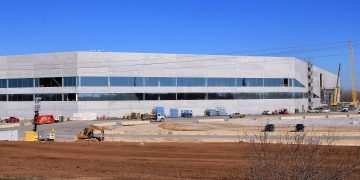
The opportunity is not confined to selling raw metal. The same AI build-out driving demand for copper is also driving demand for data centres and the power to run them, and Australia has been wrestling with how to host that infrastructure without overwhelming the grid. Recent debate over world-first energy rules for data centres, and warnings that the country’s AI ambitions are on a collision course with its energy system, sit directly alongside the market story. If Australia can supply both the metals and the megawatts, it captures far more of the value chain than it would as a quarry alone.
There is a note of caution for retail investors too. A thematic rally tends to sweep up quality and speculation alike, and the AI label has already been attached to a wide range of ASX names, some with far more substance than others. The lesson from previous booms is that the underlying demand can be real while individual share prices still get ahead of themselves.
What is next
The near-term test is whether the global technology giants confirm their spending plans in coming earnings updates, since those capital budgets are the clearest signal of how much copper, energy and data centre capacity the world will actually need. Locally, investors will watch commodity prices, project approvals and the policy settings around energy and data centre development, all of which will shape how much of the AI dividend Australia keeps. For now the theme has given the ASX a genuine tailwind and returned the nation’s miners to the centre of a story about the future, a place they have not occupied for some time.
Sources: News.com.au.