






































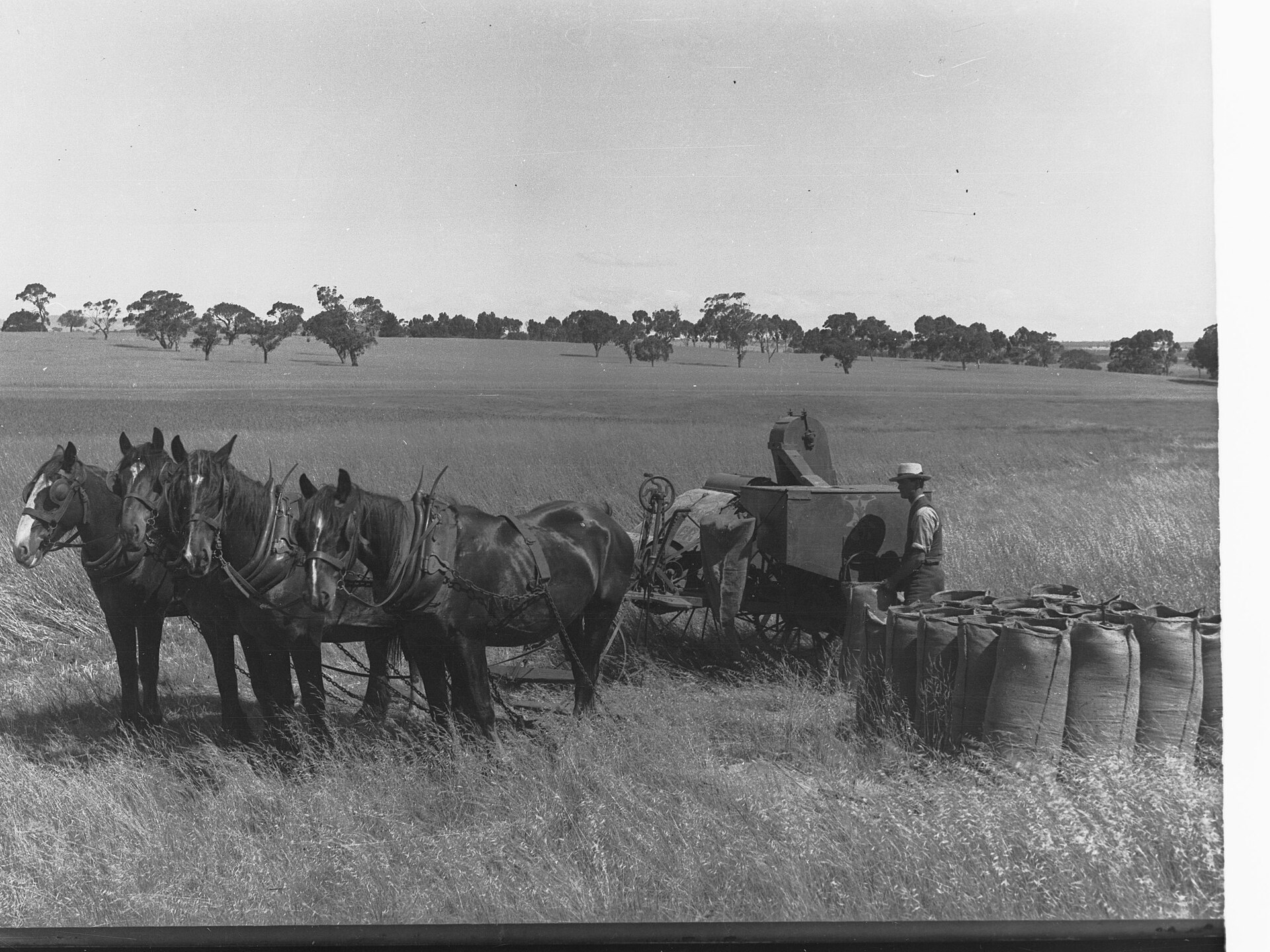
For a company that traces its roots to 1839, Elders has spent generations doing the unglamorous, essential work of Australian agriculture: buying and selling livestock, moving grain and wool, supplying fertiliser and agronomy advice, and financing the seasonal gamble that every farmer takes each year. Now the ASX-listed rural services group is trying to bolt something distinctly modern onto that machinery, with artificial intelligence being used to forecast crop performance for the farmers it already serves.
The move, canvassed in a recent analyst note from Kalkine, poses a question that is now familiar across corporate Australia. Can a data tool bolted onto a legacy operation actually change the economics of the core business, or is it a shiny addition that looks good in an investor deck without moving the numbers that matter?
What Elders is actually doing
Crop forecasting sits at the heart of almost every decision a grain grower makes. Yield expectations shape how much fertiliser and chemical goes on, when to sell forward, how much finance to draw, and whether to store grain or send it straight to market. Traditionally that forecasting has been a blend of on-farm experience, agronomist judgement and government or industry estimates that arrive with a lag.
The pitch behind AI crop forecasting is that machine learning models can chew through satellite imagery, soil moisture readings, weather data and historical yield records to produce paddock-level predictions that update as the season unfolds. For Elders, the appeal is obvious. It already has thousands of farmer relationships, a national branch network and a small army of agronomists on the ground. Layering predictive analytics over that footprint means the company can, in theory, offer sharper advice, sell more of the right inputs at the right time, and deepen the customer relationships that underpin its earnings.
That is the strategic logic of the whole exercise. Elders does not need to find new customers to benefit from better forecasting. It needs to become more useful to the customers it already has, and to capture more of each farm’s annual spend by being the trusted source of both the data and the products that flow from it.
The bull case: data as glue
Supporters of the strategy argue that agtech and traditional agribusiness are natural partners rather than competing priorities. Elders makes money from volume and from advice, and better forecasting feeds both. If a grower trusts an Elders yield model, they are more likely to buy the recommended inputs through Elders, hedge grain through Elders and lean on Elders finance. The data becomes the glue that binds the customer to the network.
There is also a defensive dimension. A wave of specialist agtech startups has spent the past decade trying to insert software between farmers and the incumbents who supply them. By building or acquiring its own AI capability, Elders keeps that relationship in-house rather than ceding the digital layer to a third party. In a market where the physical distribution network is expensive to replicate but the software is not, owning both is a meaningful moat.
The sceptic’s view
The counterargument is that agriculture is littered with promising technology that never justified its cost. Australian farming conditions are brutally variable, and a model trained on one region’s soils and rainfall can perform poorly a few hundred kilometres away. Farmers are also famously hard-nosed about tools that do not pay for themselves, and adoption tends to be slow when the incumbent advice already works well enough.
Then there is the question of materiality for shareholders. Elders is a large business whose fortunes still swing on cattle prices, seasonal conditions, grain volumes and input margins. Even a genuinely useful forecasting product may be a rounding error against those forces in any given year. Investors weighing the stock will want to see whether AI meaningfully lifts customer retention or margin, or whether it is a sensible but modest improvement dressed up as transformation. The honest answer, for now, is that it is too early to tell.
Why this matters for Australia
Agriculture is one of the sectors where Australia has the most to gain from applied AI, and Elders is a useful test case precisely because it is so ordinary. This is not a Silicon Valley lab or a venture-funded moonshot. It is a 185-year-old rural services company deciding whether machine learning belongs in the same conversation as sheep yards and fertiliser sheds.
The stakes are national. Australian farmers manage some of the most climate-exposed cropping land in the world, and better in-season forecasting could help them manage water, inputs and financial risk more precisely at a time when seasons are becoming less predictable. Grain is a major export earner, so marginal improvements in how accurately the country’s croppers plan and sell ripple out to trade figures and regional economies. If tools like this genuinely tighten the link between data and decisions on farm, the productivity dividend lands squarely in regional Australia, where it is needed most.
It also fits a broader pattern playing out across the ASX, where established Australian companies are trying to work out where AI actually earns its keep rather than simply appearing in a strategy slide. The banks are testing AI agents, the miners are chasing data-centre demand, and now a rural services group is asking whether predictive analytics can complement rather than distract from its core engine. The uniting theme is discipline: does the technology improve the existing business, or does it just decorate it?
What’s next
The proof will be in adoption and in the numbers. Watch for how many growers actually use the forecasting tools, whether Elders ties them to measurable outcomes such as input sales or client retention, and whether management starts quantifying the contribution in results and investor briefings rather than describing it in general terms. If the company can show that farmers who use its AI forecasts spend more, stay longer or make demonstrably better decisions, the agtech push will have earned its place alongside the grain and livestock businesses that still pay the bills.
Until then, the more sober reading is the right one. Elders is doing what a great many capable Australian companies are doing right now, which is experimenting carefully with AI in the part of its business it understands best. That is a reasonable place to start, and it is a long way from proof that the technology reshapes the agribusiness engine underneath it.
Sources: Kalkine, via GNews.