










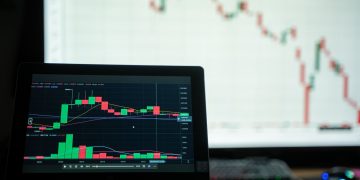




















For most of the past year, the story of the Australian sharemarket has been a story about artificial intelligence. Data-centre builders, chip designers and the handful of ASX-listed companies with a credible AI angle have carried the index through bouts of volatility that would once have sent it sideways. So when the country’s largest company, mining giant BHP, slips on a day when the AI narrative wobbles, it is worth asking how a copper producer ended up so tightly tied to the fortunes of Silicon Valley.
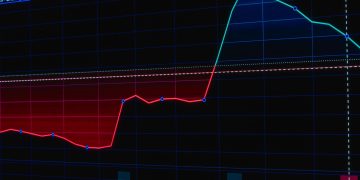
That is the question raised by a recent market wrap from financial research house Kalkine, which traced a dip in BHP’s share price on the S&P/ASX 200 back to a slide in the copper price, itself linked to growing investor nerves about the scale of global spending on artificial intelligence. You can read the original analysis via Kalkine’s coverage of the BHP move. The mechanics are less exotic than they first appear, but they say a lot about where the market’s mood is sitting as 2026 draws towards a close.
How copper became an AI barometer
Copper has long been treated as a proxy for the health of the global economy, which is why traders nickname it “Dr Copper”. When factories hum and construction booms, demand for the red metal climbs. When growth looks shaky, the price retreats. In recent years a new leg has been bolted onto that old logic. The enormous electrical demands of AI data centres, from the power-hungry servers themselves to the cabling, transformers and cooling systems that keep them running, have made copper one of the quieter beneficiaries of the AI build-out.
That connection cuts both ways. If investors start to doubt whether the hyperscalers (the Microsofts, Amazons, Googles and Metas of the world) will keep pouring hundreds of billions of dollars into AI infrastructure, the expected future demand for copper softens along with it. A reassessment of AI capital expenditure, combined with the usual worries about Chinese demand and the strength of the US dollar, was enough to take some heat out of the copper price. BHP, which counts copper as one of its core growth pillars alongside iron ore, moved lower in sympathy.
None of this amounts to a crisis for the company. A single session’s dip in response to a commodity wobble is ordinary market behaviour, and BHP’s earnings still rest heavily on iron ore shipped to Chinese steel mills. The point is more subtle. The miner’s exposure to copper has, almost by stealth, given it a sensitivity to the same sentiment swings that move Nvidia and the Nasdaq.
Two ways of reading the move
Among market watchers there are broadly two camps. The more cautious view holds that the AI trade has become stretched, that valuations across the technology complex have run ahead of what near-term earnings can justify, and that any crack in the spending story will ripple outwards into everything the boom has touched, copper included. On this reading, BHP’s slide is an early tremor, a sign that the market is beginning to price in the possibility that AI capital expenditure cannot keep compounding at its current pace indefinitely.
The more sanguine camp argues almost the opposite. Yes, there will be volatility and there will be days when fears about AI spending knock risk assets around, but the structural demand for copper is real and durable regardless of whether any single quarter’s data-centre orders come in light. Electrification, the energy transition and the physical infrastructure behind AI all point to a copper market that is likely to stay tight for years. For these investors, a sentiment-driven dip in a quality producer like BHP looks more like an opportunity than a warning.
Both views can be true at once, which is part of what makes the current market so difficult to call. The AI story is simultaneously the thing holding the index up and the thing most capable of knocking it down.
Why this matters for Australia
For Australian investors and for the national economy, the episode is a useful reminder of how interconnected things have become. The ASX 200 is heavily weighted towards the big miners and the big banks, and millions of Australians hold BHP inside their superannuation whether they realise it or not. When a company of that size moves on offshore sentiment about AI, the effect flows through to retirement balances across the country.
There is a broader strategic thread here too. Australia has positioned itself as a supplier of the critical minerals the world needs for both the energy transition and the AI build-out, with copper near the top of that list. If the demand picture for copper is going to be shaped increasingly by the spending decisions of a small number of American technology companies, then the health of the AI investment cycle becomes a genuine input into Australia’s resources outlook, not just a curiosity for tech-stock traders. The same dynamic has been visible across the local market in recent weeks, from soft opens that have tracked Wall Street’s AI selloffs to warnings that the casualties of the AI trade may be far from over.
It also cuts against the comforting assumption that the resources sector offers a refuge from technology volatility. For years, the pitch for Australian miners was that they gave investors exposure to real-world demand that had little to do with the froth of the tech market. The copper link quietly erodes that separation. A portfolio that holds BHP for ballast and an AI name for growth may be more correlated than its owner expects.
What happens next
In the short term, BHP’s share price will keep taking its cues from the copper price, and copper will keep taking its cues from the twin forces of Chinese demand and global risk appetite, with the AI-spending debate now firmly part of that mix. The company’s own operational performance, its production numbers, its progress on expanding copper output and the trajectory of iron ore, will reassert itself over any single session’s sentiment in time.
The longer-term question is whether the current wave of AI capital expenditure settles into a durable, decades-long demand story for copper, or whether it proves lumpier and more cyclical than today’s enthusiasm suggests. The answer will matter well beyond the trading screens. It will shape investment decisions in new mines, the outlook for critical-minerals policy, and the returns sitting inside Australian superannuation funds. For now, the lesson from BHP’s dip is a simple one. In a market this concentrated on artificial intelligence, even a 140-year-old miner is part of the AI trade whether it likes it or not.
Sources: Kalkine via GNews.