
















































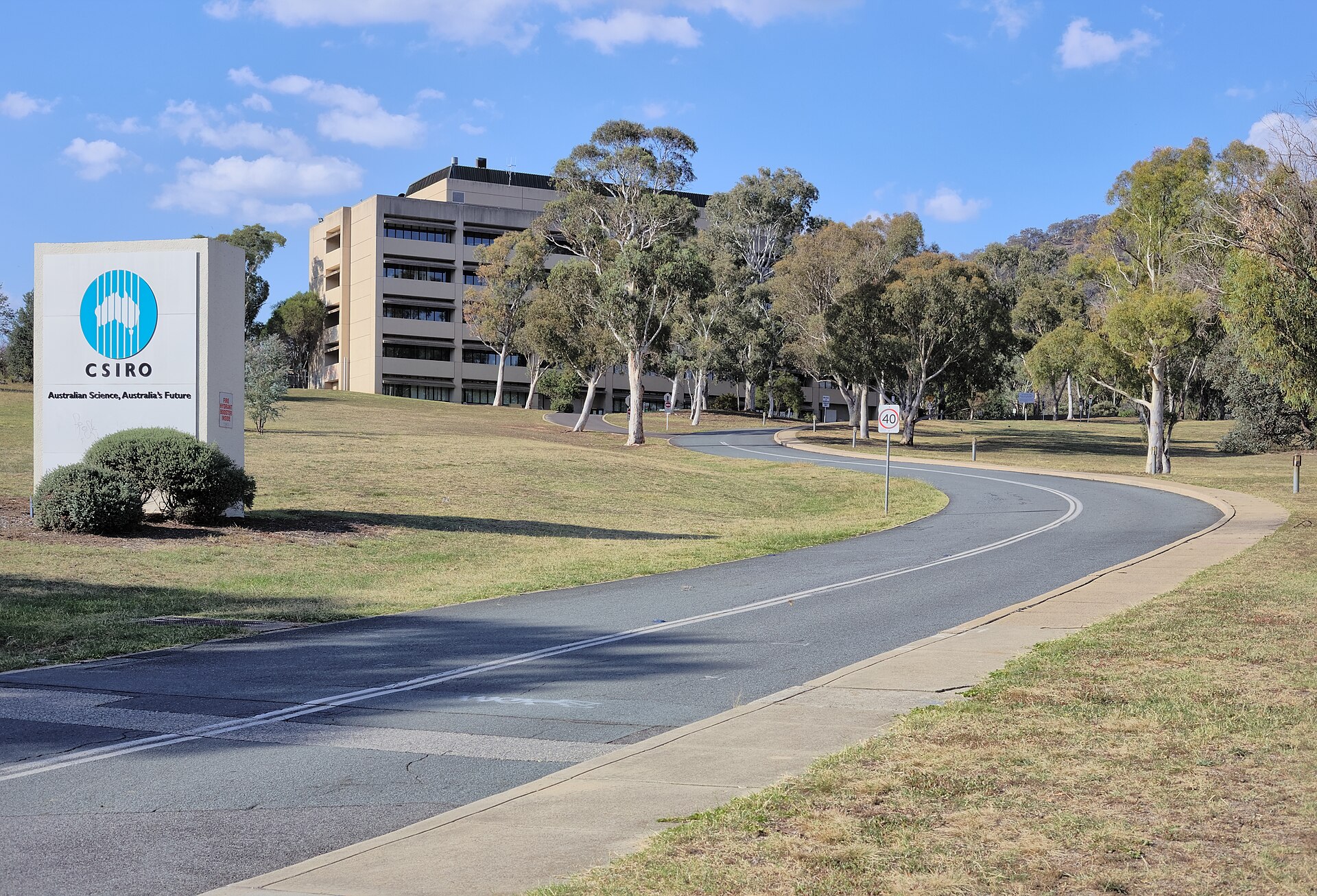
Australia has spent much of the past two years watching from the sidelines as American and Chinese laboratories pour tens of billions of dollars into ever larger artificial intelligence systems. The nation’s peak science agency now says the smart move is to stop trying to keep up in that particular race, and to compete somewhere else entirely.
In comments reported by InnovationAus, CSIRO chief executive Doug Hilton argued that Australia’s genuine artificial intelligence advantage sits in niche, purpose-built models rather than the sprawling general-purpose systems being churned out by the world’s biggest technology companies. The message is a pointed one for a country that keeps agonising over whether it has missed the AI boat.
Why the frontier race is a losing bet
The logic behind Hilton’s position is not complicated, and it is one plenty of local researchers have quietly held for a while. The frontier of general AI is now defined by capital on a scale Australia simply cannot match. A single training run for a leading large language model can cost hundreds of millions of dollars, and the companies building them are committing to data centre budgets that run into the hundreds of billions over the coming years. Trying to build an Australian rival to OpenAI, Google DeepMind or Anthropic would mean spending money the country does not have, to arrive late in a market already carved up.
Niche models flip that equation. Rather than a system that can write a sonnet, debug code and summarise a legal brief all at once, a specialised model does one valuable thing extremely well. It might be trained to read radiology scans for a particular cancer, to forecast bushfire behaviour across specific fuel loads, to model reef health, or to optimise a mining operation. These systems are smaller, cheaper to train and run, and they lean on data and expertise Australia already owns. That is the crux of Hilton’s argument: the edge is not in raw scale, it is in depth and relevance.
CSIRO is not speaking from the cheap seats here. The agency has a long record in applied science, from inventing the technology behind fast wi-fi to its work in agriculture, health and climate, and its Data61 arm has been building machine learning tools for industry for years. A pitch built around specialisation plays directly to that history.
Not everyone is convinced
The niche-first strategy has its sceptics, and their concerns deserve airing. One worry is sovereignty. If Australia builds clever specialist models but still trains and runs them on foreign cloud infrastructure using foreign foundation models as a base, how much control does it really have? A specialised medical model fine-tuned on top of an overseas system is still tethered to that system’s owner for updates, pricing and access. Critics argue that ceding the foundational layer entirely could leave the country exposed if geopolitics sours or commercial terms change.
A second concern is ambition. There is a school of thought, well represented among Australian venture investors, that talking down the country’s chances at the frontier becomes a self-fulfilling prophecy. If the national conversation settles on “we can’t compete on the big models,” then the funding, talent and political will needed to try never materialise. Some founders will read Hilton’s comments as pragmatic realism, and others will hear them as a ceiling being set on national ambition before the game has really begun.
There is also the talent question. Building world-class niche models still requires world-class machine learning researchers, and Australia continues to lose many of them to higher salaries in the United States. A specialisation strategy only works if the people who can execute it choose to stay, or come home.
What it means for Australia
For all the debate, the niche argument lands on solid economic ground for this country. Australia’s comparative advantages are unusual and hard to replicate: some of the best agricultural, mining, marine and health datasets in the world, world-leading research institutions, and industries where a small accuracy gain translates into real money. A model that shaves a few per cent off water use across the Murray-Darling, or that catches disease in livestock earlier, or that squeezes more from an ageing gas field, is worth building even if it never makes headlines in Silicon Valley.
The approach also fits the money that is actually available. Governments and enterprises here have shown they will fund AI that solves a concrete problem far more readily than they will bankroll a moonshot. Specialist models are the kind of thing a mining major, a health network or a state agriculture department can sponsor directly, which gives Australian AI a commercial path that does not depend on winning a global arms race.
It does, however, sharpen the policy questions that Canberra keeps circling. If niche models are the play, then the national conversation should be about compute access for researchers, about who owns the data these models are trained on, and about keeping the underlying infrastructure onshore enough that a clever Australian model is not one commercial decision away from being switched off. Those are the details that turn a nice strategic slogan into an actual industry.
What’s next
Hilton’s comments arrive as the federal government continues to shape its broader AI agenda, with debate rolling on about a national framework, skills, and how much public money should back sovereign capability. A CSIRO chief executive making the case for specialisation adds a credible institutional voice to that discussion, and it may nudge funding decisions toward applied, sector-specific projects rather than grand general-purpose ones.
The real test will be whether the strategy attracts capital and keeps talent. If a handful of Australian niche models can prove they deliver measurable value in health, resources or the environment, the argument makes itself. If they stall for want of compute, data access or researchers, the sceptics who worry about setting the bar too low will feel vindicated. Either way, the country now has a clearer proposition to argue about than the vague anxiety that has dominated its AI debate so far.
Sources: InnovationAus.