














































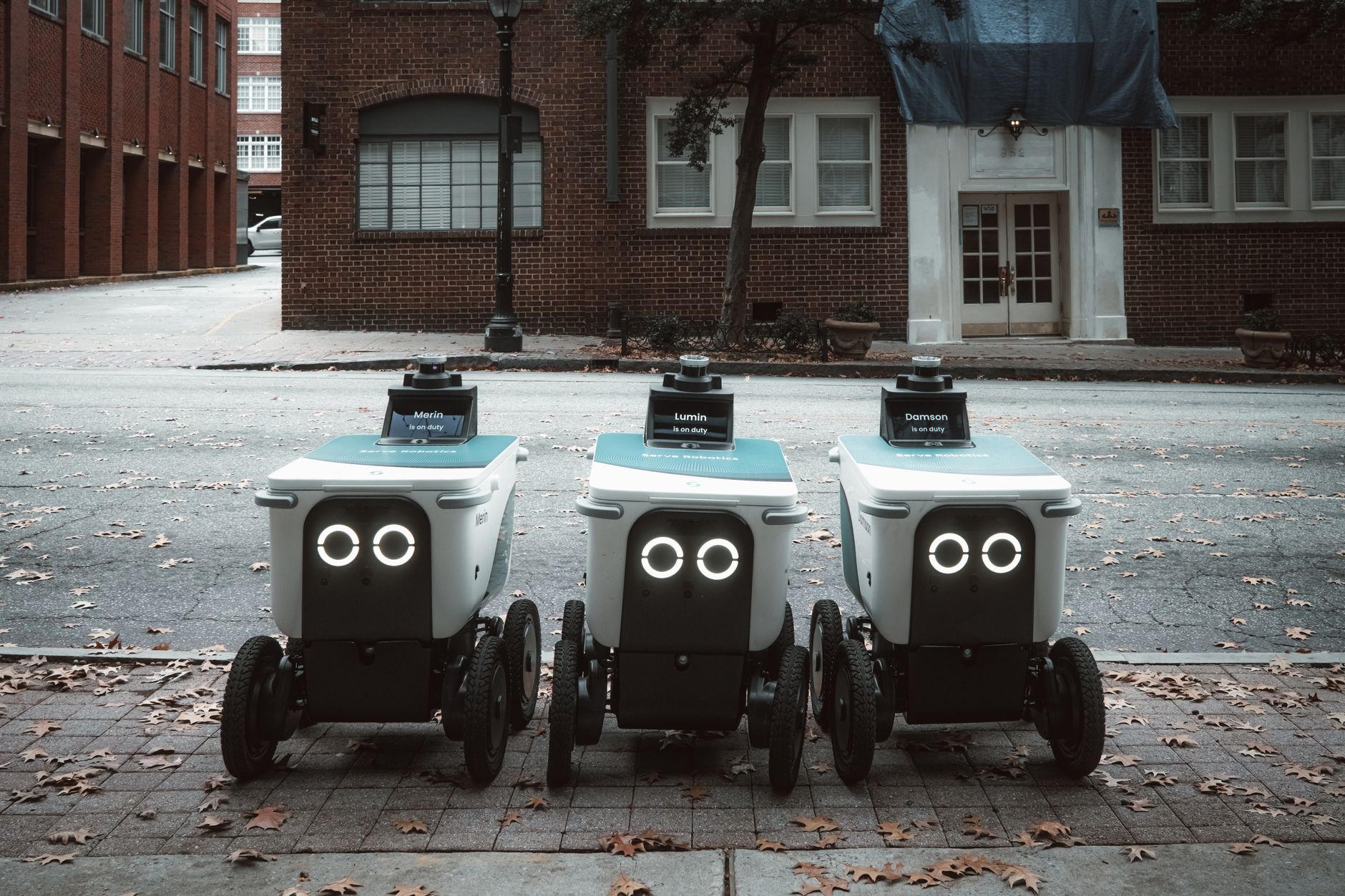
One of the quieter frontiers of workplace automation is the humble pallet, the trolley and the trip from one end of a warehouse to the other. For decades those jobs belonged to forklifts and people pushing them. Increasingly they belong to squat, self-driving machines that map a factory floor, dodge the staff and keep moving long after the day shift has gone home. The companies that sell and service those machines are now jostling for position in Australia, and this week one local operator strengthened its hand.
Robotic Automation, a long-established Sydney-based systems integrator, has been appointed an authorised partner and support network for Mobile Industrial Robots, the Danish maker better known by its initials, MiR. The appointment covers both Australia and New Zealand, and extends the RA Group’s ability to look after MiR’s autonomous mobile robots across their working life, from scheduled preventative maintenance through to system optimisation and emergency breakdown assistance when a machine stops mid-shift.
What the deal actually does
MiR builds autonomous mobile robots, or AMRs, which are the newer and smarter cousins of the automated guided vehicles that have trundled around factories for years. The older machines followed fixed wires or magnetic strips laid into the floor. AMRs do away with that infrastructure entirely. They carry on-board sensors and laser scanners, build a digital map of the space around them and use software to plan routes, avoid obstacles and reroute on the fly when a person or a pallet gets in the way. It is this navigation layer, the perception and decision-making that lets a robot share a busy floor with humans safely, that puts AMRs squarely in the applied artificial intelligence conversation rather than simple conveyor-belt mechanics.
MiR is owned by the American test-and-automation group Teradyne, which also owns the collaborative-robot maker Universal Robots, and its fleet ranges from small units that ferry components between workstations to heavier models rated to shift pallets weighing a tonne or more. Selling that hardware is only part of the equation. An AMR that breaks down becomes a very expensive doorstop, and a fleet that is poorly tuned can clog aisles rather than clear them. That is where the local support network matters. Under the new arrangement, Robotic Automation becomes the point of contact for Australian and New Zealand customers who need their MiR robots maintained, optimised and, when necessary, fixed in a hurry.
Two ways to read the move
From the vendor’s side, the logic is about proximity. Importing sophisticated robots into a market as geographically spread out as Australia is the easy bit. Keeping them running in a Perth warehouse or a regional Victorian factory, thousands of kilometres from a European head office, is the hard bit. By formalising a local partner with its own engineers and spare-parts pipeline, MiR is effectively buying itself credibility with cautious operations managers who have been burned before by automation projects that stalled the moment something went wrong. Local support de-risks the purchase, and in industrial sales, de-risking is often what closes the deal.
There is a more sceptical reading, and it is worth airing. Partner announcements are a staple of the automation industry, and the gap between an authorised badge and genuine, responsive service on the ground can be wide. Australian manufacturers have heard plenty of promises about seamless support, and the real test will come not from the press release but from how quickly a technician reaches a stranded robot in a facility outside the capital cities. Robotic Automation’s pitch rests on its claim to cover maintenance through to emergency callouts, and that breadth is exactly the part customers will scrutinise. The value of the network will be measured in response times and uptime, not in signed agreements.
Why this matters for Australia
The timing lands in the middle of a national argument about productivity and labour. Australian warehousing and manufacturing have struggled to fill roles, particularly the physically repetitive jobs of moving goods around a site, and the sector has leaned on automation to paper over the gap. AMRs are attractive precisely because they slot into existing buildings without the costly floor works that older guided vehicles demanded, which lowers the barrier for mid-sized operators who could never justify a full robotic overhaul.
That matters for a country whose manufacturing base is smaller and more fragmented than those of its trading partners. The firms adopting this technology are rarely giants. They are food processors, parts distributors, logistics operators and contract manufacturers running tight margins, and for them the maintenance question is existential rather than academic. A robot that sits idle because the nearest qualified technician is overseas is worse than no robot at all. A credible local support layer is arguably more important to Australian adoption than the sophistication of the hardware itself.
There is also a jobs dimension that deserves honesty. Every machine that moves a pallet is a machine doing work a person once did, and the spread of AMRs will reshape what warehouse employment looks like. The more optimistic view, and the one the industry prefers to tell, is that the robots take the dull and physically punishing transport tasks while people move into oversight, exception-handling and the technical roles that keep fleets running. Support partnerships like this one quietly create some of those very jobs, in the form of the engineers and technicians who service the machines. Whether that trade nets out positively for workers is a question the sector would do well not to wave away.
What’s next
The practical measure of this appointment will play out over the next year as Robotic Automation builds out its service footprint and the first wave of supported deployments goes live across both countries. Watch for how the company handles coverage beyond the eastern seaboard, where the distances are greatest and the economics of a rapid callout are hardest to make work. Watch, too, for whether rival AMR vendors respond by shoring up their own Australian and New Zealand support arrangements, because in a market this size, service reach is fast becoming the competitive battleground rather than the robots themselves.
For now, the message to local manufacturers is straightforward. The autonomous mobile robot is no longer an experiment confined to a handful of showcase sites, and the infrastructure to keep those machines working is being assembled around them. The robots were always going to come. What determines whether they stay useful is who answers the phone when one stops.
Sources: Manufacturers Monthly


