









































Australian investors have spent the better part of two years hunting for a clean way to play artificial intelligence on the local market, and the search has not been easy. The obvious global winners trade offshore, the home-grown software names can be volatile, and the semiconductor hopefuls on the ASX often carry more promise than revenue. Against that backdrop, a fresh piece of market commentary has put forward a quieter candidate: Macquarie Technology Group, the Sydney-based data-centre and cloud operator that trades under the ticker MAQ.
The framing comes from Kalkine Media, which asks in a recent article whether the All Ordinaries constituent represents AI’s calmer corner. The logic is straightforward enough. Rather than betting on whichever company builds the smartest model, you buy the business that rents out the floor space, power and cooling those models need to run. It is the picks-and-shovels argument applied to the compute era, and MAQ sits squarely in that category.
The business behind the ticker
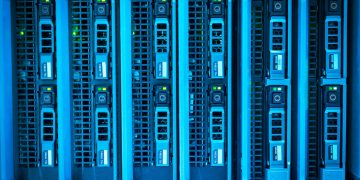
Macquarie Technology, led by chief executive David Tudehope and his brother Aidan, has been around far longer than the current AI hype cycle. The company runs telecommunications, cloud services and government-focused IT, but its most watched division is data centres, concentrated in the Macquarie Park precinct in Sydney’s north. Its flagship expansion, the IC3 Super West facility, is designed to add a large block of new capacity aimed squarely at the kind of dense, power-hungry workloads that AI training and inference demand.
That positioning is why commentators keep circling the stock. Demand for Australian data-centre capacity has run well ahead of supply, driven by cloud migration, sovereign data requirements and now the compute needs of AI. Operators with land, grid connections and existing customer relationships are in an enviable spot, because the barriers to entry are high and the lead times for new sites are long. A business that signs long contracts with enterprise and government tenants also tends to produce steadier, more predictable earnings than a software firm chasing the next product cycle, which is the heart of the “calmer corner” pitch.
Two ways to read it
The bullish case leans on scarcity and contracted revenue. If you believe AI adoption in Australia keeps climbing, and that most of that computing has to happen somewhere physical and ideally onshore for privacy and latency reasons, then owning the landlord looks sensible. Infrastructure of this kind does not need any single AI application to succeed. It simply needs the overall tide of data and compute to keep rising, and the operator collects rent regardless of which models win.
The more cautious reading is that “calmer” can be a relative term. Data centres are enormously capital-intensive, and building new capacity means heavy spending up front, often funded by debt, well before the revenue arrives. Construction can slip, power connections can be delayed, and the economics hinge on filling the new halls at prices that justify the outlay. There is also a growing crowd. Global giants and well-funded local players are all racing to build in Australia, which could eventually ease the capacity crunch that makes the current numbers look so attractive. And like every stock tied to the AI narrative, MAQ is exposed to sentiment: if the market decides the whole theme is overcooked, even a business with solid fundamentals can be marked down alongside the frothier names.
It is worth stressing that the Kalkine piece is commentary rather than a buy recommendation, and it does not pretend to settle the question. The value in it is the framing, which invites investors to think about risk and volatility rather than just upside, a useful corrective in a market where anything with “AI” attached has at times been bid up indiscriminately.
Why this matters for Australia
Beyond the share price, the MAQ story is a window onto a bigger national question: who owns the infrastructure that Australia’s AI future will run on. Much of the compute powering tools used here is housed overseas or controlled by offshore hyperscalers, which raises recurring concerns about data sovereignty, resilience and where the economic value lands. A locally listed, locally operated data-centre business is one of the few ways ordinary Australian investors can take a direct stake in that build-out, and its expansion plans feed into the same debate about sovereign capability that has been playing out in government procurement and policy circles.
There are flow-on effects too. Data centres are significant consumers of electricity, and Australia’s push to add capacity is colliding with an already stretched energy system and a shortage of skilled trades to build and maintain the facilities. The success or otherwise of operators like Macquarie Technology will shape how much of that spending stays onshore, how many jobs it creates, and whether the country can host sensitive workloads rather than shipping them offshore. For superannuation funds and retail investors alike, the sector has quietly become one of the more tangible exposures to the AI economy available on the ASX.
What’s next
The near-term tests are practical ones. Investors will be watching the ramp-up of new capacity, the pace at which fresh floor space is contracted, and whether rising construction and energy costs eat into margins. Updates at the company’s results and any news on major tenant agreements or further expansion will do more to settle the “calmer corner” thesis than any single piece of commentary can.
The broader signal is that the Australian AI investment conversation is maturing. The early phase was dominated by speculative bets on model builders and chip hopefuls. The attention now turning to infrastructure, with its contracted revenue and physical assets, suggests a market looking for durability rather than just a story. Whether Macquarie Technology proves to be the steady performer its backers hope for will depend on execution, but its growing prominence in these discussions says plenty about where investors think the real, lasting value in the AI boom is going to sit.
Sources: Kalkine Media.