












































Every few months the big question hanging over global markets gets sharper rather than softer: is the artificial intelligence boom a once-in-a-generation rewiring of the economy, or an expensive bubble inflating in plain sight? With the major share indices leaning heavily on a small cluster of technology names, the honest answer from the people who manage money for a living is that it can be both at once, and the trick is knowing which companies will still be standing when the froth clears.
That tension runs through a new canvass of fund managers by The Australian Financial Review, which asked a dozen investors to nominate their single most bullish technology bet for the next phase of the AI rollout. The picks ranged from the obvious to the obscure, taking in the US cloud giants building the physical backbone of the boom, Elon Musk’s privately held SpaceX, and a scattering of smaller companies listed on the Australian Securities Exchange that most retail investors would struggle to name.
From hyperscalers to hidden gems
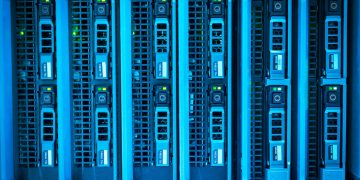
The common thread among the heavyweight picks is infrastructure. The so-called hyperscalers, the handful of American companies that operate the world’s largest data centre fleets, remain the default position for investors who want exposure to AI without betting on which chatbot or app wins. The logic is straightforward enough: whoever ends up dominating the application layer, they will all need somewhere to run their models, and that somewhere is an enormous, capital-hungry network of warehouses stuffed with chips, power connections and cooling.
Interest in SpaceX reflects a different instinct. As a private company, it sits outside the daily noise of the sharemarket, and some managers see its satellite internet arm as a quieter way to play the connectivity that AI-hungry applications will demand. The appeal is less about a quarterly earnings beat and more about owning a slice of infrastructure that is hard to replicate.
Where the exercise gets genuinely interesting for local readers is the ASX names. Alongside the global giants, several managers pointed to smaller Australian-listed companies as their preferred way to ride the theme, the idea being that the easy money in the mega-caps may already have been made, while select local players still trade at prices that do not fully reflect their role in the AI supply chain. FluentSea has covered a run of these names in recent months, from semiconductor and edge-AI hopefuls to data centre operators and enterprise software firms, and the survey is a reminder that professional investors are hunting in the same thickets.
Two ways of reading the same chart
The bulls make a compelling case. Spending commitments from the largest technology companies keep climbing, and the money is not hypothetical: it is being poured into real estate, electricity contracts and silicon right now. On that reading, the current wave of capital expenditure is the early innings of a build-out that will underpin earnings for years, and buying the companies that supply the picks and shovels is the sensible way to participate.
The sceptics look at the same numbers and see something more precarious. Valuations across much of the AI complex assume a level of future demand that has not yet shown up in cash returns, and a handful of stocks now carry an outsized share of the entire market’s gains. If the promised productivity revolution arrives more slowly than the spending implies, or if customers baulk at the cost of running these systems, the correction could be sharp and indiscriminate, dragging good businesses down alongside the speculative ones. That is why even enthusiastic managers tend to frame their picks around companies with real revenue and defensible positions rather than story stocks.
Neither camp is obviously wrong, and that ambiguity is precisely why a survey of this kind is useful. It is not a tip sheet so much as a snapshot of how thoughtful investors are hedging their conviction, leaning into the structural story while trying to avoid the names where the price has run too far ahead of the fundamentals.
What it means for Australia
For Australian investors, the stakes are more personal than a list of overseas tickers might suggest. The country’s superannuation pool, now one of the largest in the world, has significant exposure to global technology through index funds and offshore mandates, which means the fortunes of the US hyperscalers flow directly into the retirement balances of millions of Australians who have never knowingly bought a tech stock. A serious wobble in the AI trade would be felt in fund returns here just as keenly as on Wall Street.
At the same time, the appetite for smaller ASX names points to a genuine local opportunity. Australia is building its own slice of the AI economy, from data centre campuses and sovereign cloud capacity to listed firms in chips, software and automation, and recent weeks have brought a steady stream of results and guidance updates from companies positioning themselves for the buildout. Several have told the market they are winning enterprise contracts or turning cash-positive, which is exactly the kind of evidence that separates a durable business from a momentum play. For local fund managers, the pitch is that investors can back the theme without paying US mega-cap prices, provided they do the work to tell the real revenue from the hype.
There is also a sovereignty dimension that keeps surfacing in the Australian debate. Policymakers and industry groups have been arguing over how much of the AI stack the country should own domestically, from the data centres that store sensitive information to the models trained on local data. Investment flows into local infrastructure are not just a financial question; they shape how dependent Australia remains on offshore providers for a technology that is quickly becoming critical to government, business and everyday life.
What’s next
The near-term test is earnings. As more of the companies feeding the AI boom report, the market will be watching for signs that the vast capital spending is translating into profit rather than just promise. Expect the gap between the believers and the doubters to widen around each result, and expect Australian managers to keep sifting the ASX for names that offer exposure to the theme without the valuations that make the global giants so nerve-racking. The one point almost everyone agrees on is that the next phase of the rollout will reward discrimination over enthusiasm, and that the investors who do best will be the ones who can tell the difference.
Sources: The Australian Financial Review.